There is nothing worse than getting a bad return on investment. And often, when it comes to physical goods, that investment is cared for by our own actions, or lack thereof. So it is up to us to either disregard it completely or look after it through upkeep and protection, even in shoes. So here I wanted to share with you the 5 proven tips to make leather shoes last longer to maximize the return on our investment.
There will not be an order of importance, as many of them tie together, so please read this as essentially needing all five to complete the task.
Make Leather Shoes Last Longer
1. Shoe Trees
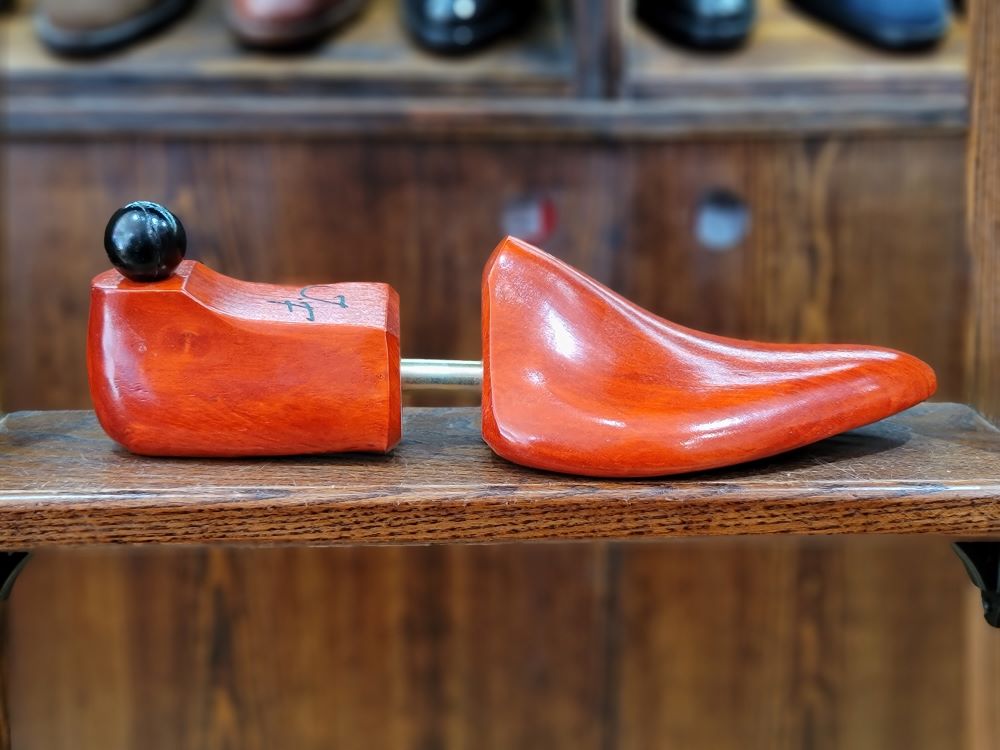
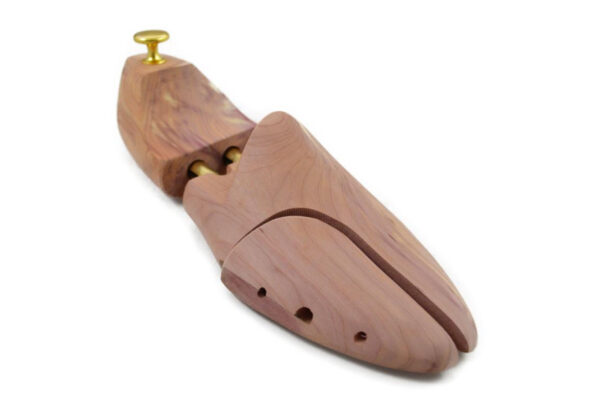
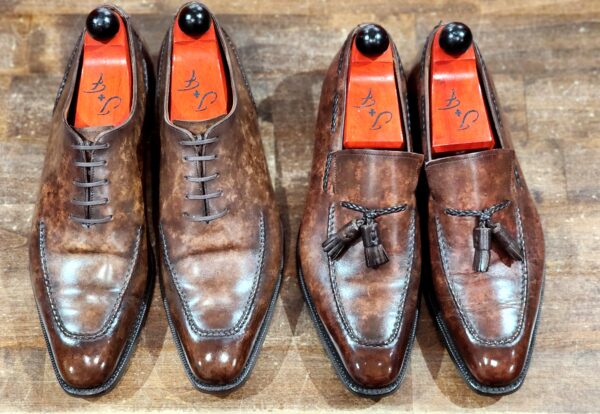
Shoe trees are an essential part of protecting your shoe’s upper, and most likely not for the reasons that you are thinking about. Most companies will sell them as necessary for ‘wicking away moisture and while to a degree that might help (although newspaper is much better as it truly absorbs any/all moisture), what is more important to maintaining your upper leather via the use of shoe trees is the pushing out of the creasing that can ultimately lead to premature cracking, which can ruin your upper entirely.
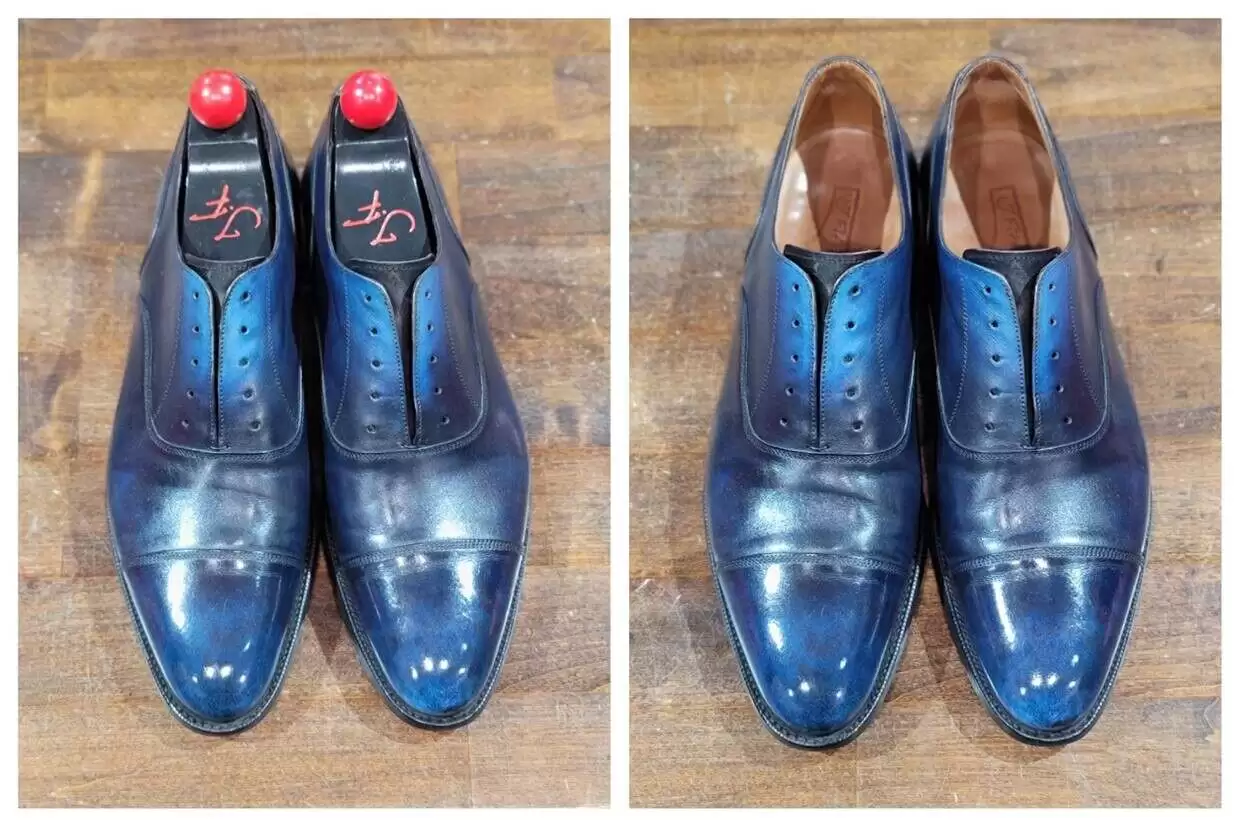
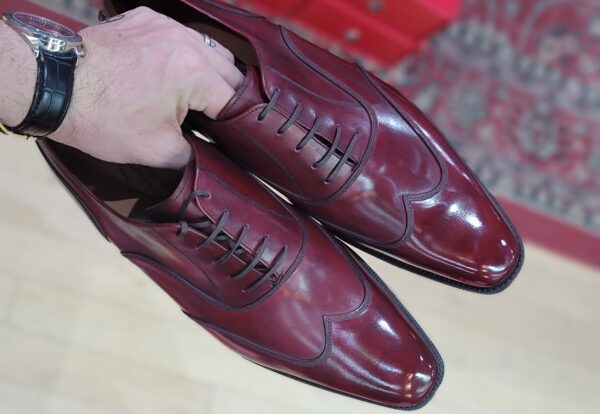
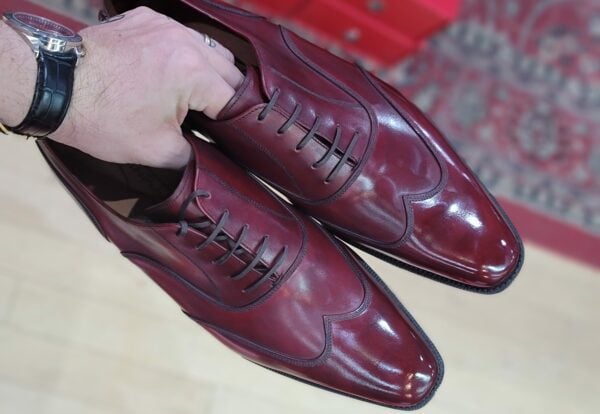
You see, as the feature photo will show (although not so well as the ‘before’ photo that I forgot to take before rejuvenating the shoes!), when a shoe does not have shoe trees in it, its creasing is more pronounced as nothing is pushing out those creases to be as flat as possible. The more those creases get deeper (through wear), the leather dries (through wear and exposure to the elements), and is not looked after (through lack of care), the more chances the leather in the creasing region can crack/split.
Ultimately, shoe trees help prevent creasing by gently pushing the leather back into shape, reducing stress at the fold and lowering the risk of premature splitting that could eventually ruin your shoes
A good shoe tree is an integral tip for making your leather shoes last longer, especially if you are wearing good-quality shoes.
To read more about shoe trees, their importance, and/or myths about them: SEE HERE
2. Toe Taps
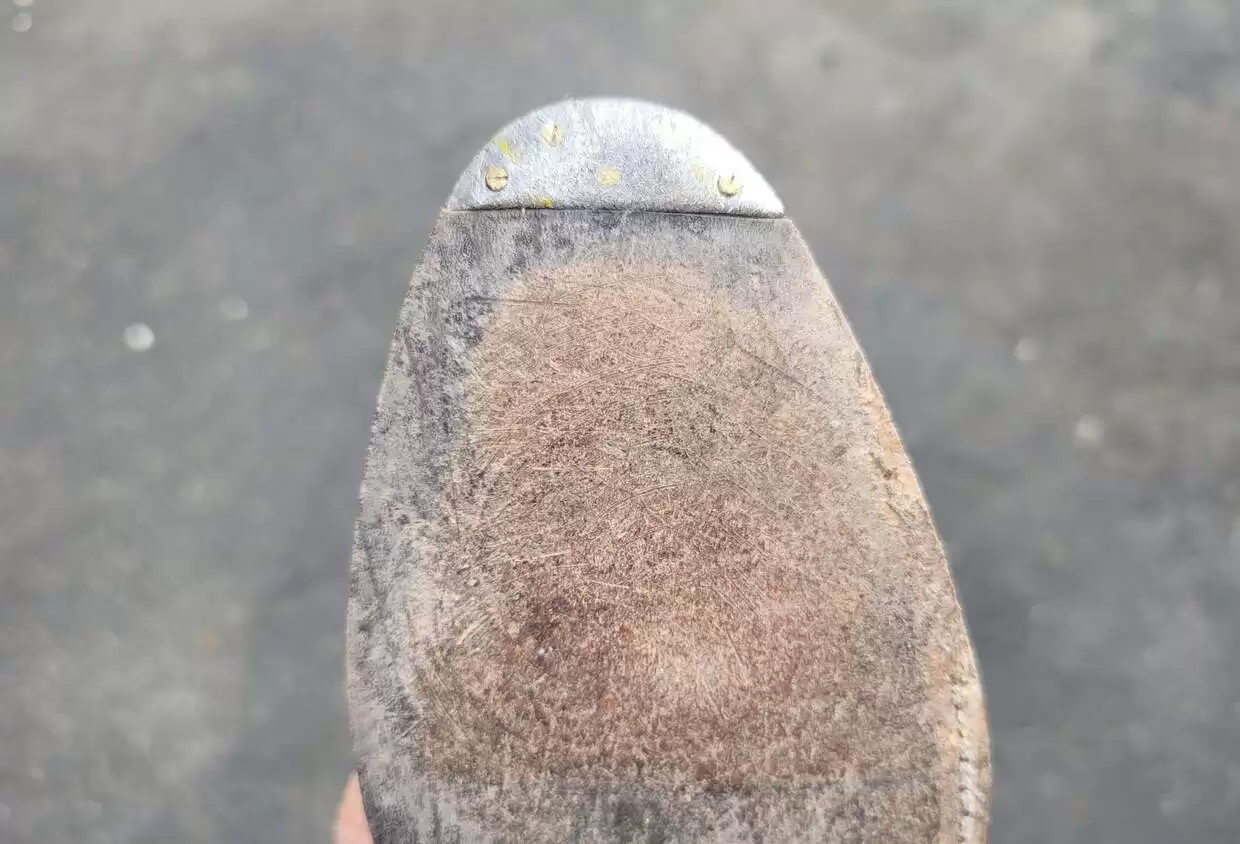
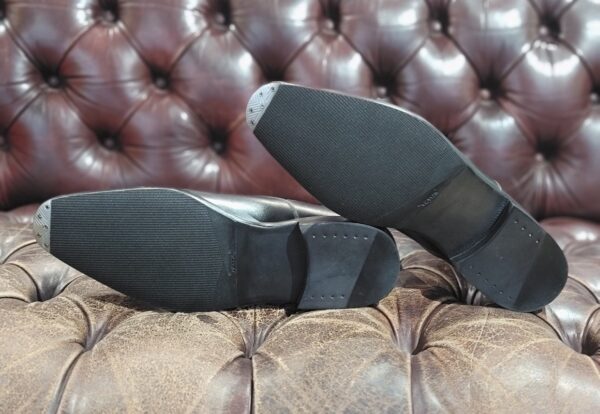
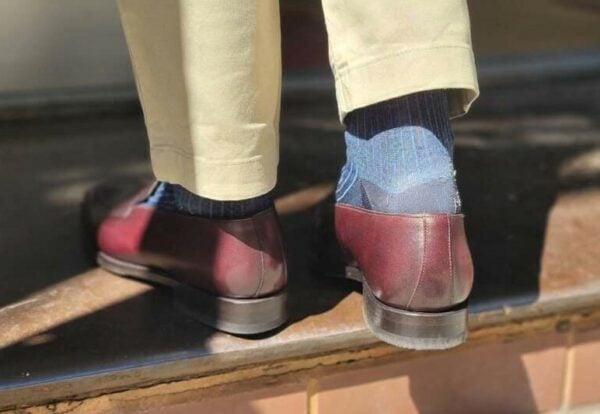
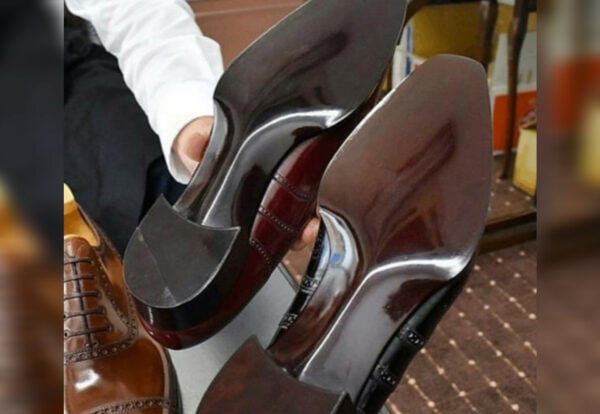
I have recently gone into depth on this issue, which you can read HERE and HERE, but the short of it is that toe taps greatly help to reduce the need for premature resoling by protecting the area of the sole that we subject to the most wear and tear. So, in adding these metal/brass features, we greatly reduce the risk of having to fork over another $100-$200 (and in many cases more) to resole our shoes before we would have needed to if we had them. That small further investment greatly helps to protect your larger investment.
3. Brush Down After Use
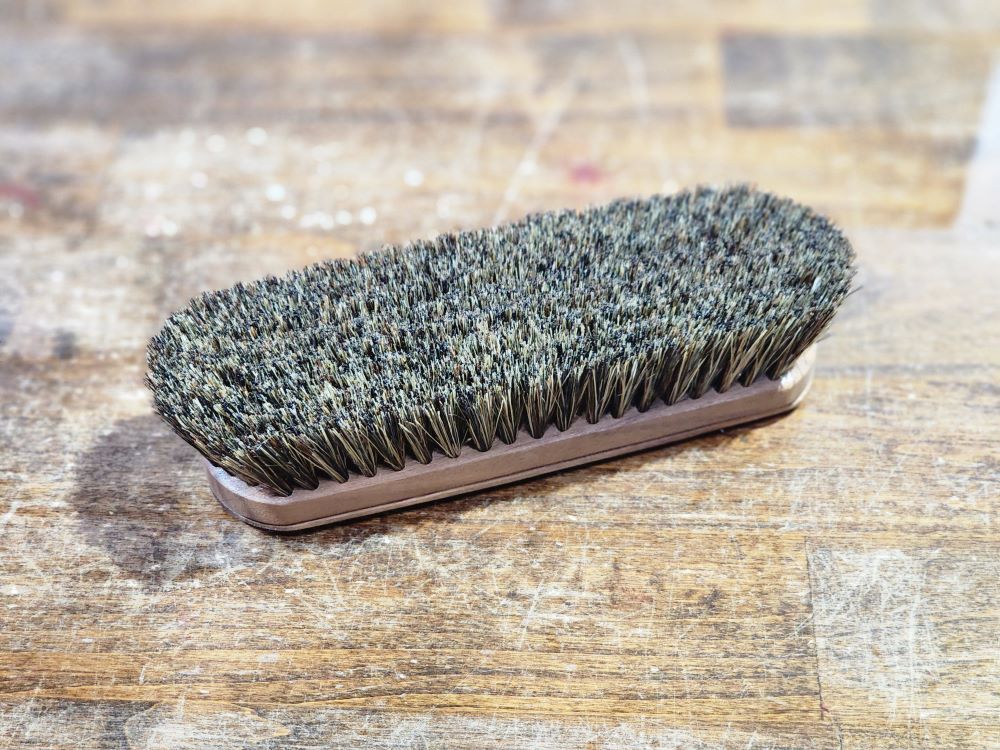
This one seems like a no-brainer, but the reality is that it is the hardest one to remember to do, but very important in keeping your upper leather healthy. You see, every time we wear our shoes we subject many elements to them, from dust to water (rain), to salinity (from rain, salt, snow, etc), and other liquids, etc, you get the picture. This daily wear and tear eats at your leather slowly but surely. Even more so if you do not try and take off what is there at the end of each day. Those elements cause the leather to dry, and now you can see how the shoe trees tie in together to help push out those dry wrinkles that can eventually cause splitting if left untreated.
A simple brush down will at least take off the dust. Dust left on will dry out your leather over time. All it takes is about 30 seconds of a smart regimen to maintain your shoes.
4. Dust Bags
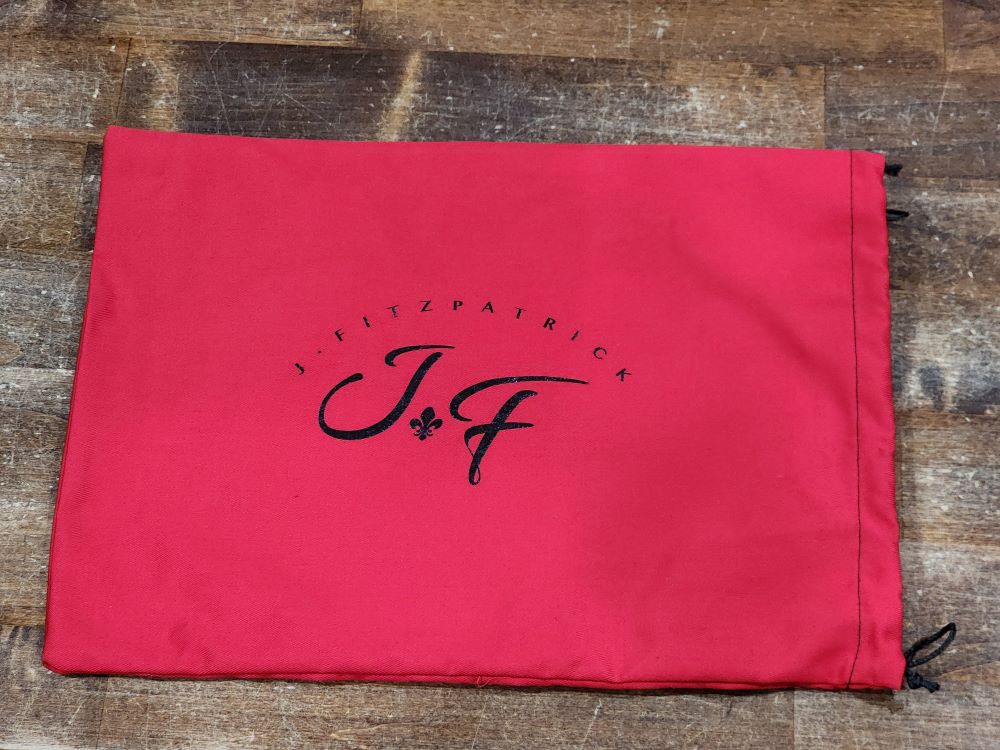
The keyword is in the name. And dust is the enemy of leather. So, having your shoes stored when not wearing them in dust bags with shoe trees after a proper brush down is the way to keep them living longer. Taking off your shoes and throwing them on top of the pile in your closet is a sure way to have them wear out fast. Again, you will start to see the importance of the 5 and how they are almost like a package deal, as they all exist in harmony to maintain your shoes.
Kirby Allison sells dust bags by the pair. Find them here.
5. Regular Conditioning
Leather is skin, and as we all have skin, we know that it requires upkeep when subjected to certain environments. But being that leather is not attached to something living, it requires more treatment to help maintain a robust, healthy look. Giving advice on how often to use conditioner to make your leather shoes last longer is not something that I can tell you as a fact. It is like asking, ‘How long is a string?’. Many deciding factors make up that answer. Common sense will need to be applied.
The more you wear your shoes, the more it is needed. The more extreme the weather, the more it is needed. But that common sense should let you know when your leather looks dry or ‘thirsty’ for some nutrients. Always remember that it needs drying time, and it only needs a little to go a long way. Never cake on any type of conditioning leather product. It can, and most likely will, have adverse reactions. For those with shoes that have a delicate upper, using a neutral cream polish can be an acceptable alternative, although it won’t be as good as a good renovating lotion/cream.
But never ever apply too much. Always use this sparingly, working it evenly, and do not automatically apply it to brand-new shoes, no matter what salesmen tell you to do so. Only overly dry leather needs it. New leather is not usually overly dry.
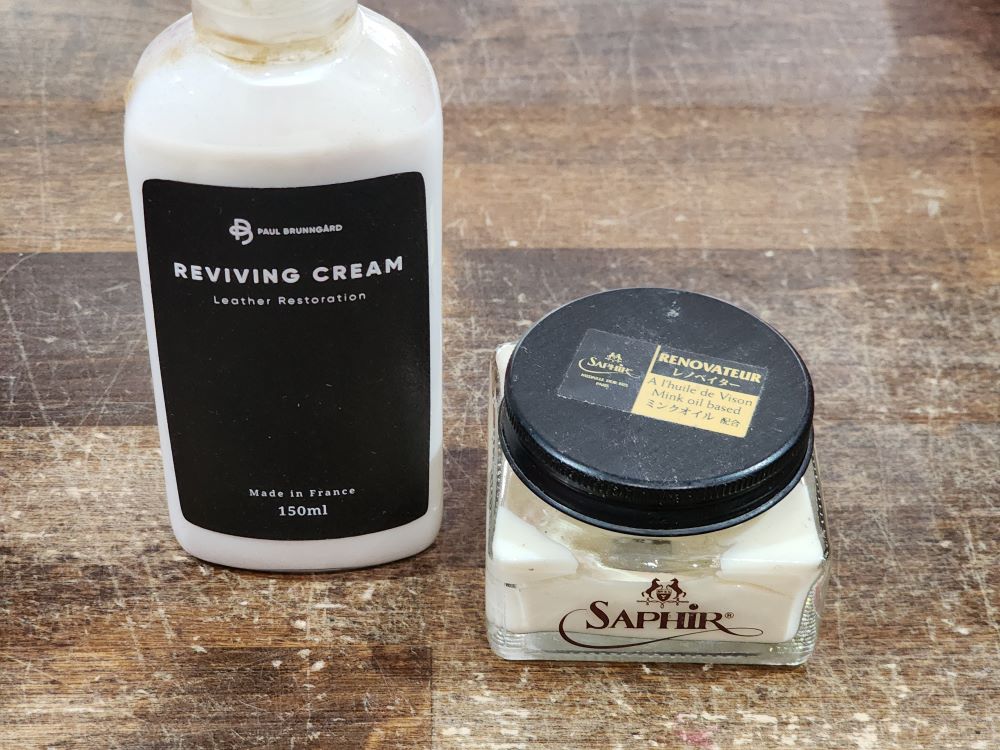
In the photo, you can find two of my favorite shoe conditioners: Saphir’s Renovateur, which is good for deep cleansing on very dry leathers, and Paul Brunngard’s Reviving Cream, which is good for delicate shoe conditioning.
Conclusion on your Shoe Care Tips
Utilizing these 5 proven tips to make leather shoes last longer will ensure you get the most out of your shoes. Naturally, the one thing that can counteract all of this is wearing the same shoes daily, which is the ultimate no-no. But assuming you have a good rotation, these five points will keep you having your shoes for many years to come and looking good, too. This, of course, also assumes you have a nice shoe polishing regimen in place. While some might shy away from having to purchase add-ons to good shoes (i.e., shoe trees and toe taps), it is precisely because you have good shoes that you should buy them.
Read more educational posts like this here.
—Justin FitzPatrick, The Shoe Snob
Shop · Marketplace · J.FitzPatrick · Patreon




Great sharing and thoughts as usual. Thanks a lot for the tips, Justin. Too bad the place I live does not have a professional cobbler to help put on the toe cap.
Is it recommend if to put on an extra rubber sole on top of the leather outsole? As alternative?
The rubber sole you’re talking about is called a topy. Basically, the cobbler will sand off a couple mm off the leather sole, and then glue the topy on. If the cobbler has done it properly, the topy should be flush with the leather sole. You definitely need to go to a good cobbler for this.
Thank you for assisting
Thanks a lot for the tips, will look carefully for a good cobbler.
Eric, I have the same problem where I live. Any of the cobblers on these pages will put the plates on fit you. For something this simple, I usually send my shoes to. Tony Wyatt. He’s quick and reasonable.
Thanks for sharing Peter!
My pleasure Eric and thank you. Where do you live? You can always mail your shoes to a good cobbler. I know it costs more but it can be worth the investment. I never put a sole guard on. I do not like them. But they do help to protect the sole. I cannot deny that.
Thanks Justin. I am from Malaysia, where quality leather shoes are hard to find, and way too expensive from physical store. Same as good and skilful cobbler. Am thinking to add on the toe cap next time I purchase shoe online, to save the hassle.
My pleasure and I see. Not sure how expensive it is to ship to Singapore from where you are but there are some good cobblers there. See Mason & Smith
Another very good article.
I would add, I always clean and polish mine before putting back in the dust bag. I would add I always polish the instep between the heel and the sole.
I also use a toothbrush to polish the stitching around the edge of the shoe.
Having an extensive collection my oldest pairs being 42 years. Still as good as new.
I am now sadly the only one on the train to London wearing real shoes, I will not give in the fight to trainers.
Keep up the good work.
Thank you Marcus, I do appreciate it. And you are doing better than most, that takes real discipline. And yes, never give in to the fight to trainers. I mean, I love mine, but they have a time and place and should never replace proper shoes.
Wow, Marcus,
You have impressed me with your taste and importance to shoes !
How come you have some pairs as old as 42 years, if I may ask, please.
Justin, I was very happy reading your care tips, but Marcus’ response thrilled me far more, how is that possible.
Hats off to both you guys.
Regards
Nadeem.
Thank you for sharing Nadeem
Justin, what are your thoughts on caring for the inner liner and insole (aside from shoe trees)? Intuition says this, being leather as well, would benefit from conditioning the same as the upper, especially with constant exposure to sweat. It doesn’t seem like a good idea to use a product containing waxes, though…Im thinking maybe a leather lotion? Would hate to take great care of the rest of the shoe but neglect the inner parts… But at the same time, I can’t find any good guidance from reputable sources and am hesitant to experiment on my own. Do you have experience or recommendation here? Thanks!
To be honest Mark, I have never even thought to do so. But I am not your average case either as I have way too many shoes so the chances of me ever coming close to going through one is close to zero, hence me not being an expert on the topic. But logic would make one think that if you have few shoes and wear them heavily, then yes, I say conditioning the soles can be useful. As per the insole, I have never really seen that get destroyed and can only think of one condition that maybe would be applicable: where one sweats profusely in a humid environment.
Hear, hear… Golden words, gentlemen!
🙂