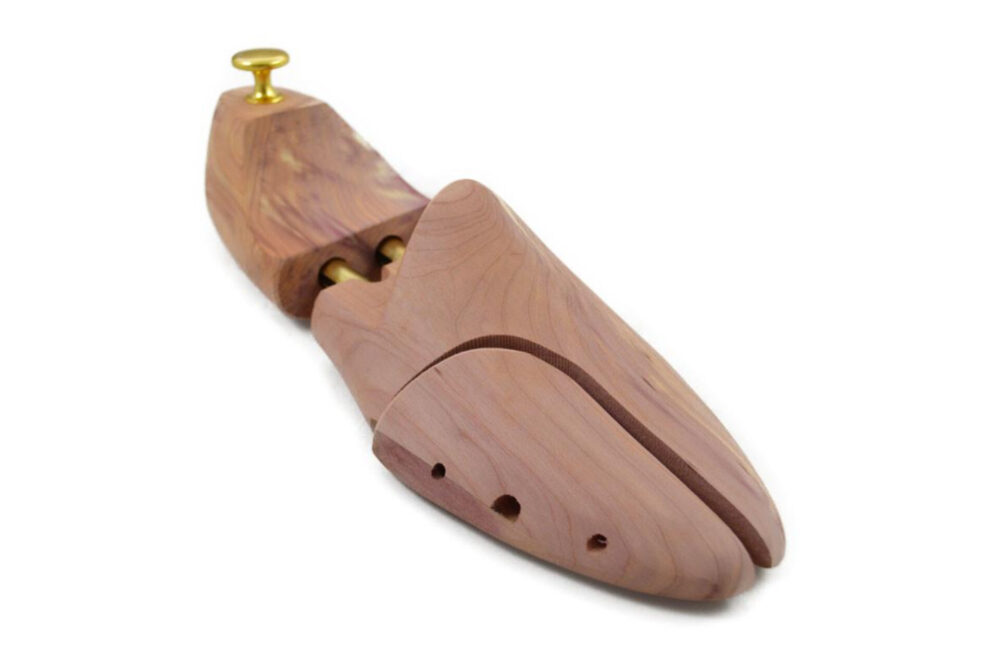
Are Cedar Shoe Trees the Best? Let’s Break Down the Myth.
If you’ve ever shopped for shoe trees in the U.S., chances are someone has told you that cedar shoe trees are the best. This claim gets repeated so often, it’s practically taken as fact. But let’s pause and really examine it.
Are cedar shoe trees truly the best option out there?
In short: no—they’re not. And here’s why.
Where the Cedar Myth Comes From
Cedar shoe trees are a U.S. phenomenon. The wood is cheap and widely available in North America, which makes it appealing for mass production. Manufacturers and retailers jumped on the opportunity to turn a low-cost material into a high-margin product. All they needed was a story to sell it.
So, they created one.
They emphasized cedar’s aromatic qualities and moisture-wicking abilities, turning these features into a full-blown sales narrative. The pitch? “It absorbs sweat. It keeps your shoes fresh. It’s the best wood for shoe trees.”
The truth? Cedar does smell nice, and it does absorb some moisture—but not to any degree that truly sets it apart from other woods. And that fragrance? It wears off. Fast.
Meanwhile, the wood itself is brittle and chips easily, which is something you may have noticed if you own a pair. It’s not uncommon to find splintering or cracking over time—especially with cheaper models made from poorly processed cedar.
Cedar’s Popularity in the U.S. vs. the Rest of the World
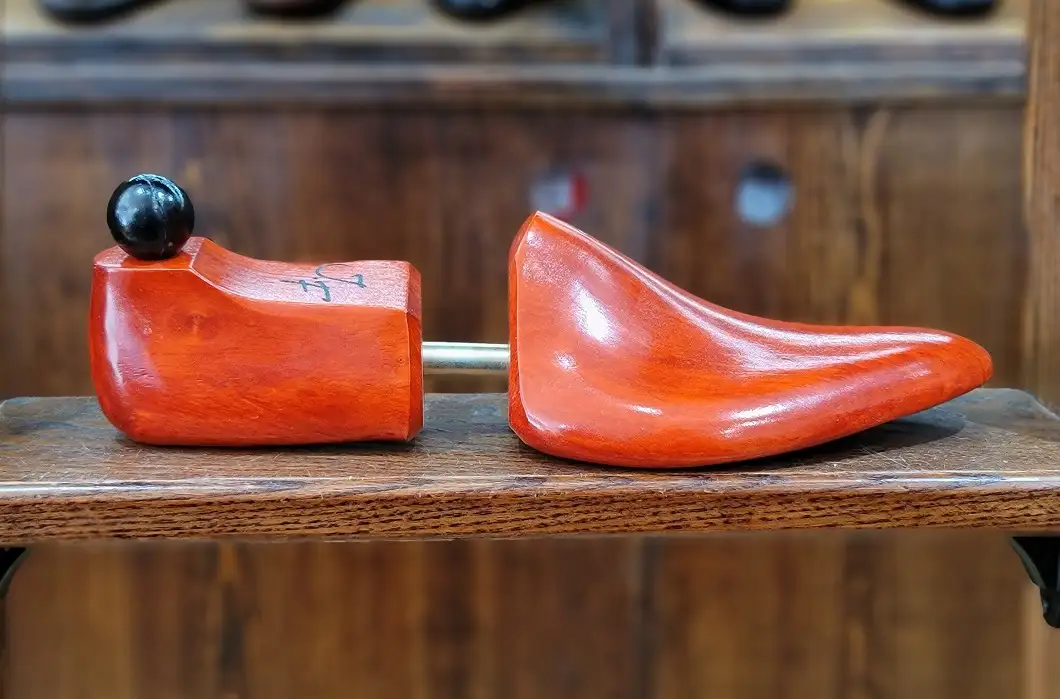
Step outside the U.S., and the story changes dramatically. In Europe, cedar is rarely used for shoe trees. High-end shoemakers and traditional craftsmen prefer beechwood, limewood, alder, or maple—woods that are denser, more durable, and hold up better over time.
Why the difference? A big part of it comes down to sales culture.
In the U.S., commission-driven retail environments create incentives for salespeople to push accessories—often without regard for actual product quality. Shoe trees become upsell items. Cedar is cheap to produce, easy to mark up, and easy to sell with a rehearsed script.
In Europe, however, commission-based selling is far less common. The result? Less pressure to upsell, and a greater emphasis on product integrity. Shoemakers there choose wood based on performance, not marketing potential.
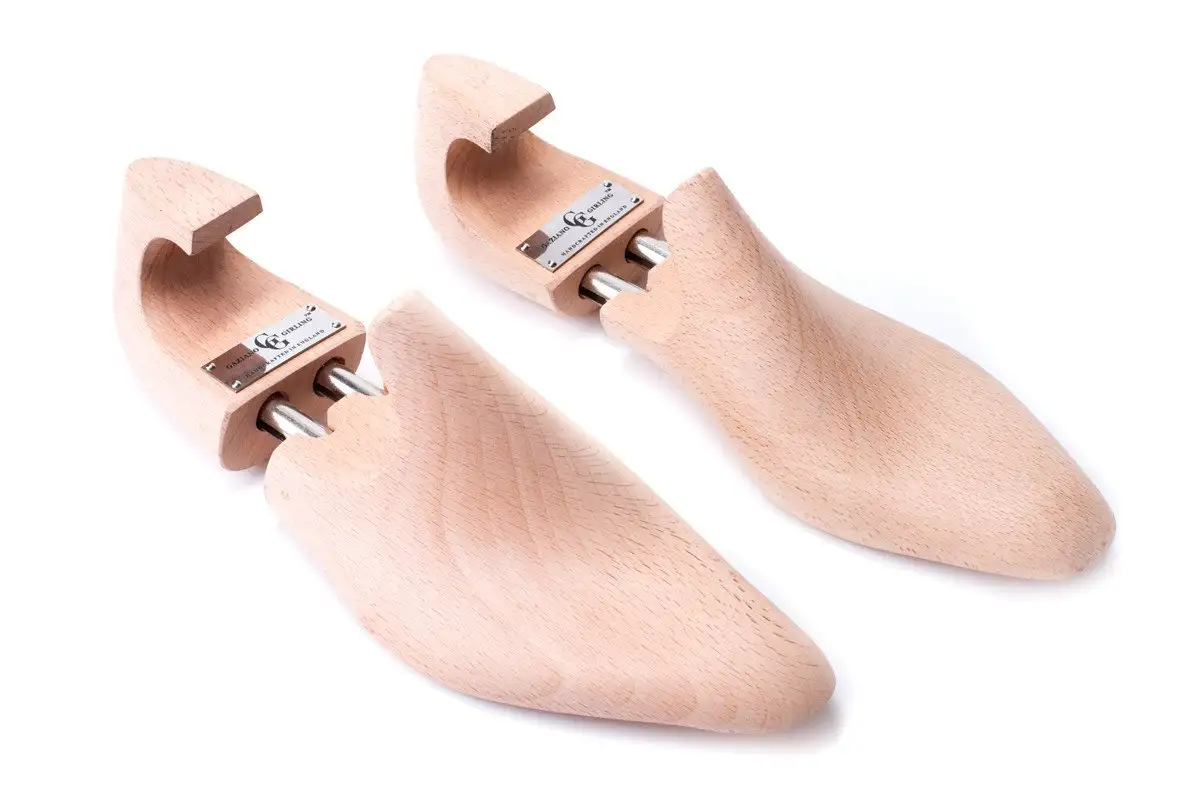
So, Is There a “Best” Wood for Shoe Trees?
Not exactly.
There isn’t one perfect wood that’s universally superior—but there are definitely better and worse choices.
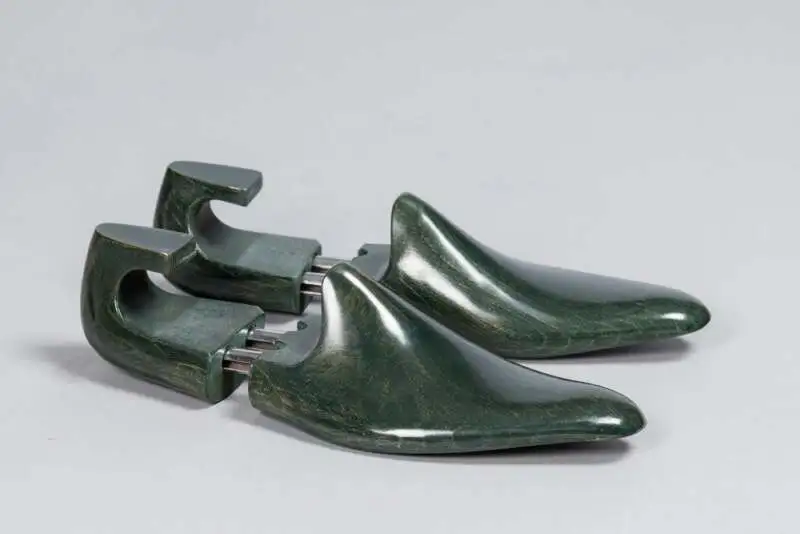
What matters most is that the shoe tree holds its shape, provides firm support, and doesn’t damage your shoes over time. Woods like beech, lime, and maple are often preferred by professionals because they’re:
- Durable
- Smooth-grained (less likely to splinter)
- Heavy enough to hold shape but not overly so
- Readily available outside of the U.S. cedar market
Cedar, on the other hand, chips easily, especially when it’s not properly finished. And while the scent is pleasant, it fades and doesn’t solve serious odor issues. If you’re buying cedar shoe trees thinking they’ll cure sweaty feet, you’re being sold a fantasy.
Bottom Line: Stop Believing the Hype
If you’re buying cedar shoe trees because they’re affordable, that’s totally fine—just don’t buy into the idea that they’re the best. That claim is the product of smart marketing and a long-standing myth, not material superiority.
So next time someone tells you that cedar shoe trees are the best, ask yourself:
Best for your shoes—or best for their sales quota?
—Justin FitzPatrick, The Shoe Snob
Shop · Marketplace · J.FitzPatrick · Patreon




interesting article. Still any natural wood releases a healthy sent that no finished, colored, oiled shoe trees can do.
true, no arguements there
Lol, I can appreciate your hustle with the alderwood shoe trees, but as the owner of five pairs of Woodlore trees (and someone who has built furniture out of cedar), kiln dried cedar is reeeally hard to chip or crack. It has a pleasant scent (that moths hate!), is inexpensive, and environmentally sustainable.
there is no hustle. I will of course show my product because it is my blog. I don’t know if Alderwood is the end all be all either. It just happens to be what my suppliers use. But as far as Cedar goes, I am not saying that it is a bad wood. What I am saying is that people have to look at this from a business perspective first and foremost. There is an abundance of Cedar trees. And the entire tree’s consistency of good wood won’t be the same. I have owned hundreds of cedar shoe trees and many of them have chipped off. Not all of course, but many. Massive producers of anything are trying to get a high profit margin. So probably when the wood suppliers are selling to the manufacturers of shoe trees, furniture makers etc, the good stuff goes to the furniture makers who charge a premium and the less desirable parts of the cedar goes to the shoe tree makers that are trying to pump out millions and sell on a low cost high volume basis. Make sense now what I was saying? It’s all business and business is done intelligently and not out of goodness of heart or else shoe trees would be made out of something else that doesn’t take our trees away. It’s done to make money, plain and simple. But thanks for sharing nonetheless
Interesting article indeed. yet best shoe trees are… Justin’s. Of course.
I’m guessing the crowd isn’t sold on the whole “my overpriced shoe trees out of some obscure stuff I got on the cheap from China is better” eh?
“It’s all business and business is done intelligently and not out of goodness of heart”
We know Justin. We know.
“If something is cheap, there is a reason”
Yup. Supply outstrips demand. The rest is just talk. And as you yourself say “there’s a lot of Cedar”
I wish you success in your quest to exorcise your sins as a salesman. Unfortunately, you are essentially doing the same thing that you say led to the “hype” about cedar being the best wood for a shoe tree. You offer us a “business perspective” which generally makes some sense. Beyond that, however, you’re simply sharing an opinion. But one opinion to debunk another opinion is hardly a strong argument. Consequently, your message is unconvincing. You admit your inability to substantiate how other woods stack up against each other or even against cedar. I have shoe trees in every pair of leather shoes I own. The majority are made of quality raw cedar. I have 8 pairs of lasted shoe trees made of various other woods which were included when I purchased shoes made in England and Italy. The only advantage to these shoe trees is their perfect fit inside my shoes. Other than that, I actually prefer cedar. Please note, in 30 years of using cedar shoe trees, not once has any of them chipped.
I keep cedar shoe trees in all my shoes and boots and never use plastic or other versions, as this has been the standard in the USA for many years. I generally use woodlore, but I have other brands, too. Most of my dress shoes and boots are made by Allen Edmonds, but I am intrigued by J. Fitzpatrick, and my next pair will probably be of your brand. I have heard positive reviews of your footwear. I am unsure of Alderwood, but maybe you are correct – your shoe trees are pricey, but possibly they may be the best. Thank you for writing articles to educate others on footwear.
Thank you for sharing Stephen, and I appreciate your desire to support and your kind words.
That made me smirk: „… retail environments create incentives for salespeople to push accessories—often without regard for actual product quality“.
There are some crazy habits and narratives out there. E.g. in Germany when you buy shoes you will be offered a waterproofing spray for smooth calf leather and they tell you, this is most indispensable care (as it is for suede). This is simply stupid and the sprays offered in shoe shops are five times more expensive than elsewhere. In the same time, here you have the crème de la crème of leather products available: Saphir, Famaco, Collonil and Burgol — but the shops offer you mostly cream in black or neutral, and no wax. For proper care products and brushes you need to go to the cobbler.
you get it exactly 😉 same in the US with the waterproofing spray, especially in sneaker stores.