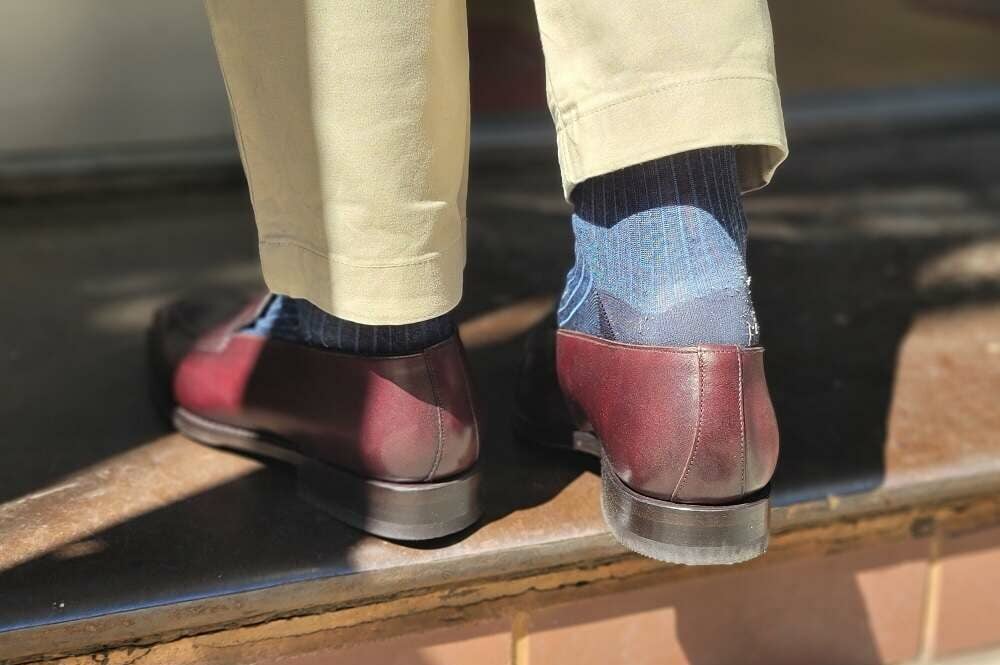
Generally speaking, there are two types of heel slip: 1. The shoes are simply too big and your heel falls right out of them, and, 2. The shoes fit but the heel counter is stiff, the new leather is slippery, both causing a bit of movement on your heels but you are not really falling out of the shoes. The question is how to tell between the two, as sometimes the line can be a fine one? On top of that, sometimes you simply have a super narrow heel and most shoes give you some sort of movement in the heel region no matter what you do.
One would think this is quite trivial but you would not imagine how many people I have fit that put on a pair of oxfords, claiming heel slip and after telling them to tighten the laces, the shoes fit just fine. So, knowing that, it would appear sometimes we need an extra opinion on heel slip, to understand which is acceptable and which is not. Ideally, you would have none, but in a world of different feet, different lasts, and different ideas of a good fit, the heel slip arena can get tricky.
It goes without saying that if in a loafer, oxford, boot, or monkstrap, you tighten up the shoe/boot all the way and your heel falls right out, well that shoe is simply too big. You should never be able to walk out of your shoes. You should never be able to pull them off without undoing them. Monkstraps are not loafers. They are functional. If you treat them like loafers, they are too big. If you don’t care, then great!
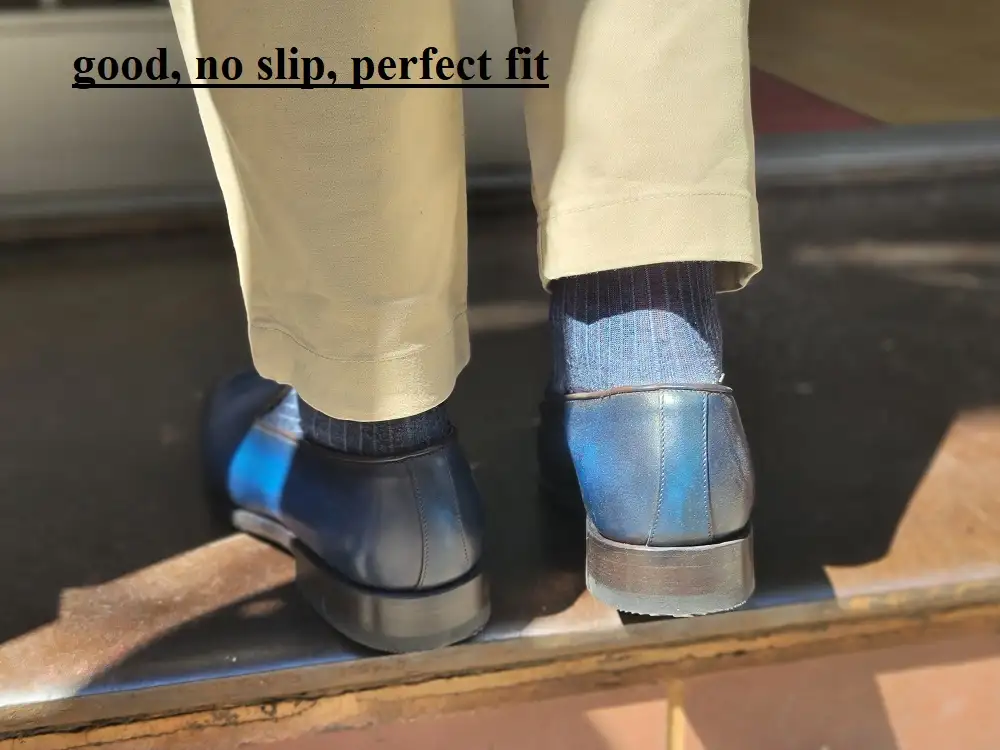
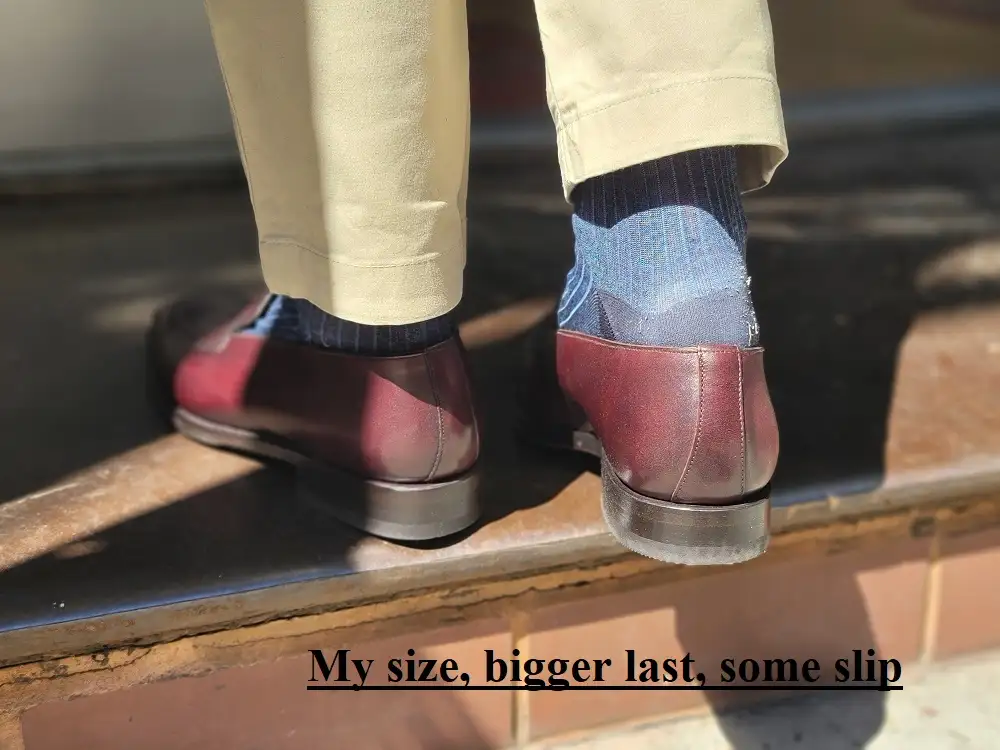
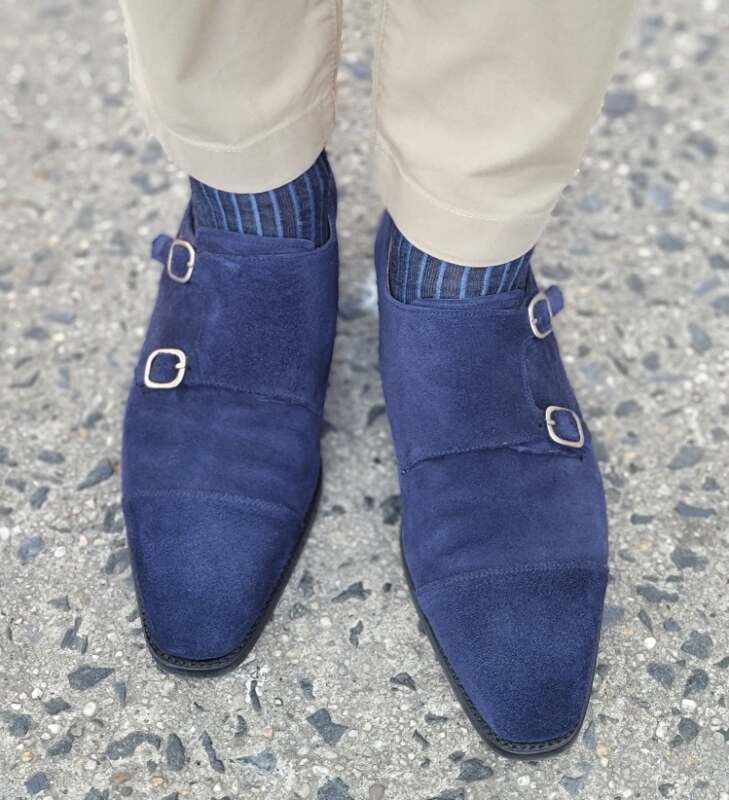
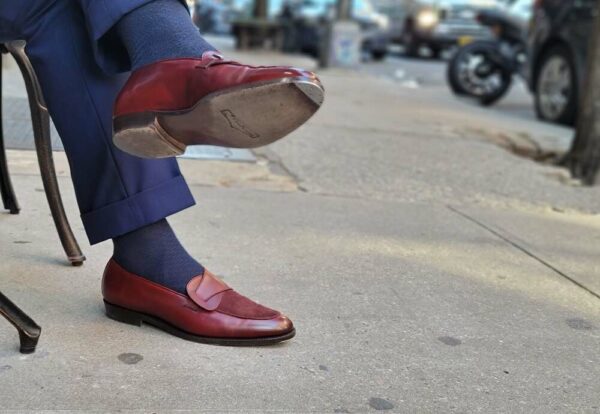
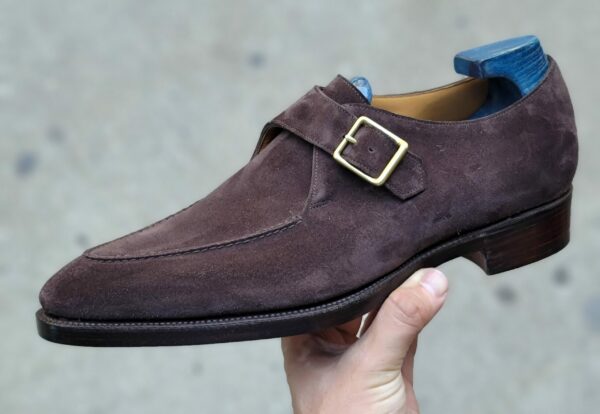
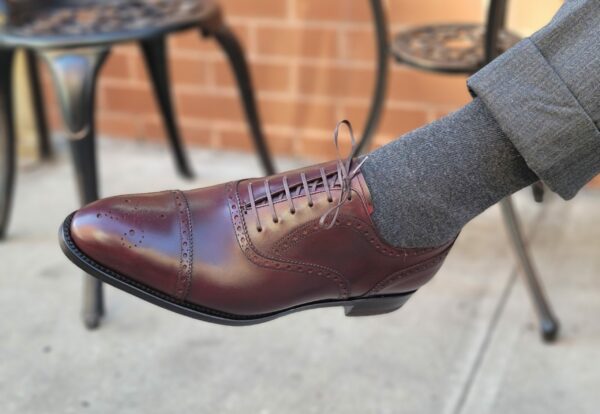
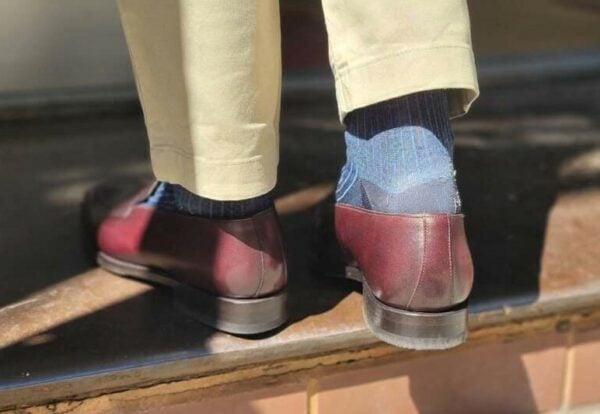
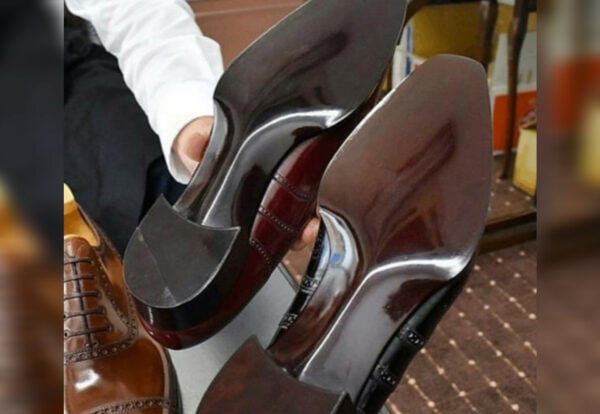
Most people know right away when a shoe is too big. The tricky spot is that slight heel movement on one size while sizing down is just too small. You question if you are between sizes. Sometimes you might be. Sometimes you just need to break in the shoe. You see, several outcomes occur when you wear shoes and start to break them in. After some wears, the leather starts to soften up and mold to the shape of your foot, in all areas that the feet put pressure on the leather. This namely happens in the forefoot, the insole, and the heel area. Above you can see an example of a great fit with no issue and then a last slightly larger that causes some heel slip. As these are my own shoes, I know that this heel slip will eventually soften as I break those new loafers in. Others might be wary of that though.
So let’s look at the two areas that affect heel slip the most: the insole and the heel counter.
Just because it needs to be said, the insole is not to be confused with the sock liner. They are two very different things. The insole is the hard piece of leather that is supporting your foot. The sock liner is that soft piece of leather usually between the insole and your foot. Moving onwards. As you wear the shoes, the weight of your body starts to imprint your feet onto the insoles of your shoes. You essentially sink into your shoes and when doing this you drop down a little, allowing you to get a better fit overall. When you are higher up (even 1mm) and thus closer to the top collar of the shoe, the heel can slip more so than when you sink down and can get a tighter lock. So as the heel sinks, the fit can be more secure through tightening of the laces. If you were already at max tightening, then chances are your feet are narrow, and trying to fit medium shoes will always cause perfect fit issues. We will touch more on that below.
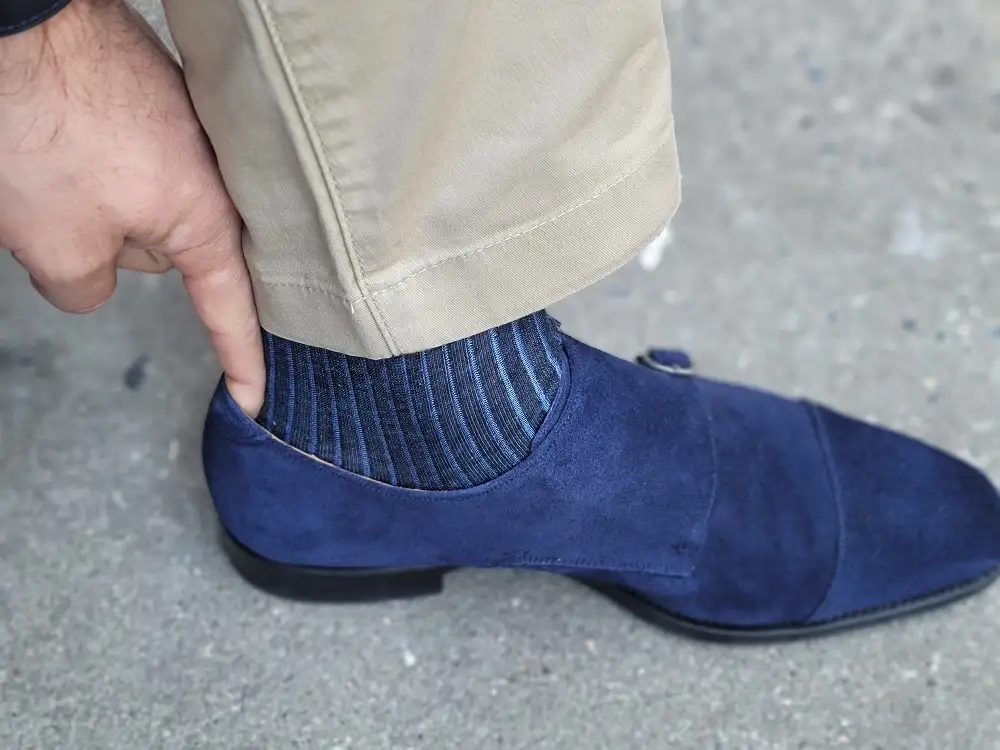
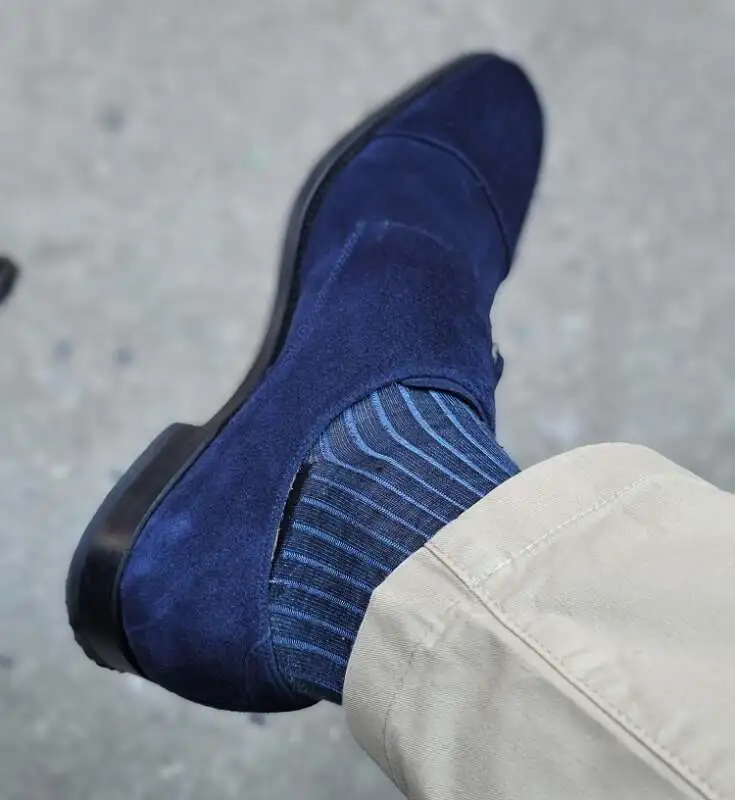
The heel counter is the area where the heel resides. Between the leather and the lining is another piece of material (cellastic, leatherboard, or actual leather – read more on this HERE) that is what eventually molds to the shape of your heel. But this is always stiff in the beginning and erect, so naturally, it is not gripping when brand new. As you wear the shoes this piece of material starts to take shape to your heel and when it does, combined with your sinking into the footbed, you start to get a better lock on your heel area. So, how do you know when you are at this point when trying on a brand-new shoe that is giving you some heel play.
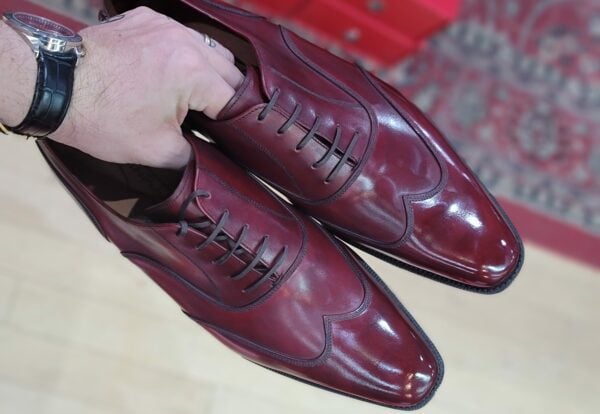
Generally speaking, unless you like to wear your shoes with an airtight grip, you will always be able to stick the tip of your finger (not the whole finger) into the back of the shoe (using that as a ‘shoe is too big idea’ is wrong). You can see this in the photos shown. I can put the tip of my finger in. I could not dream of wearing a half-size down though. If you put on the shoe, tie it as tight as it should be without suffocating, and feel slight movement in the heels then you are at this stage where the fit is right but you simply need to break them in. And it is common. And it is normal, in fact. Don’t feel because you do not have an airtight grip, that the size is not right or the shoes too big. Trying to get a bespoke fit in RTW shoes is challenging. Blessed are those that fit perfectly into RTW shoes. More often than not, that small amount of heel play will work itself out. Accept it, embrace it, and know that it is okay. And if you are lucky enough to never have heel play, be grateful!
Lastly, if you get said shoes and still feel sloppiness after 7-10 wears, and this is common for you with most shoes, chances are you have a narrow heel. If that is the case, you might be hard-pressed to find a perfect heel fit without custom options. However, Jesper of Shoegazing offered a great tip in his recent post about simple corrections to ‘not perfect’ RTW fit. Read it Here.
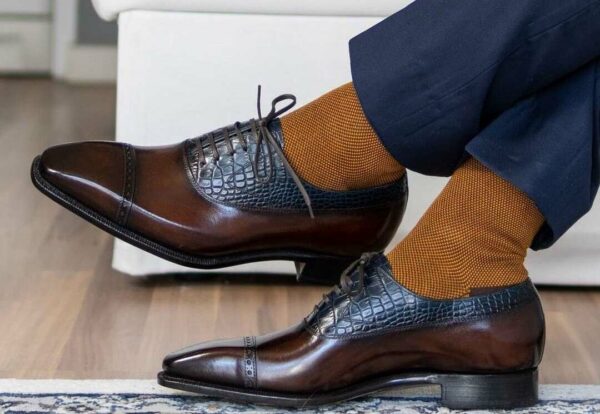
Shoes by J.FitzPatrick Footwear
Socks by Mes Chuassettes Rouges
—Justin FitzPatrick, The Shoe Snob
Shop · Marketplace · J.FitzPatrick · Patreon


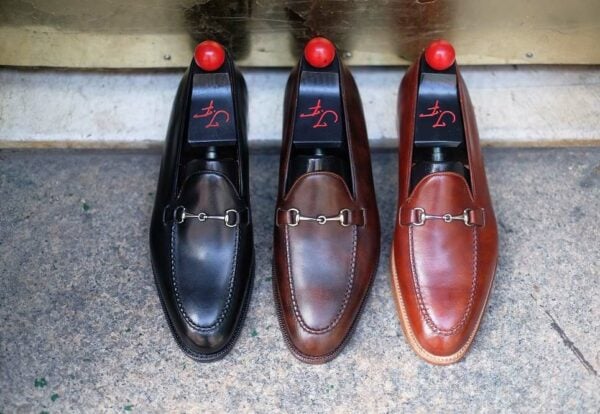


I encountered this heel slip problem with my J.Fitzpatrick Pike in US11. Which was weird, because I did experience heel slippage when I’m wearing my JFline Chelans also in size US11.
They are made on slightly different lasts 😉 the Pike is a touch wider
I have new shoes that has a 1 inch space from end of my longest toe to the end of the shoe. When laced as tight as possible, nearly running out of room on the upper. the shoe is secure but feels it could be pulled off with some force. When walking the shoe feels inside kind of like a rain boot. My feet feel free though and I have stability and good control. Is this good for me? Should I go down a size?
Your feedback is confusing as first you saying you are ‘nearly running out of room’ on the upper when tight. That lead me to believe you needed more leather which means you are filling up the shoe quite a bit. Toe space is inconsequential as that is most like an elongated last. But comparing to the fit of a rain boot is quite odd as those nearly always feel super loose. If you have stability and good control, then that sounds like the ticket.
What I meant is that when I lace up the shoe tightly, with the eyelets coming very close together, then the shoe feels secure on my foot in that it won’t slip out. However, my feet feel like they are kind of in a rain boot, a bit loose all inside. I can walk fine but the that little sliding around is noticeable.
When the shoe is not tied I can easily stick two fingers in the heel. When laced up tight I can only get my index finger up to the first knuckle. If I lace up like my other shoes then it’s much more loose inside and I get heel slipping. One thing I’m concerned with is that if I’m tying the shoe very tight then might that irritate the front of my ankle if I wear the hoes for hours?
It sounds like you need a half size down, at least. And also sounds like you need to get used to dress shoes and how they feel and fit. They are not like sneakers. Discomfort might be inevitable to start. After break in, the leather softens. But should, ultimately, should start snug and break in to fit just right. Too much looseness in the beginning only gets worse later.
You nailed my issue at the end: I have narrow heels, and I was never really able to find loafers (or any slip-ons) that would work for me. No amount of trying to break them in did anything, and I would just blister endlessly.
I eventually tried Skinnys no-show socks, which a podiatrist friend recommended. They’re targeted to this type of problem (extra thick in the heel counter with a good gel grip and low-cut enough to wear with loafers). Sometimes I even wear them under colorful dress socks to get extra heel thickness.
I can’t say my feet work in shoes now 100% of the time, but they’ve helped a LOT.
Thank you for sharing Joe and glad that you enjoyed the post
Is there a way to attach a photograph on here?
My shoes fit perfectly at the toes.. but even after tightening the laces as much as I can ( without cutting off blood supply ) there is still heel slip..
more importantly though I get a fold in the leather on both sides of the shoe..
The area between where the laces are and the heel..
And its leaving some ugly creases..
Any suggestions for this?
Perhaps a heel guard? Or a extra insole?
Thanks
Hi Sir – thank you very much for the post. Would you be able to comment and respond to this post I made about if I should keep or return a pair of John Lobb Williams monk straps?
https://www.styleforum.net/threads/new-john-lobb-williams-monk-straps-slight-heel-slippage-keep-or-return.714759/
Hello Justin. This come a little late but I have a pair of loafers that give me some heel slip on the left shoe. I feel my left foot sliding forward a bit when I walk which creates some space between my heel and the heel counter which then gives me blisters. They are still new so I’m afraid that if my feet sink in more they will slide forward even more worsening the issue. Is this something an insole would help? Maybe a half sole to raise the forefoot so the foot does not slide forward anymore but keeping the heel low so to get a better lock ? Thanks for your help
Hey Back, I would insert a tongue pad to help stabilize your feet. Not a half sole thouth. Those cause sliding. Maybe a full insole could help too. But a tongue pad should do the trick
The shoes material can also make a difference, I find certain materials will naturally loosen more with time and I account for that when I am buying a pair.
Also certain shoes I will naturally wear in winter and therefore with thicker socks and some with fine socks. This should also be accounted for when choosing shoes.
Also lacing can also be an issue, using a different lace technique can make quite a bit of difference for loosening over the day. Look into “Loop Lock Lacing” from the running community which can help with heel slip.
Thanks for sharing Lex and yes you are right. Material does matter, too. There are many things to take into account. Most issues are not so simply put to a solution but have a lot of nuances to them
i have bought some miss k g court shoes and they keep slipping when i walk i have had them so long ican not return them . i need to wear them to my aunties funeral . what can i do to stop this
try adding a tongue pad or heel grips (if you wear them sockless)
I find with Crockett and Jones, that my size 9.5 (as measured by their measuring device) is always a tight feel on my lower half of my foot. When i go 1/2 a size up there is a lot of heel slippage. I have purchased a pair of Boston loafers, and after much trying on a 10 and a 9.5 decided to go up to a 10. There is very little movement at the heel and they do not feel uncomfortably tight. The 9.5 felt like my foot was squeezed in. Do you think it can be ok to go up 1/2 a size. Too late to take back. Have i made an expensive mistake?
Personally Joseph, I believe that loafers need to start quite snug to allow for the break in period and the space you gain from that. I would never half size up in a loafer unless that loafers was psychologically sized and that 10 was really made on a 9.5 last. But if you feel that you don’t have heel movement then it sounds right. As long as you are falling out of the loafers during normal walk I think that you will be okay
Heel problem – 9.5 uk shoe – first joint of my “skinny” little finger fits in heel, can shift my foot forward “some” – foot doesn’t walkout of shoe BUT heel of foot lifts some and produces “squeak” – comments or suggestion would be appreciated
I don’t follow your comment so well to be honest. A touch of heel slip can be normal until the heel counter has broken in and your foot has sunk into the footbed. If you do not walk out of the shoe that is good. But do you feel that you are going to walk out of it? Most people are not cut out for a loafer having zero heel movement from the beginning as it ensures a rough break in period. It will be perfect afterward but most cannot handle that. Therefore a touch of heel slip is usually the norm until the heel counter softens and grabs your heel better
Justin. Thank you for your reply. The shoe in question is a TLB full brogue. I have a narrow foot and even narrower heel. When walking it feels as if I could walk out of the shoe but the shoe is snug over the instep which keeps it on. The sole is JR so stiffer than I have had previously (these were a big splurge after two years of saving). I was just wondering if there was an “at home” trick to help with this
Anyway thank you for taking time to answer and I truly enjoy your online stories, reviews and notices of sales.
Regards. George
Hey George, that is a tricky one to be honest. You must have a really high instep as it is strange to be narrow and in a shoe that is generous all around except the instep. Usually the only thing that helps secure the foot to not move around is a tongue pad but this might put more pressure on your instep. Did you go MTO or just buy RTW? The last sounds like it simply doesn’t work for you.
Great Article. What about other solutions to help though? I have a nice pair of new italian calfskin loafers that the left foot fits perfectly in and the right foot slips out. I added some heel pads and wore thicker socks and it helps but still seems to slip. I’m hopeful that they’ll break in. I haven’t been in a pair of penny loafers in a while, been a gym rat/stay at home dad and making some changes. Got a super nice pair of monkstraps from beckett simonon that I love and fit great, even though it took a few months to get them.
Thank you Shaun! Heel grips do not work unless you are sockless as they do not stick to socks. The best is a tongue pad as that helps keep your heel locked. Good luck!