A Guide to Wearing Belts
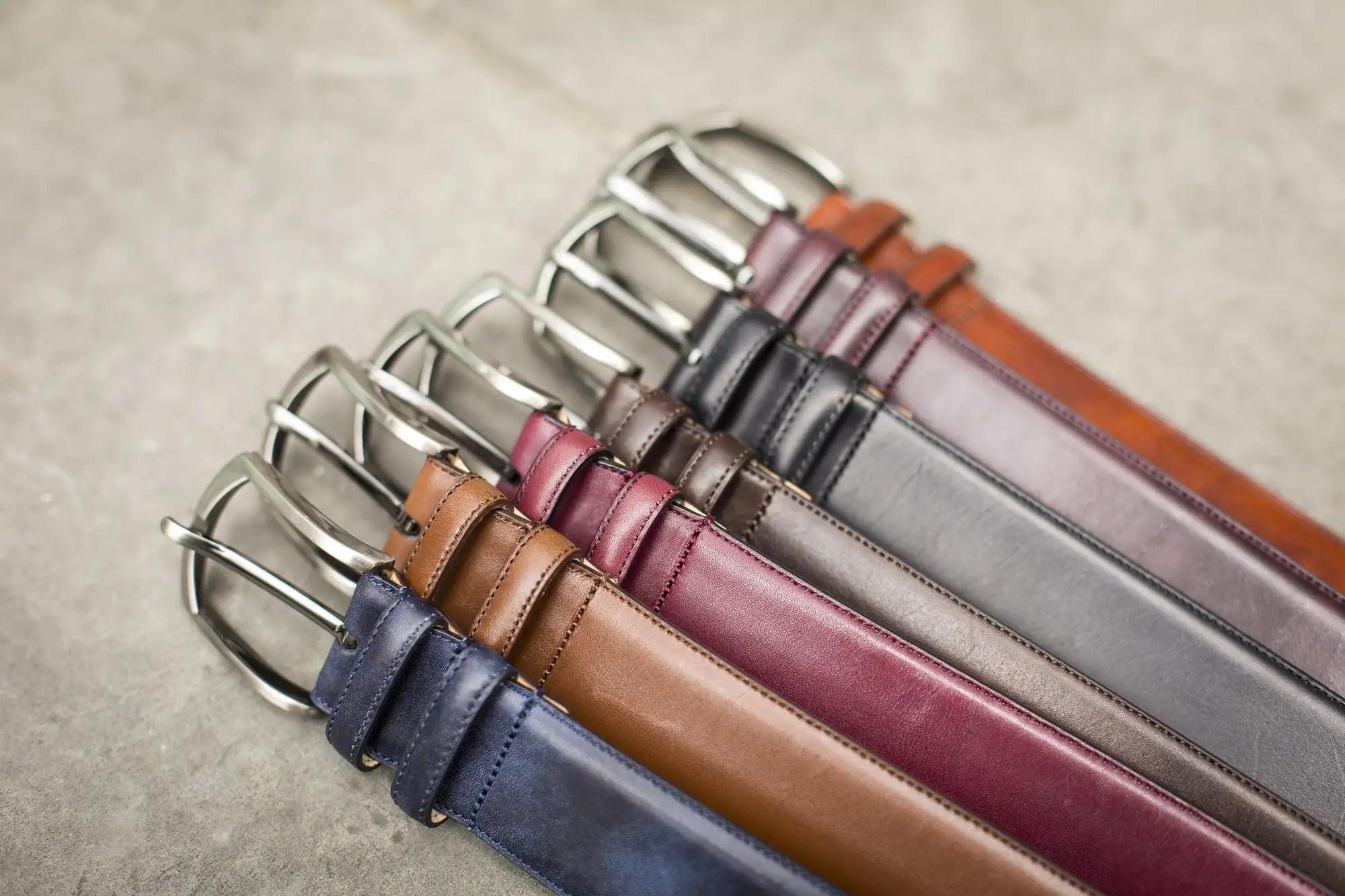
In this guide to wearing belts, we explain our ideas about how belts should be worn with your various wardrobe choices. Ready-made trousers rarely fit perfectly and we often need a belt to help keep the trousers up. If you cannot afford custom-made everything, the chances are high that you own several belts and use them regularly.
Unless you are sticking to black calf and/or dark brown shoes, it is not always clear what belt to wear with your outfit, whether dressy or casual. Therefore, I thought that we could take a look at a few rules on what belts to wear with what suits, with both the dos and don’ts.
For the sake of argument, let us break down the wearing of belts into three categories:
Table of contents

Dress Attire:
For this rule let’s assume that we are referring to wearing suits to work or for business-related functions etc
Matching
If you are wearing black shoes, you should have a black belt. The same goes for dark brown. But what about other colors, like Burgundy or Tan? In my personal opinion, I do not think that the eyes should be drawn to so many separating parts of the outfit/body. It’s too distracting/busy and not often elegant. Usually, the places to go wild are the socks (in dress attire it is sometimes hard to go bold on shoes), the tie, or maybe your pocket square. These are the more subtle accessories (i.e. not always super noticeable).
For belts, if you decide to go bold on your shoes, I believe that in fact, you should not match your belt as it will become too much for the eyes to handle. A blue suit with tan shoes and a tan belt is just overboard. It screams out, ‘Look at me.’ But when wanting to be elegant and dressy, we never want our outfit to scream but rather subtly attract through tasteful choice parings.

Complementing
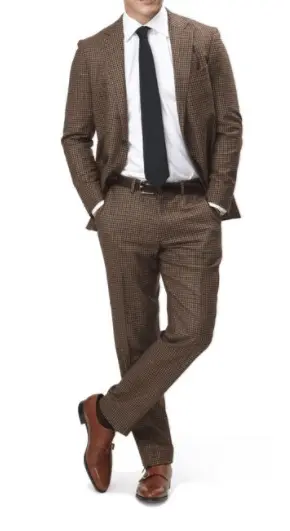
For colors of shoes that are more daring, I tend to then complement my belt to my trousers or the edging of my shoes. For example, if I am wearing a navy suit with burgundy shoes, I will either wear a navy leather/suede belt or a dark brown belt that should complement the edging of my shoe’s soles. I then do not draw attention to my waist but rather allow people to focus on my shoes (which is preferable).
On the contrary, if you are wearing a suit that you wouldn’t easily find a dress belt color (i.e. grey), then I would match the edging of the sole every time i.e. grey suit, tan shoes, brown belt (leather or suede) to complement the tan but not draw attention.
Contrasting
When wearing a suit, I wouldn’t personally ever contrast against my shoes, but if you want to go bold in your belt, make sure the rest of your outfit is subdued. For example, navy suit with dark brown shoes but you want to wear a gold museum belt for a little flair. This way your shoes are subtle and what people are being drawn to is your belt only and not several parts of your outfit. I do not recommend this rule so much for dress wear but it can be done if done right.
Smart Casual:
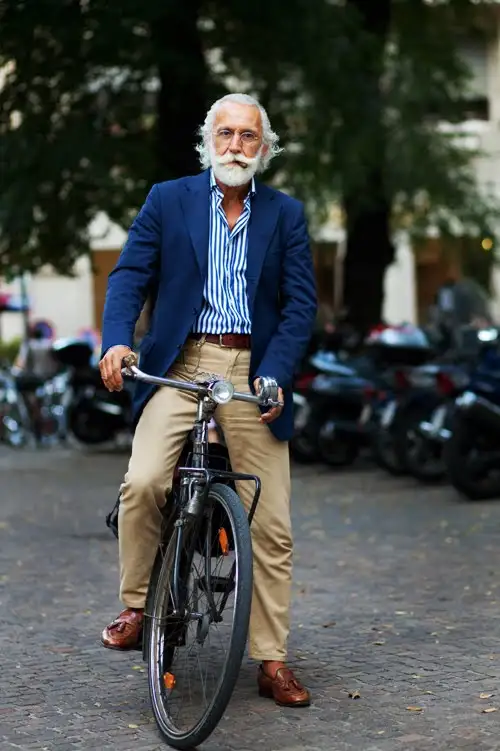
For this rule, let us assume that we are wearing trousers like chinos/flannels etc, with a button-up oxford shirt (or smart polo) and with or without a contrasting jacket. For example, tan chinos with a navy cotton jacket.
Matching
Because the trousers and jacket are not uniform in color, matching bolder colors becomes more acceptable, not only for the fact that you are most likely not wearing this outfit at your law firm but also because it already is an outfit made with many colors. Therefore matching a tan belt to your shoes, while wearing beige-colored chinos and brown/beige houndstooth jacket is far less noticeable than doing the same thing in a navy suit.
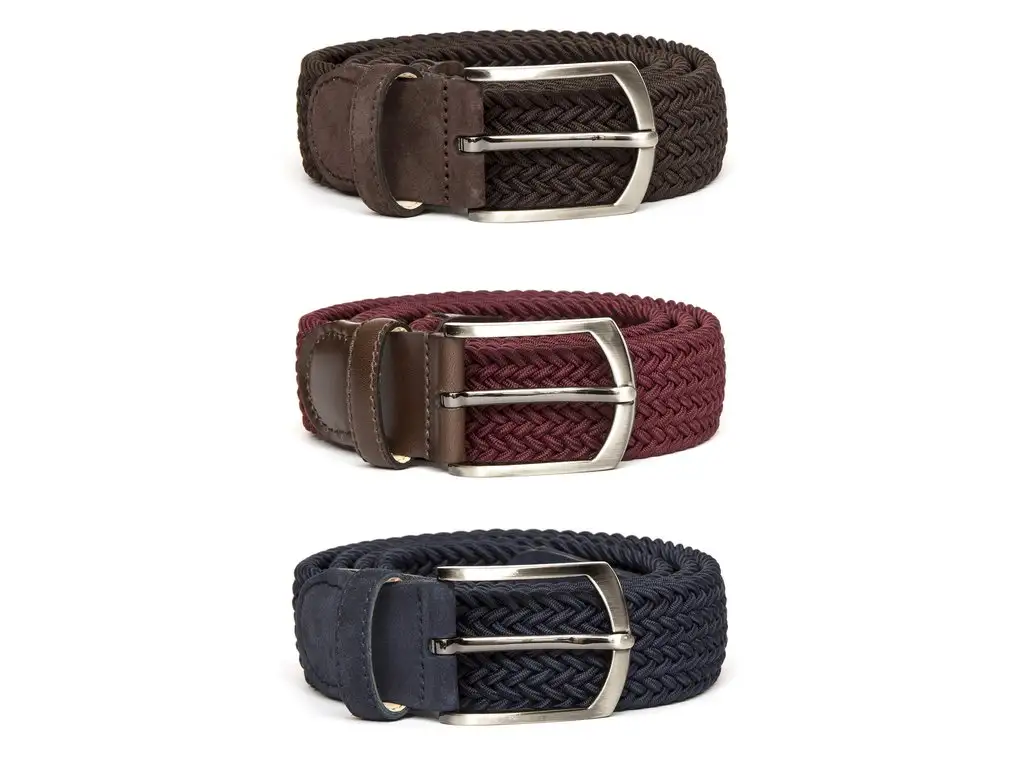
I would still hesitate to gravitate to the less-normal and bold colors like green and purple but if you are going to match bold colors, like green, use a braided belt instead as the material/design of the belt will automatically soften the look. The same goes for suede, as the texture of it not only has a softer Pantone color but also the softer texture dulls the boldness of the color, making it easier to match bolder colors without going overboard.
Complementing
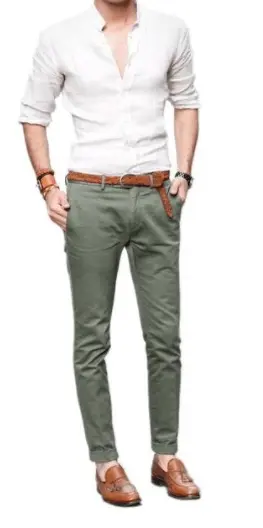
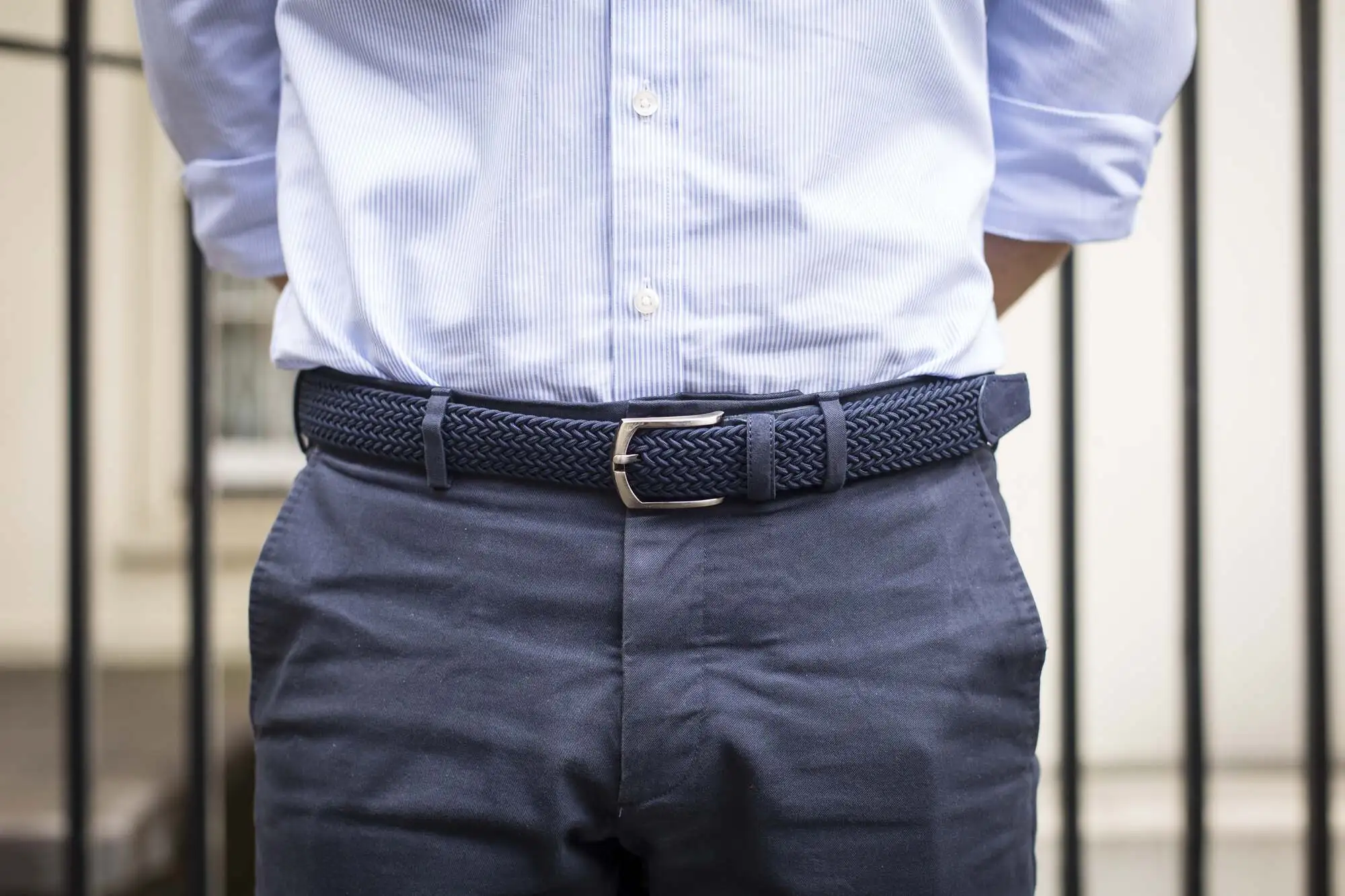
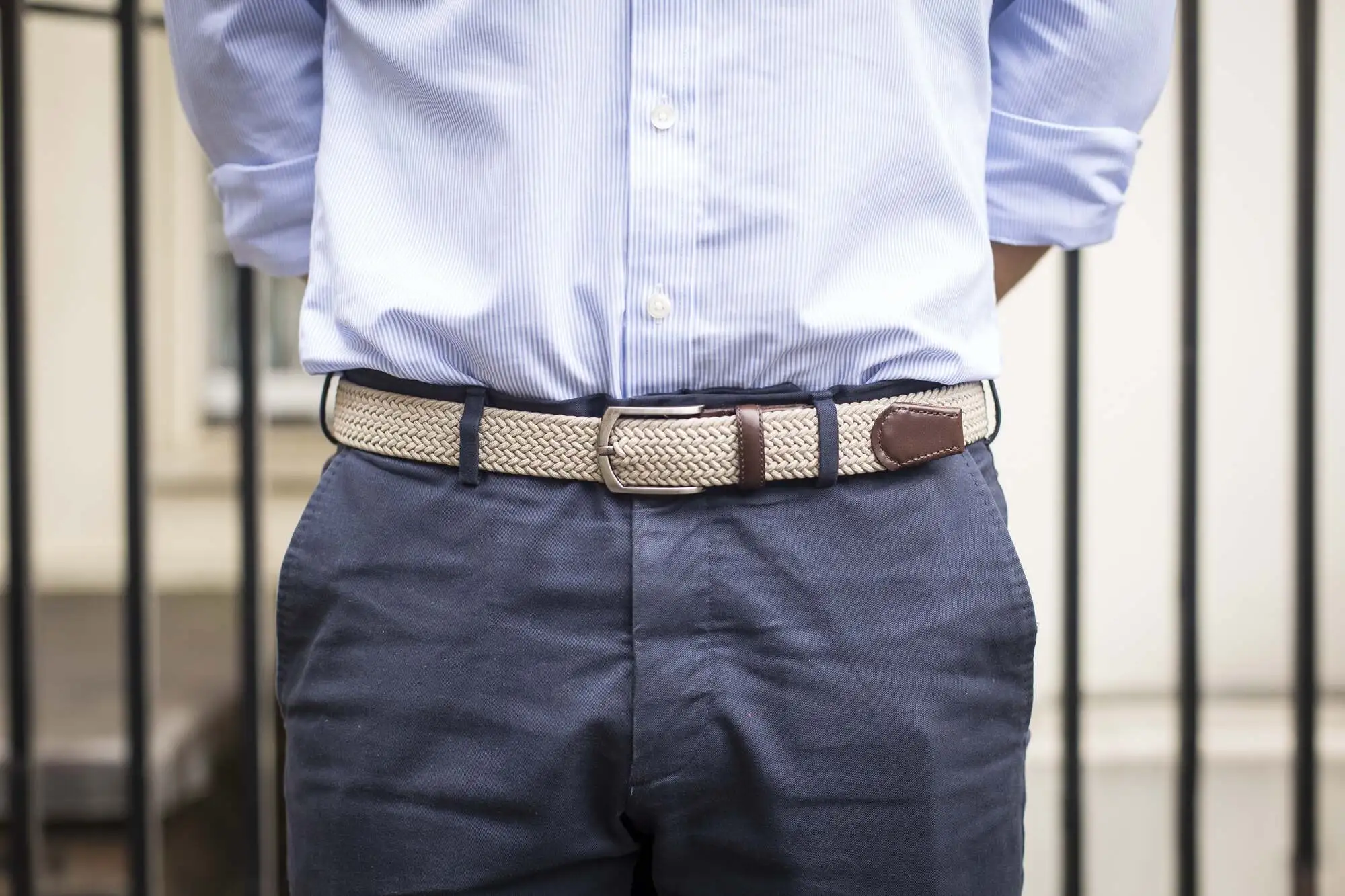
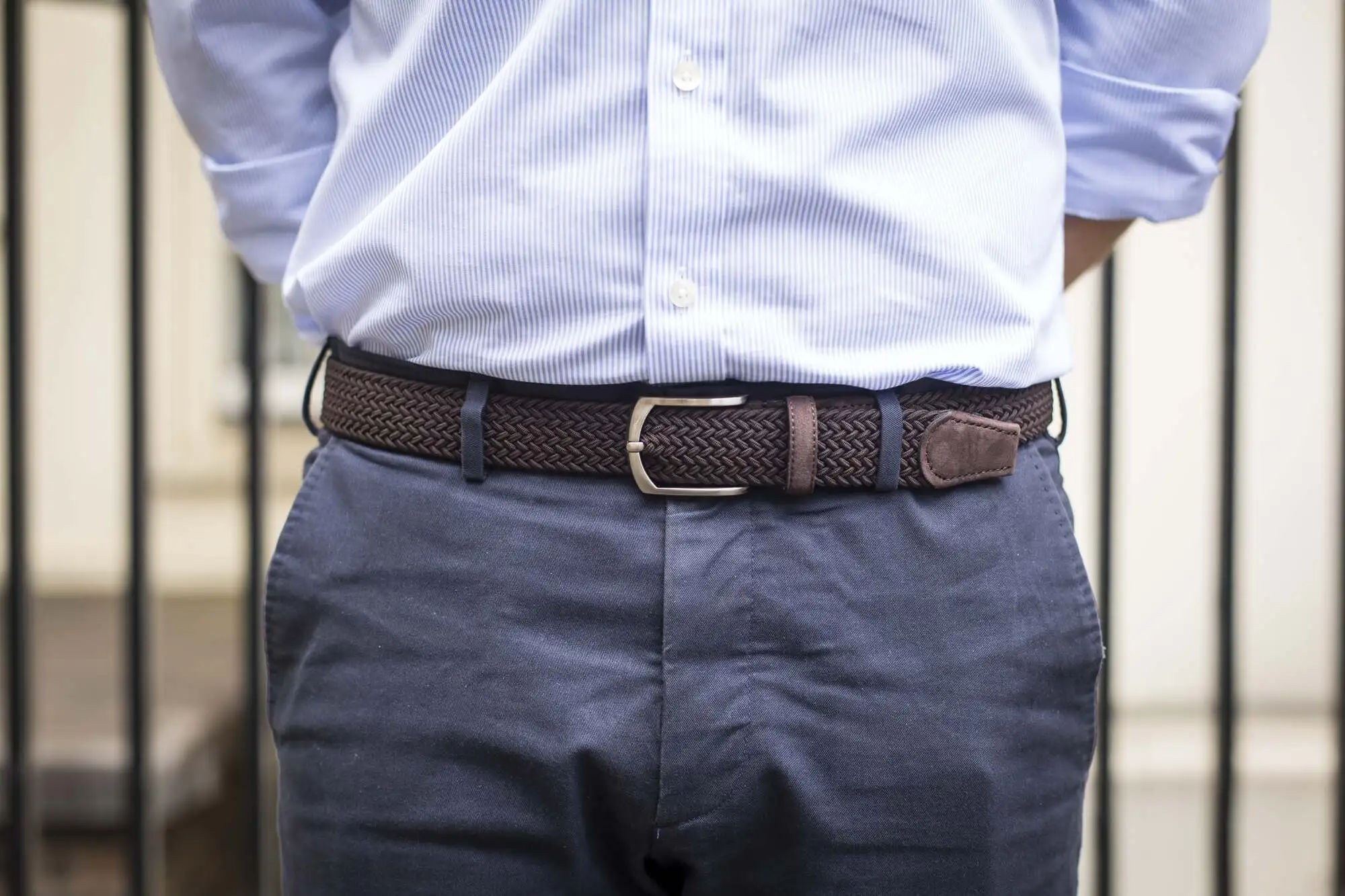
A beige, dark brown, or navy braided belt will take you far in this sector as either one will complement your trousers (i.e. beige with beige chinos, dark brown for olives/greys/browns and navy for blues/greys, etc) and allow you to wear nearly any color shoe you want without drawing too much attention to your waist and keeping your outfit elegantly complementing with a bit of flair in your shoes and maybe pocket square.

Contrasting
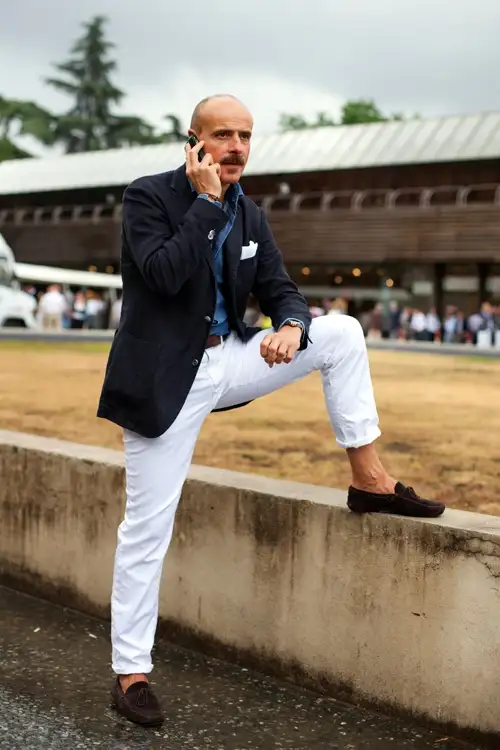
This, in my opinion, is the best time to contrast as when we wear more earth-toned trousers, they are easier to strongly contrast against (as well as your shoe) and still look good. But this works better with softer textured (i.e. not shiny) belts like suede and braided ones.
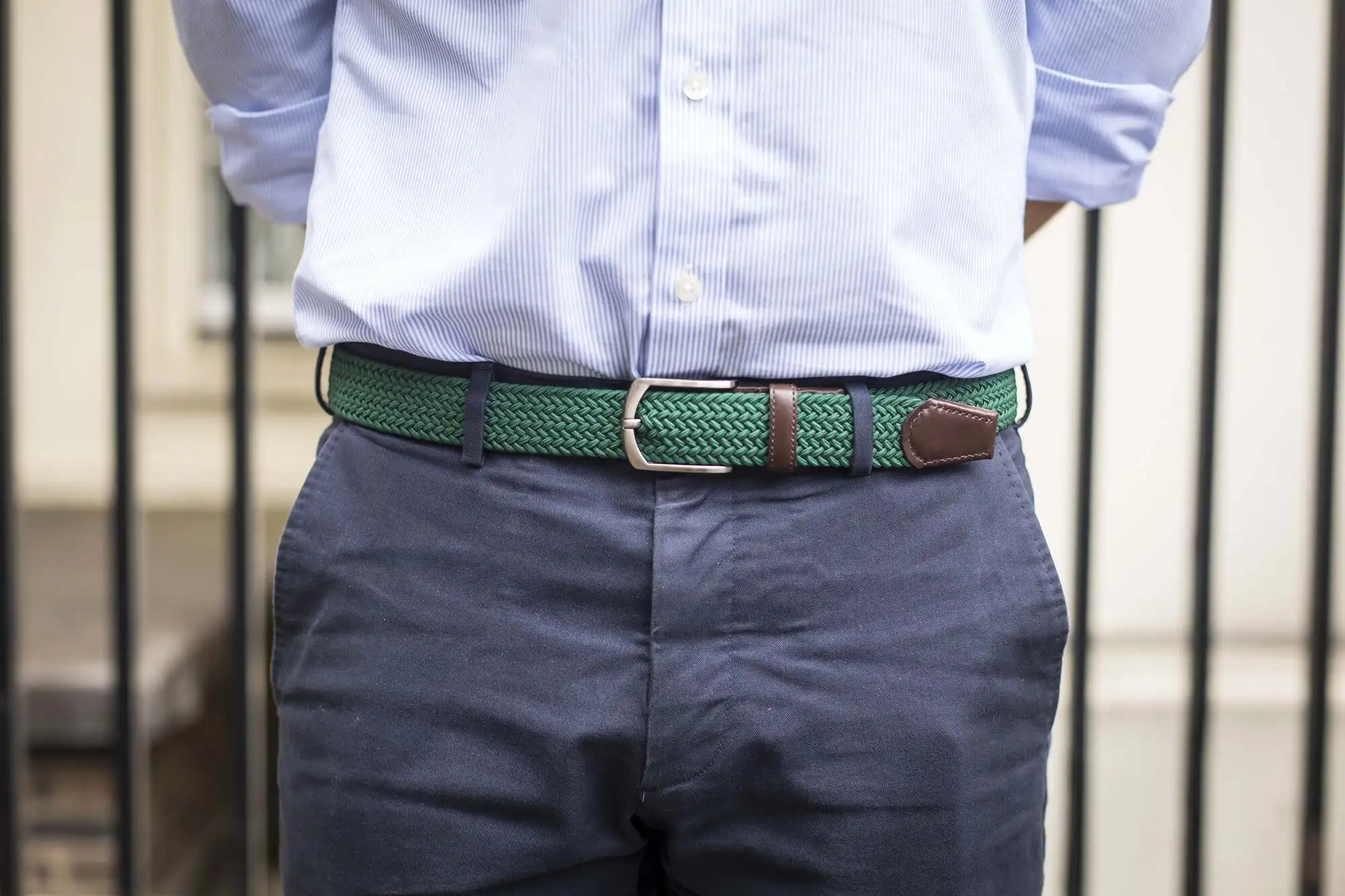
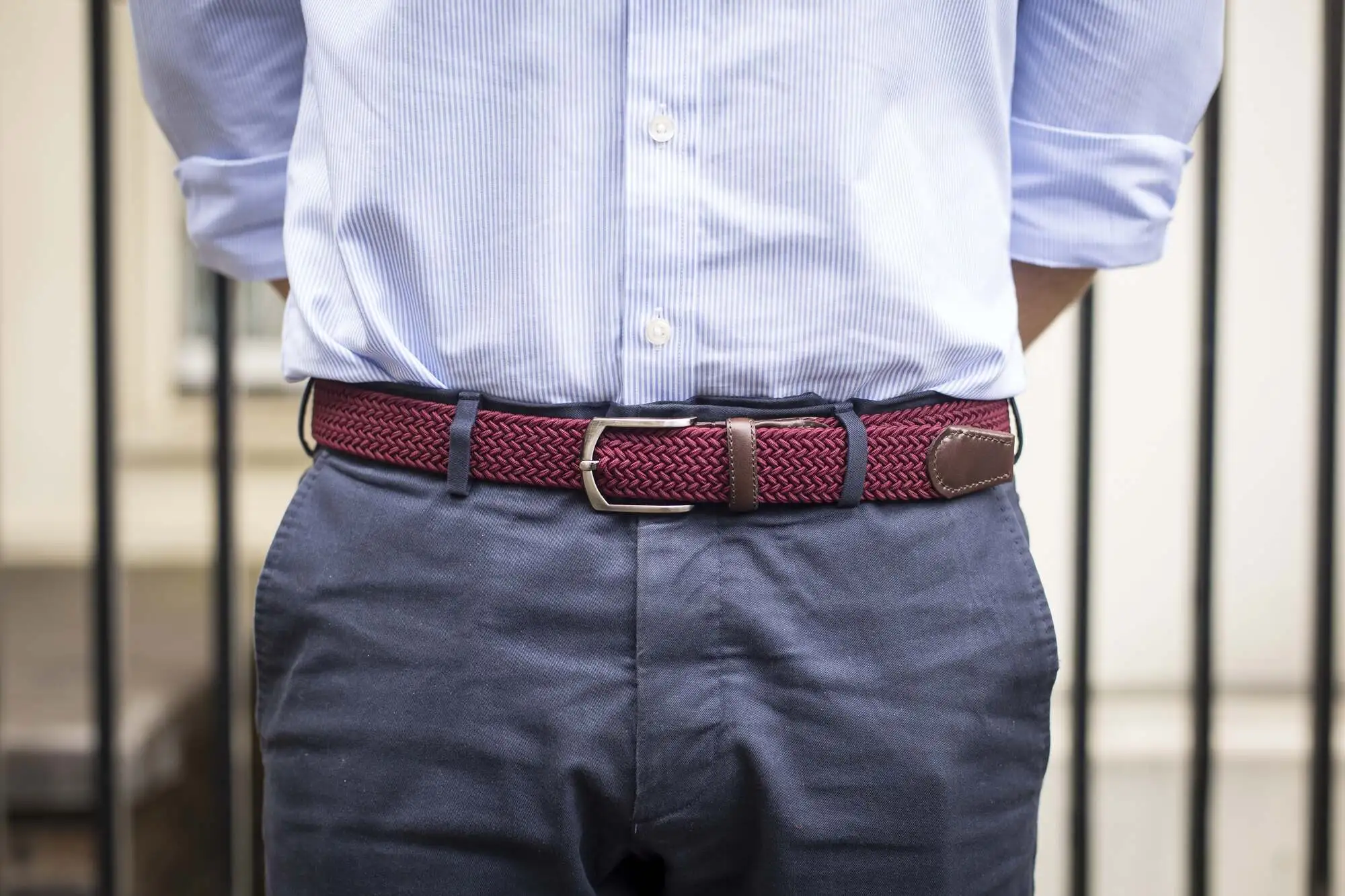
For example, wearing a burgundy or green braided belt on top of beige chinos and a mid-brown leather brogue (or loafer), with a soft white (or light blue, think linens) shirt with navy jacket (in a casual cloth like cotton or hopsack) could be a great look.
With the smart casual outfit, you have far more options to be bold in your colors and not look like you are going overboard. But even though things might be contrasting it doesn’t mean they are not complementary. For example, a green braided belt with leather tips, beige chinos, and brown shoes are contrasting yet complementary at the same time. But navy chinos, brown shoes, and a yellow braided belt are not, so be careful about being too contrasting.
Casual:
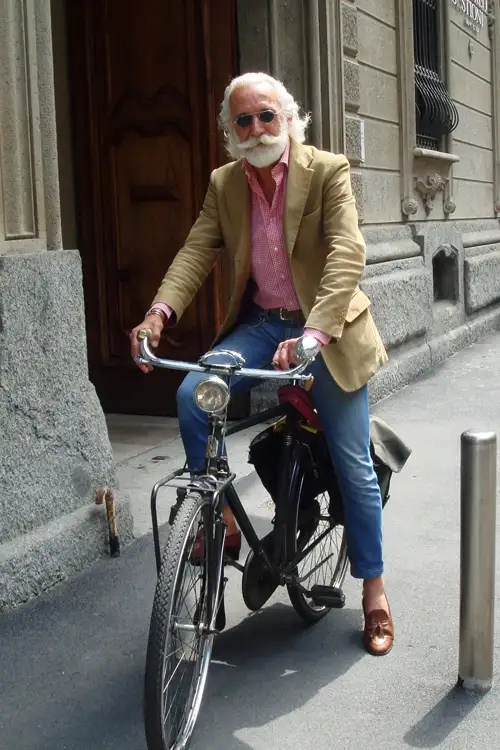
Let’s assume that for this rule we are simply speaking of wearing jeans/denim.
Matching
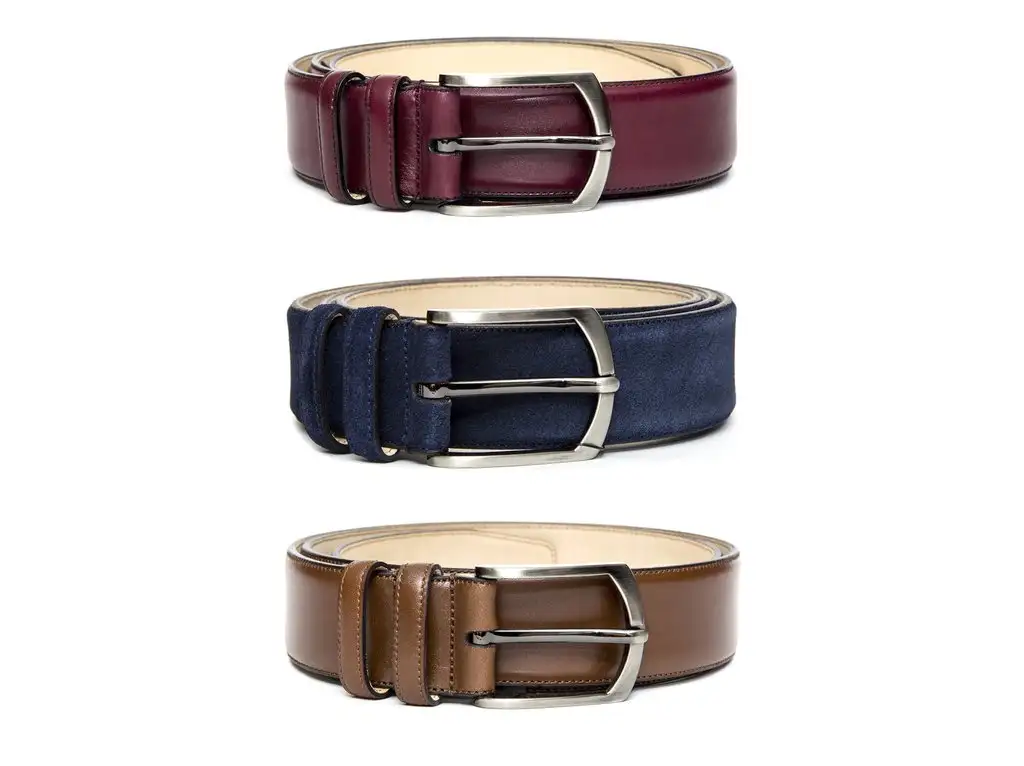
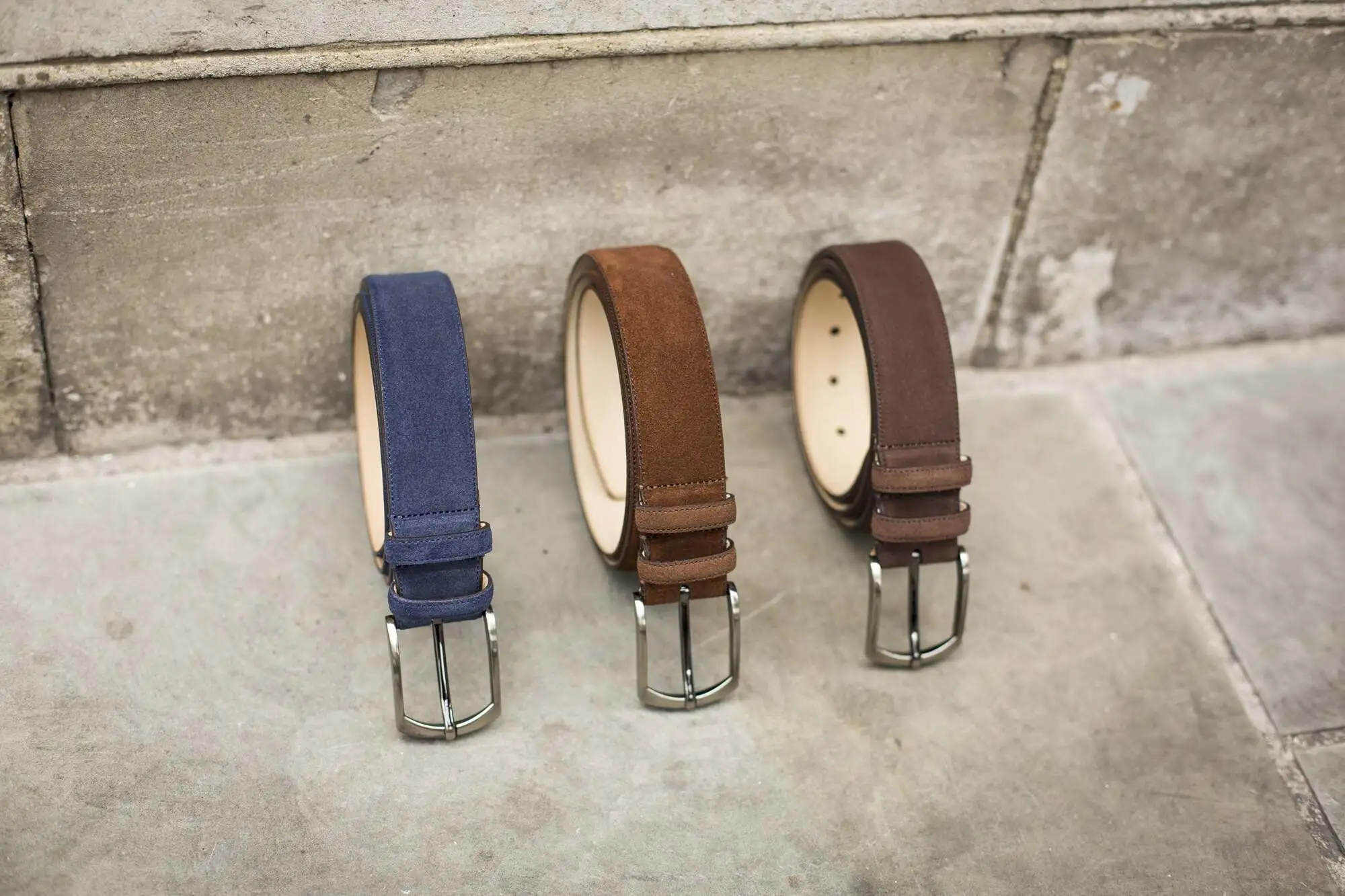
When it comes to wearing jeans, I do not believe that calf leathers should be matched. A calfskin belt, for me, is more on the dressy side so if you have black leather shoes and a belt it looks too formal for a casual look. But if you are wearing black shoes, I would wear a black braided belt or maybe suede. But if having to match, which I don’t recommend, steer towards using suedes and or more casual belts. I personally always wear a navy braided and/or suede belt with jeans.
Complementing
I often wear either a navy suede or braided belt which complements my jeans and then allows me to wear whatever color of shoe that I want. Of course, historically, ‘jean belts’ were always thicker brown leather ones with larger buckles but for the sake of this post and the use of smart shoes (I would never wear said belt with a dress shoe), we will assume that we are referring to the more ‘smart’ types of belts, as found in this post. You can’t go wrong when complementing your belt to your jeans. It’s subtle and doesn’t make you look ostentatious, which is always a good thing!
Contrasting
While I personally believe that contrasting belts/shoes is best left done on chino-type trousers, the fact that jeans/denim are more on the casual side of things, then a bit of contrast cannot be wrong if done correctly. Contrasting is always about being complementary in your contrasting so just remember that and pair like colors together. Don’t wear a red braided belt with green shoes. Christmas colors should be left for that time of year and only in decoration. Keep the contrast subtle and then you can’t go too wrong!
Remember that belts are an accessory. They are meant to be an elegant complement to your outfit. They should never be the main focus, like horrific designer belts with massive emblematic buckles that just scream out ‘Look at me, I need so much attention.’ Don’t be that guy, it’s never cool. Be subtle and elegant with your belt choices.
I hope that you have enjoyed this guide to wearing belts. Please remember to subscribe to get updates on all content released.
—Justin FitzPatrick, The Shoe Snob
Shop · Marketplace · J.FitzPatrick · Patreon
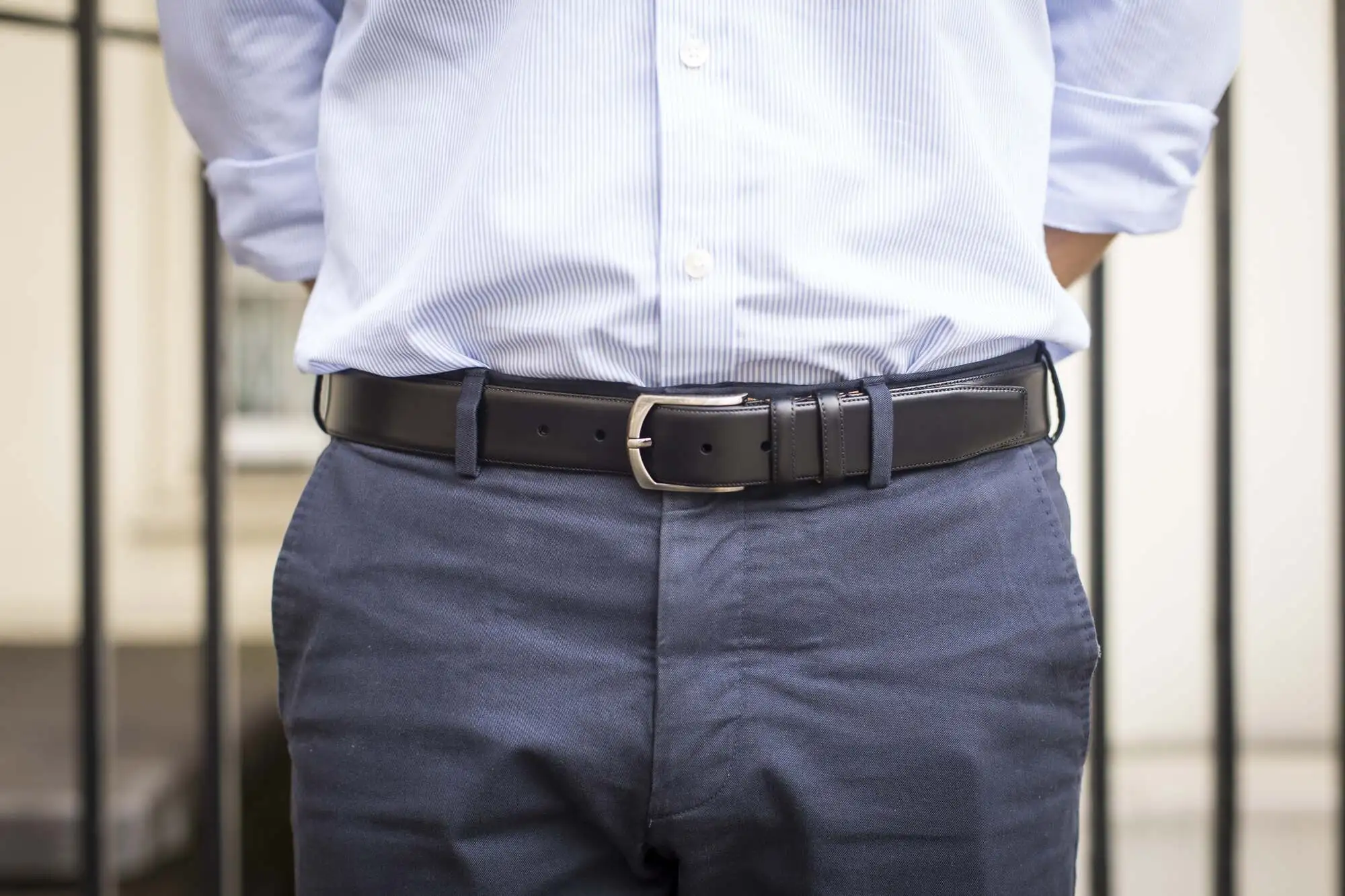
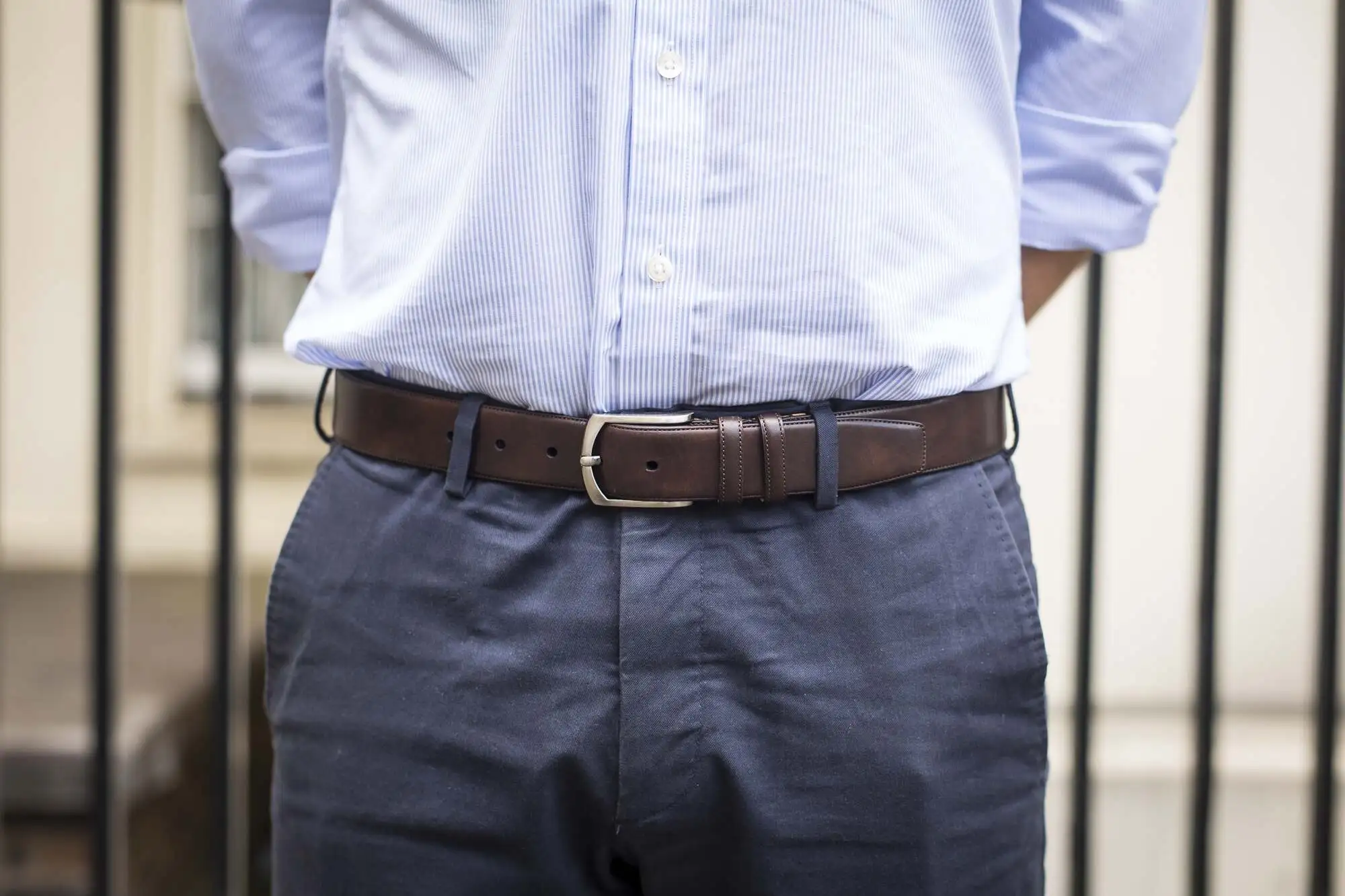
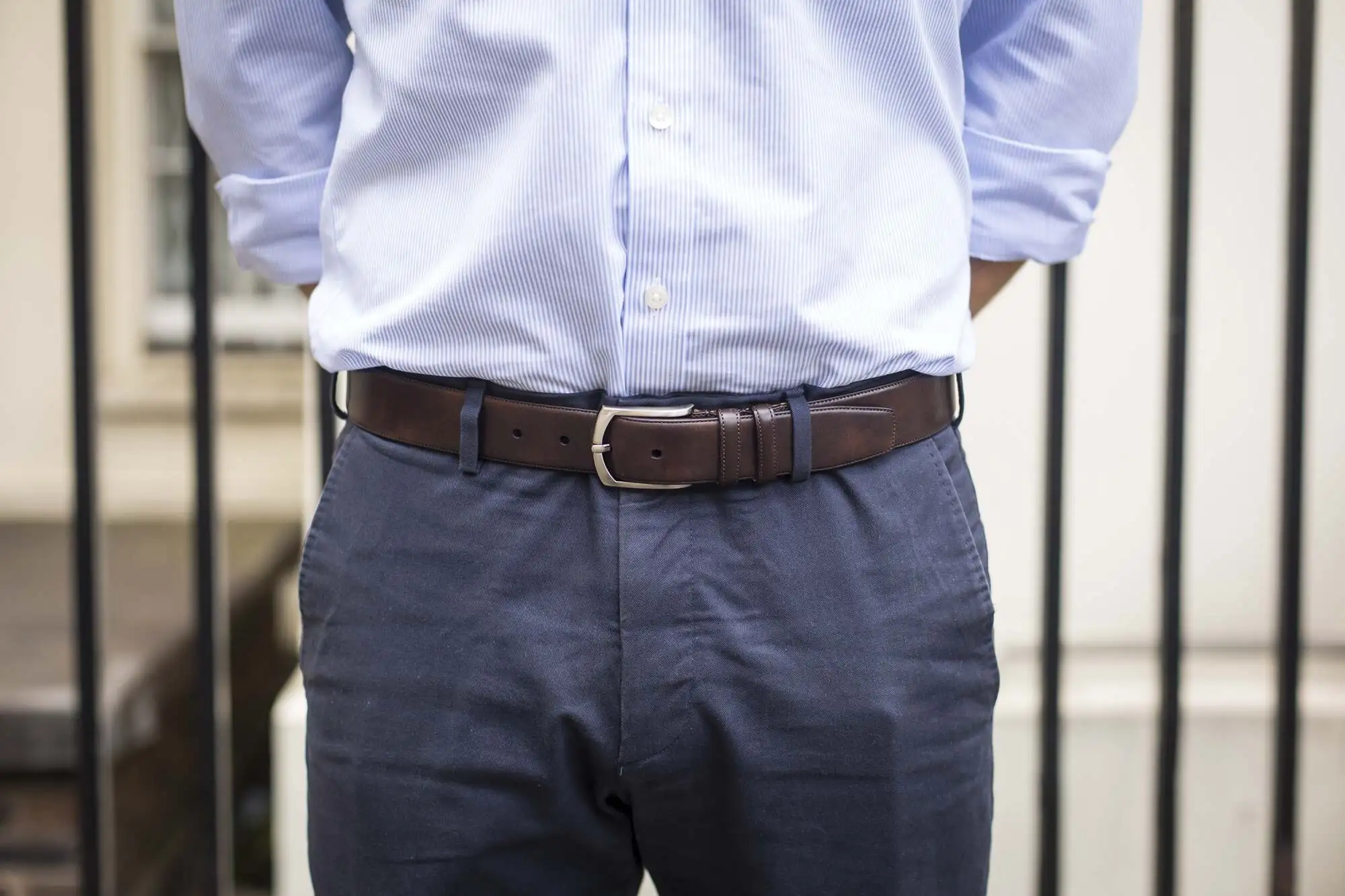
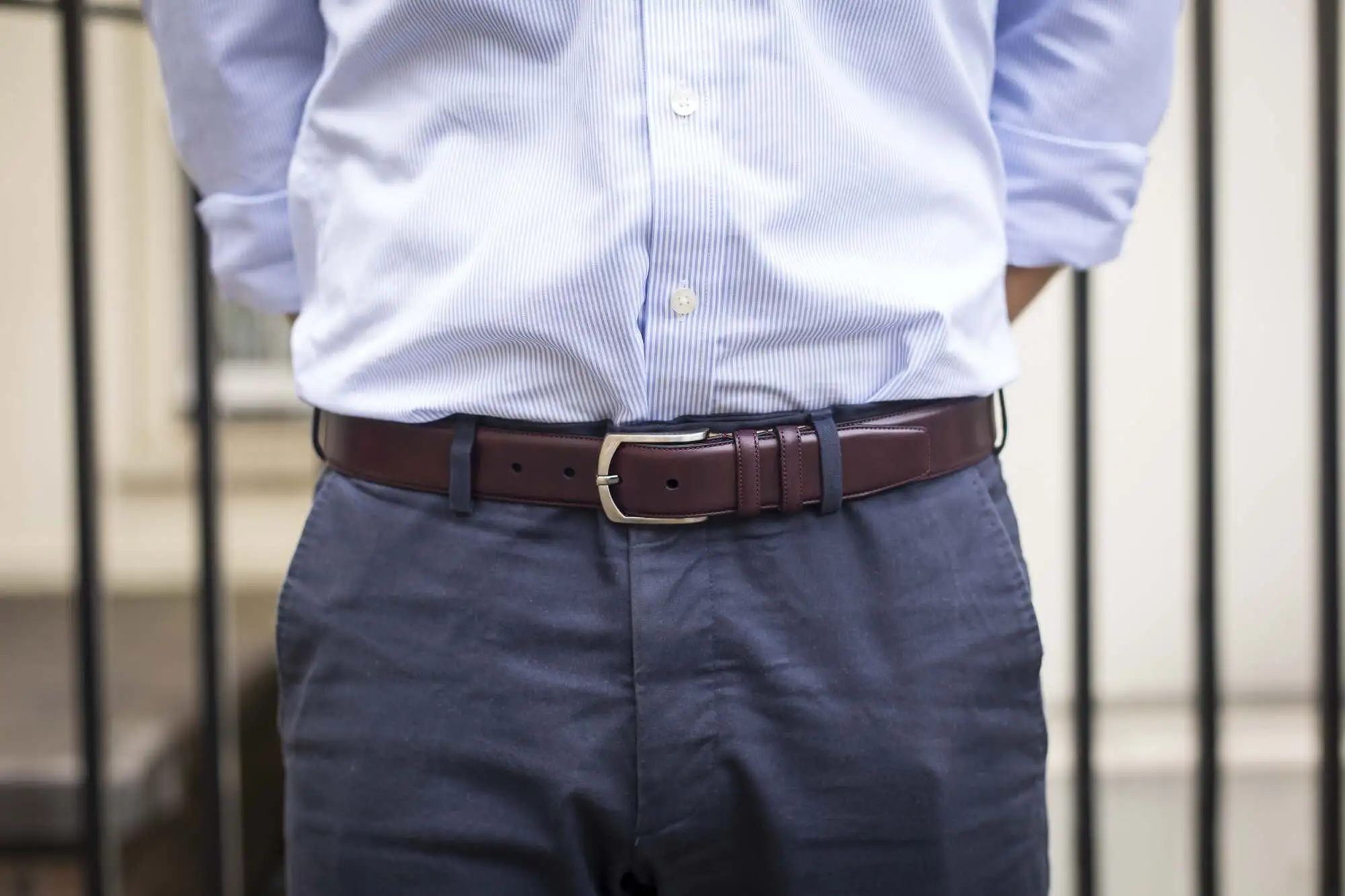
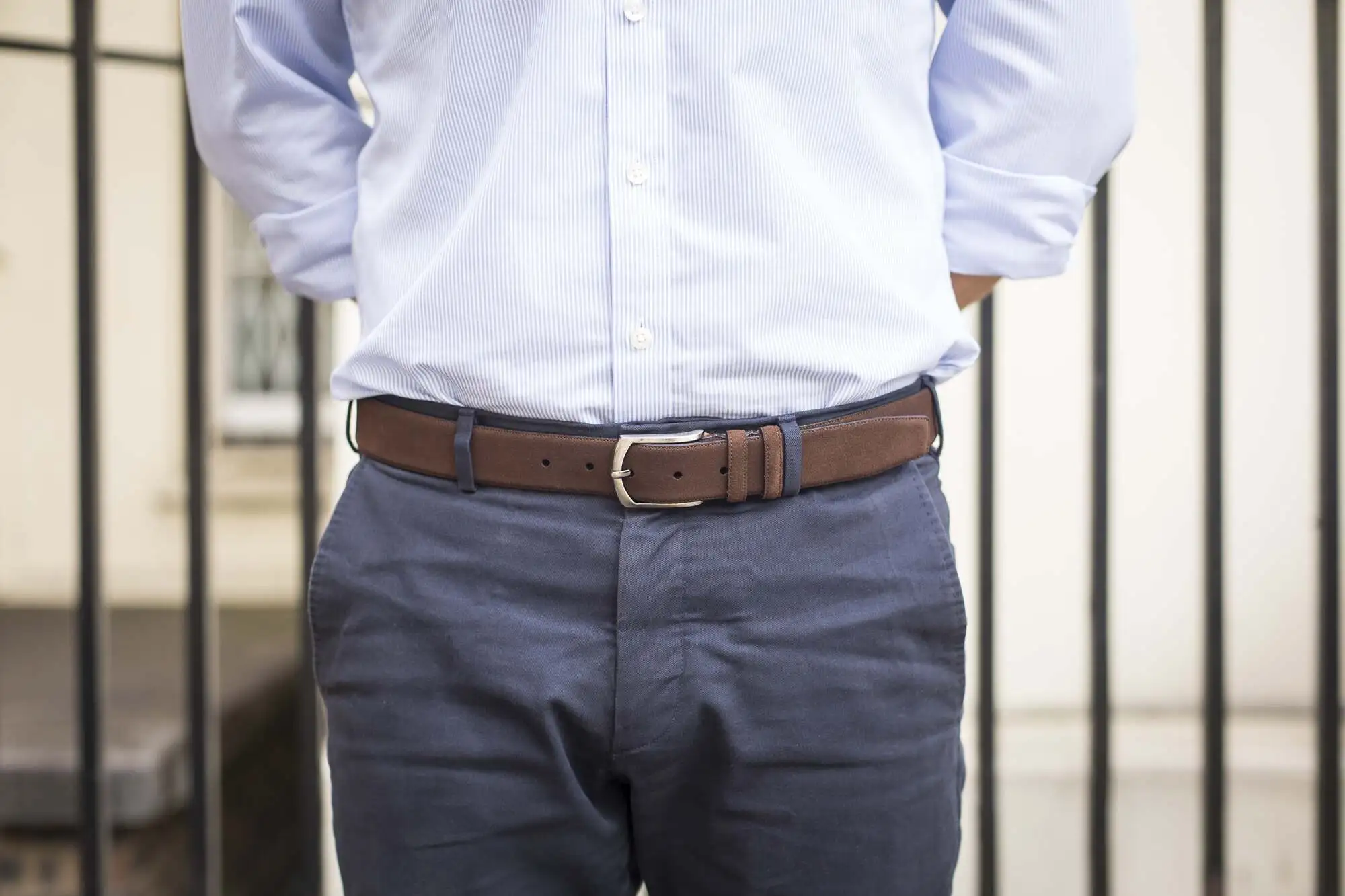
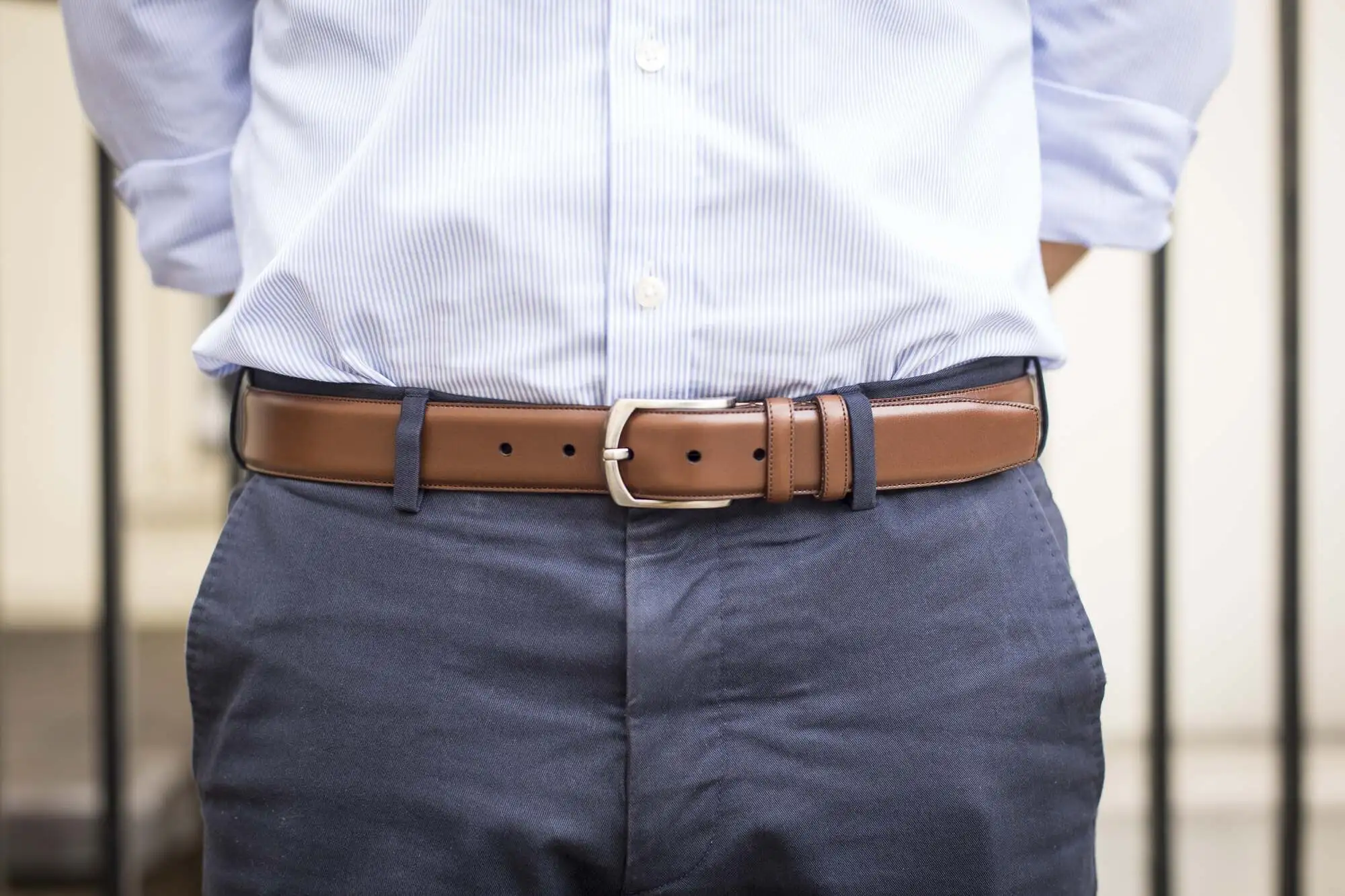
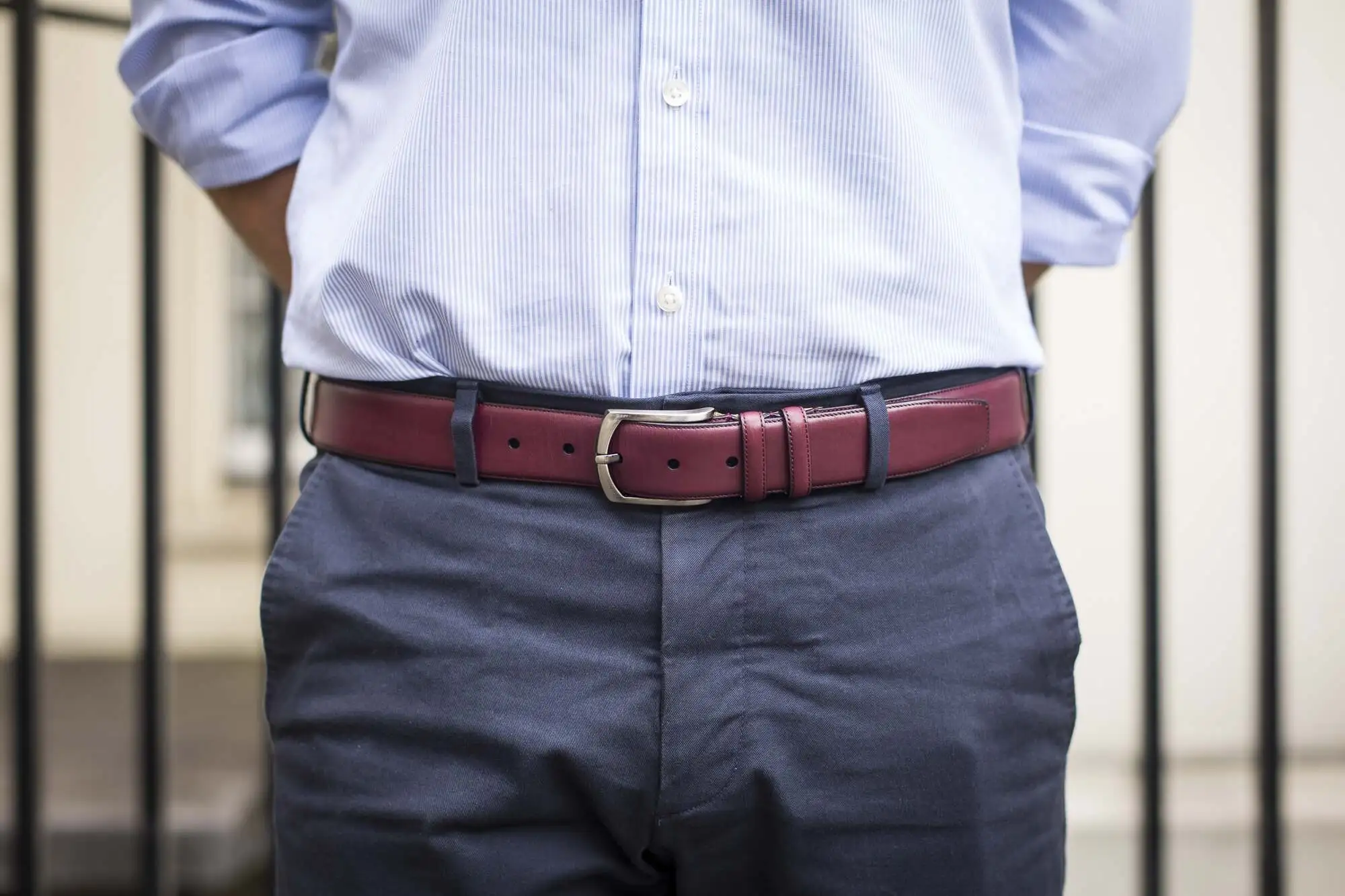
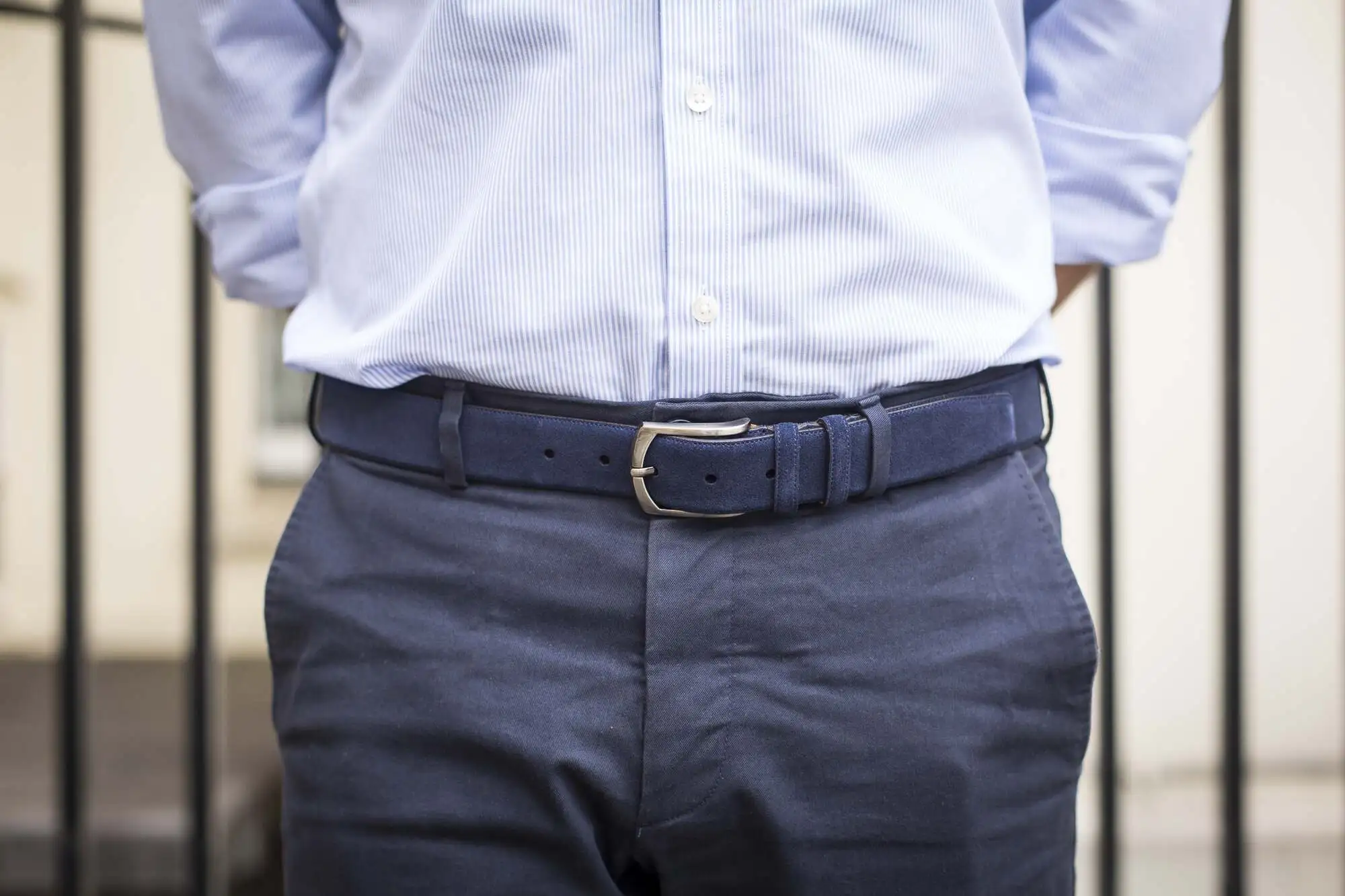
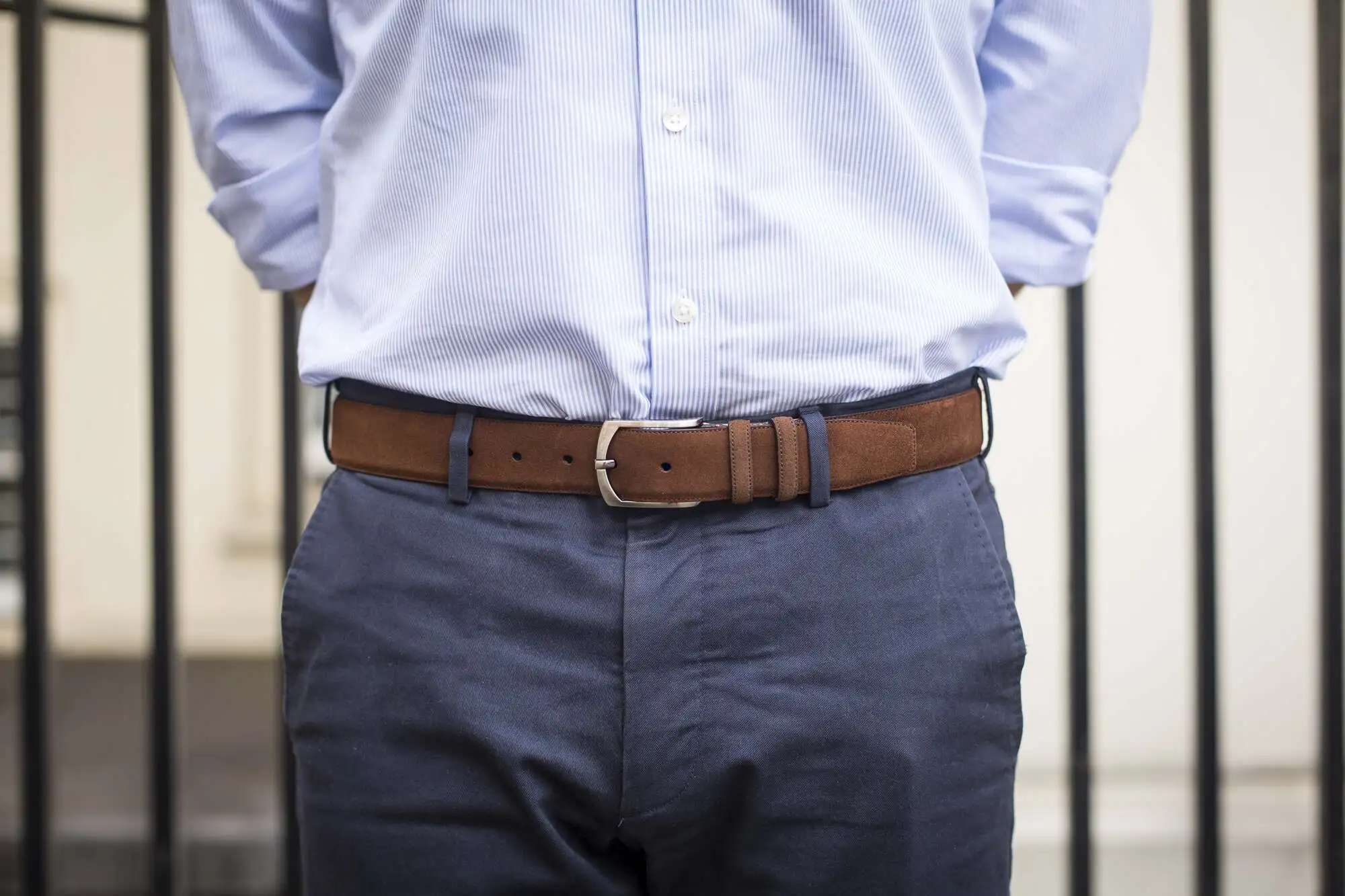
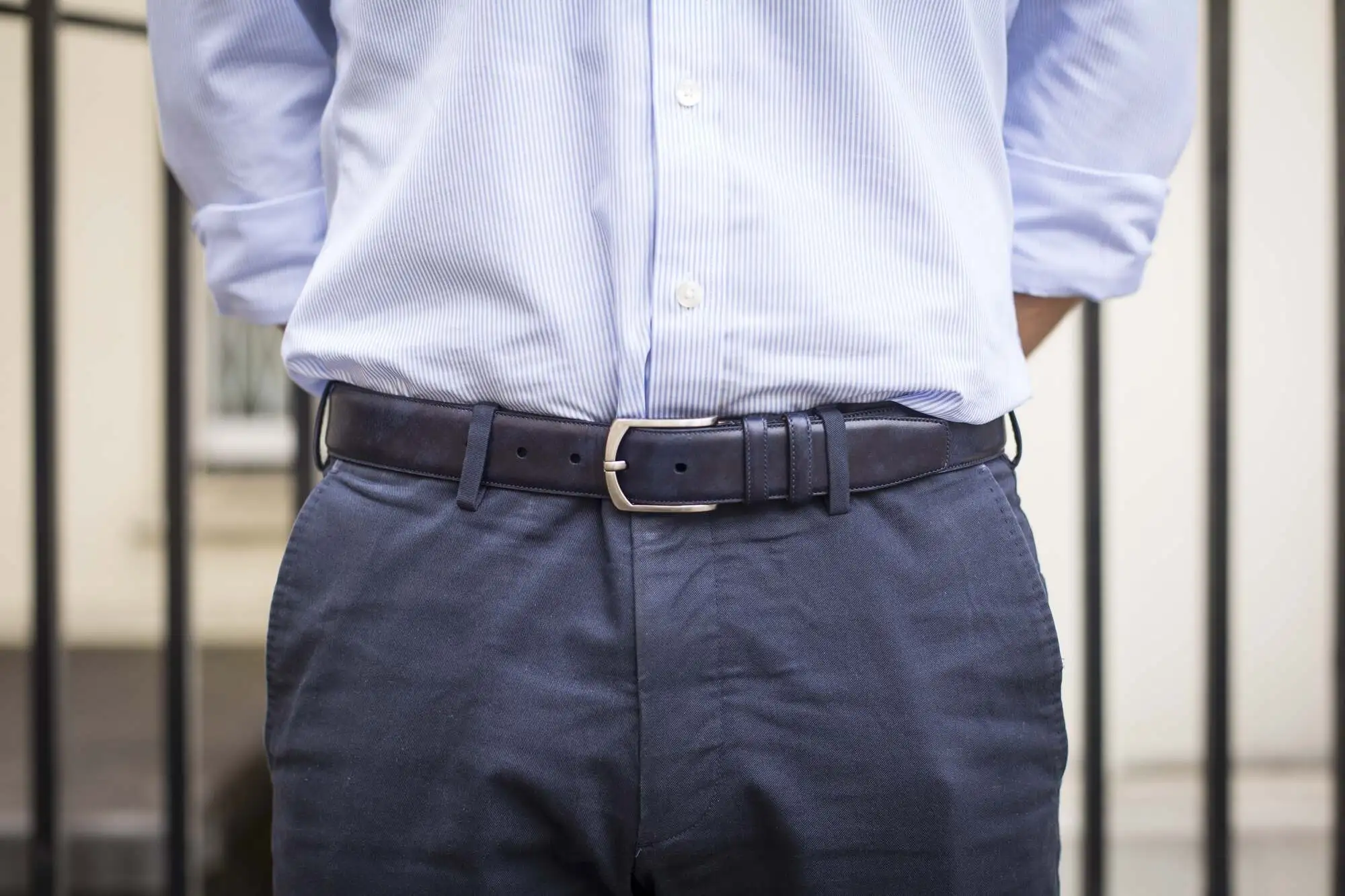
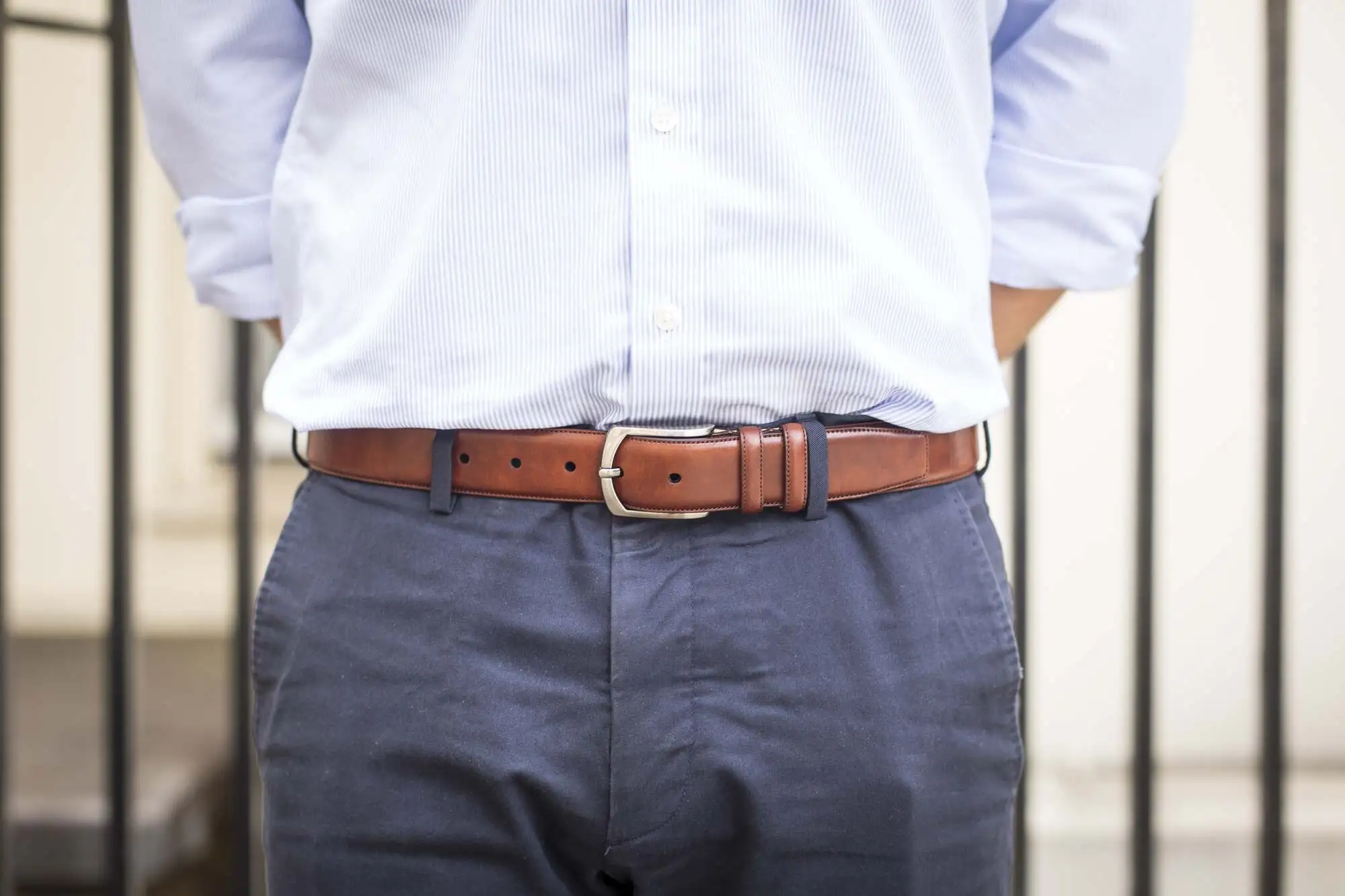
Below, you can see a classic trouser/shirt combo and automatically see what colors are hard on the eyes and ones that complement naturally. Avoid the ones that make you cringe and stick to the combinations that feel more natural.


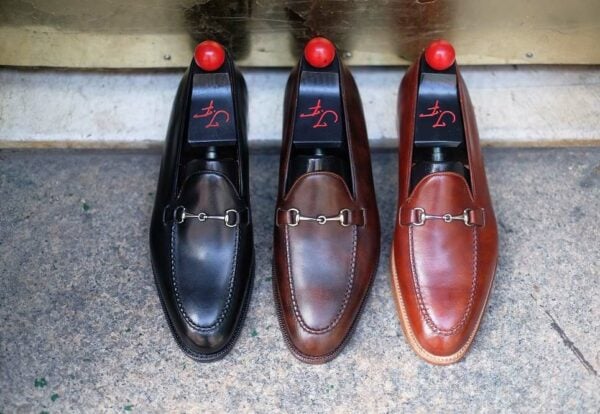
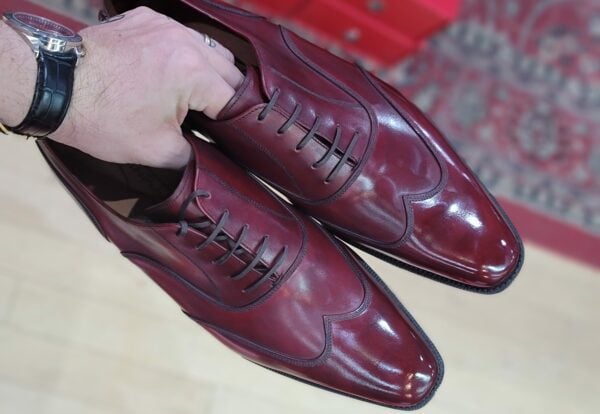



Good read. How would I wear navy suede loafers and a matching navy suede belt? If I go with white jeans/chinos, would a navy colored button down be fine since it will blend in with the belt? Or is this a no-no? Also what color pants should be worn with navy suede loafers?
Another great article Justin. What has worked for me over the years is; dark trousers, then dark shoes and belt. Light trousers, then light shoes and belt.
Thanks Arthur!
Great article! It’s always good to encourage people to dress properly.
Thanks JM!