
There’s never been more hype—and more lies—around footwear than there is today. Brands love to toss around terms like “handmade” and “heritage”, all while selling you shoes that fall apart after a few wears. Spotting the signs of low-quality shoes is crucial if you don’t want to waste your money. Let’s break down five of the most common red flags that tell you a shoe is all branding and no substance.
Signs of low-quality shoes
1. Excessive Toe Spring
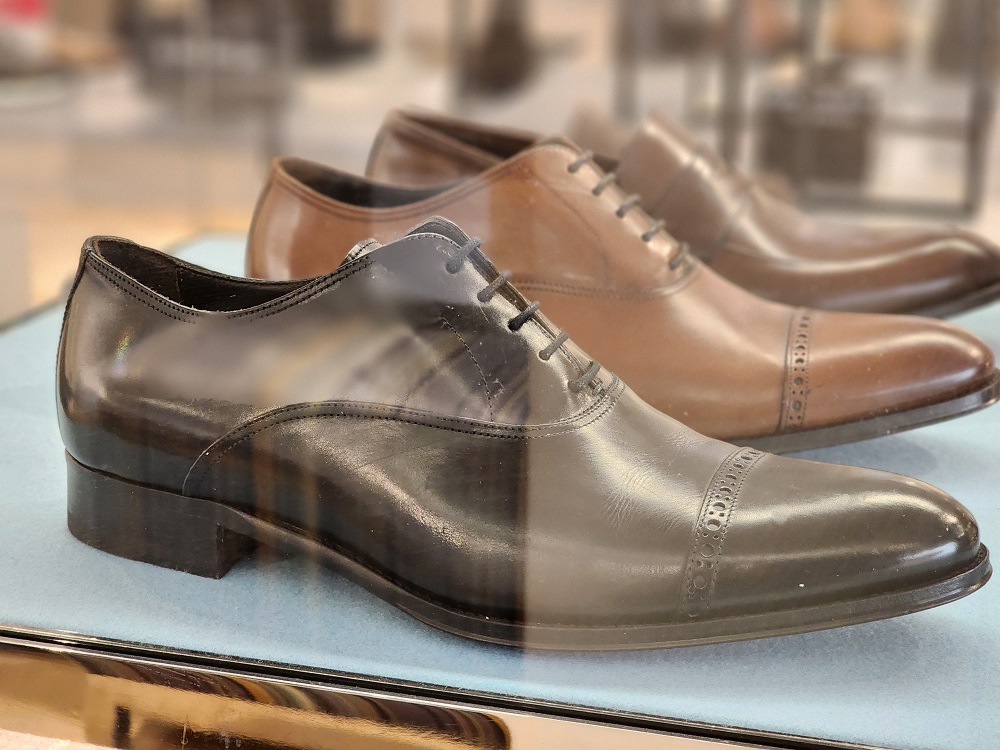
One of the first signs of low-quality shoes is excessive toe spring—that unnatural upward curve in the toe box. It’s usually a symptom of poor design and over-elongated lasts. A proper shoe should follow the natural contour of your foot. If your shoes look like they belong in a cartoon, they probably weren’t made with care.
2. Disproportionate Pattern Design
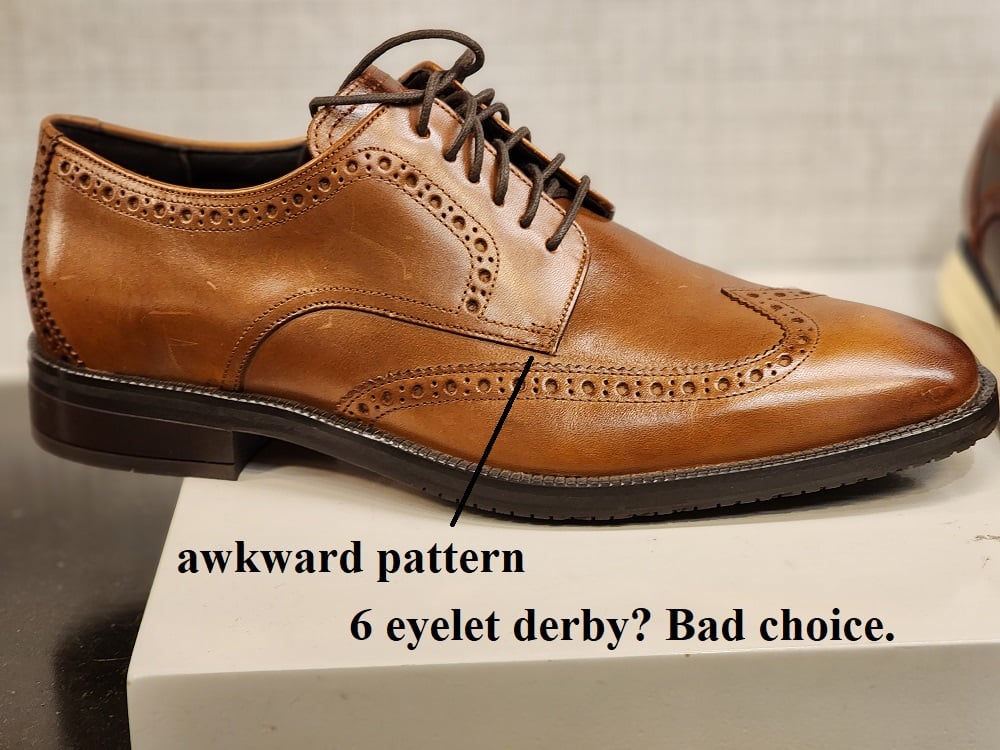
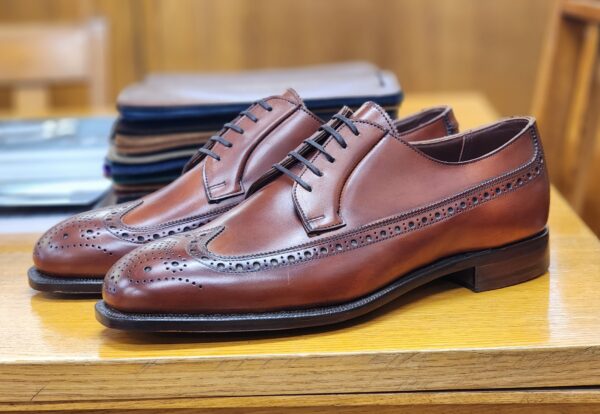
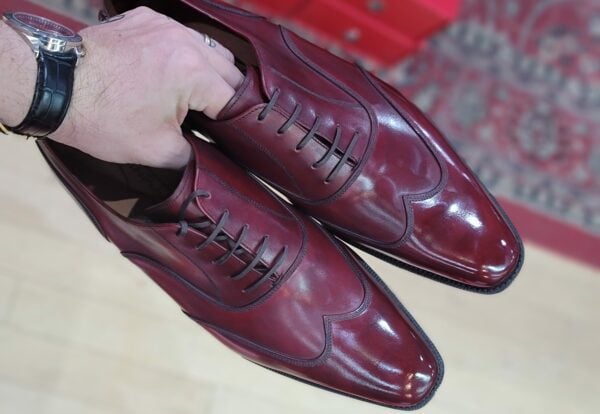
Good shoes have balanced proportions. Bad ones? Not so much. Whether it’s a vamp that’s way too short or derby flaps that overlap like a sandwich, disproportionate designs scream low effort. One of the clearest signs of low-quality shoes is when they just look off. Trust your gut—it’s usually right.

3. Overuse of “Handmade” or “Handcrafted”
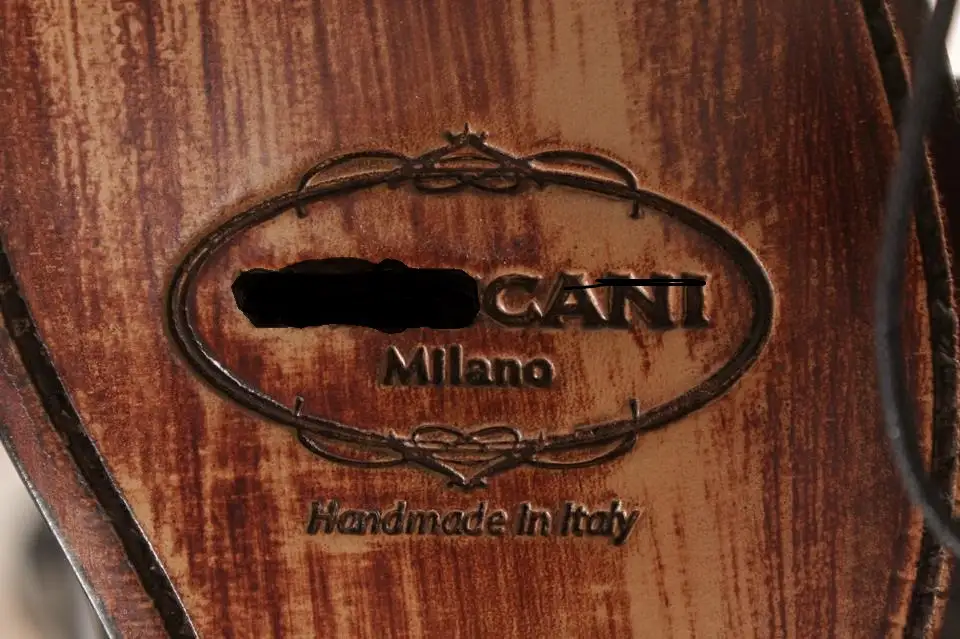
Genuine craftsmanship doesn’t need a label. Many factory-made shoes slap “handmade” on their insoles purely for marketing. Just because a human touched a machine-made shoe doesn’t make it artisanal. Real quality shows in the details, not the slogans.
If they say ‘handmade’ or ‘handcrafted’ directly on the shoe, it is nearly a 100% giveaway that they are, in fact, not handmade at all.
4. Fake Heritage Claims
Some brands claim to be over 100 years old—even if they launched last year. “Since 1842” sounds impressive, but if there’s no real lineage or proof, it’s is just another classic sign of a low-quality shoe brand. Age doesn’t equal quality. Focus on build and design, not made-up histories.

5. Poor Fit and Lack of Shape
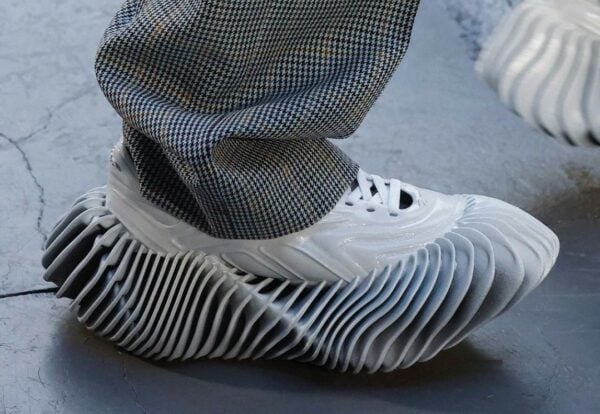
Cheap shoes often feel like boxes—they don’t hug your feet because they’re built on generic lasts to fit everyone (and no one well). Great shoes made by premium shoemakers contour to your feet, offering support and style. If your shoes feel like bricks or look like blobs, you’re looking at a telltale sign of low-quality footwear.
Closing Thoughts on Low-Quality Shoes
You don’t need to spend a fortune to get great shoes—but you do need to know what to look for. Avoid brands that hide behind buzzwords, fake heritage, and poor design. Invest in craftsmanship, not hype. Your feet (and wallet) will thank you.
To read more educational posts like this, please click here.
—Justin FitzPatrick, The Shoe Snob
Shop · Marketplace · J.FitzPatrick · Patreon






actually very good article with good doses of humor, last sentence looked like spell check rewrote it. keep up the great work!
glad that you enjoyed it.
Using ‘Handmade’ is now becoming a problem. I note one shoe brand in particular use this term ( makes all their shoes in China). But what is more worrying is that they exploit it when customers contact them about shoe defects. Shonky stitching, holes in the welt etc.. ‘because it’s handmade and hand welted… [add BS excuse here].
i know what you mean and who you are referring to….thanks for sharing
I have a question regarding paying premium for cemented construction. For instance let us consider the brand Baudoin and Lange. Would you say (starting at) 305€ is worth paying for cemented construction?
Best regards,
tt
depends really. If it is made in a big factory then no. But if each pair is made by hand and in a small workshop, then the labor cost prices are higher so you kind of have to. But to answer your question, no I would not pay that much for cemented construction, not personally
Given this topic, I’m curious about your thoughts on Paul Evans. Made in Italy, marketed (etc.) in NYC, blake stitching, but pushing around $400.00 USD. I’ve always been torn on whether they represent a decent value or not.
The first sentence of the article is simply priceless! And the rest is brilliant. Thanks for being that Batman…
Good job indeed!
Another problem (and not just in the shoe industry) is that each country has its own set of rules/laws regarding handmade products or products “Made in XXX”.
For example, AFAIK, the laws in Italy allow to write “handmade in Italy” as long as one of the steps of construction was made by hand, e.g. they just need to apply the patina by hand at the end of the construction to be able to write “tutto fato a mano”. This is really misleading for the average consumer (especially since the brand I’m thinking about often makes very nice shoes, even though overpriced, but certainly not handmade, apart from the very high-end range).
Same goes for watches : you can have all the parts created and assembled in China, but if you do 5% of the assembling in Switzerland, you can write “Swiss Made” on the watch …
agreed that a lot of shoes arent worth the money! but check these babies out!https://ebay.to/2yjqiaS