
Where Has The Shoe Industry Gone? This is a blog post that I wrote in 2018. It is amazing to see the foresight (not trying to pat my own back here) that I had then and how it probably rings 10-fold now. The world is vastly changing year on year, especially in style trends/shoes, etc. What was true last year is no longer true this year and won’t be true next year. Let’s look below at my thoughts at the time.
Being one of the original shoe bloggers in the industry, I have had the opportunity to meet many people, including shop owners, brand owners, and individuals in the shoe industry. And because of this, I get to hear a lot about what is going on, for everyone, which allows me to understand the industry better. The last few years have been interesting, to say the least. A lot of ups and downs with the growth of social media and globalization, and brands from all around the world now being able to market to anyone in the world at the drop of a dime.
It has made the options endless for the consumer, but truth be told, it has made the industry overly saturated for the companies as they compete for the global internet consumer. And whether you know it or not, many brands, factories, and retail stores are suffering due to this. So the question is, what is going on in the mind of the consumers? What has changed for them in the shoe industry? Was it all a trend? I have a few theories of my own, so I thought that I would discuss them and then ask all of you to leave your comments/opinions.
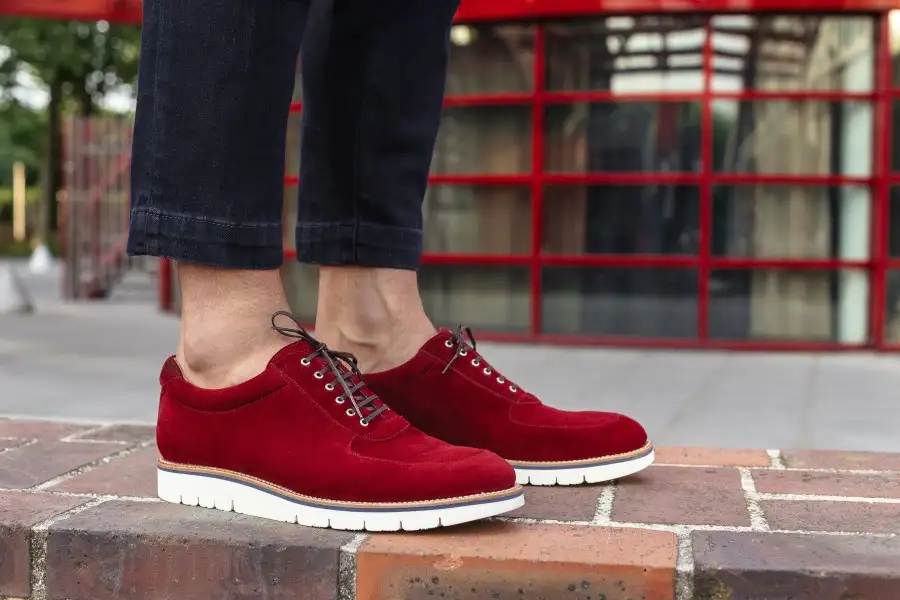
People are not wearing dress shoes as much
With the way that the world is changing to be more casual, you see more and more people wearing these hybrid dress shoes with sneaker soles, or just full-on wearing sneakers with their work attire. People want to be comfortable, and therefore, the idea of wearing leather-soled shoes in the age of ‘the sneaker’ looks less and less appealing to them, so they stop buying $400 dress shoes when they can get 2 pairs of $200 sneakers. And as workplace dress codes seem to be getting more and more relaxed, the idea of wearing your sneakers to work seems to be more and more appealing.
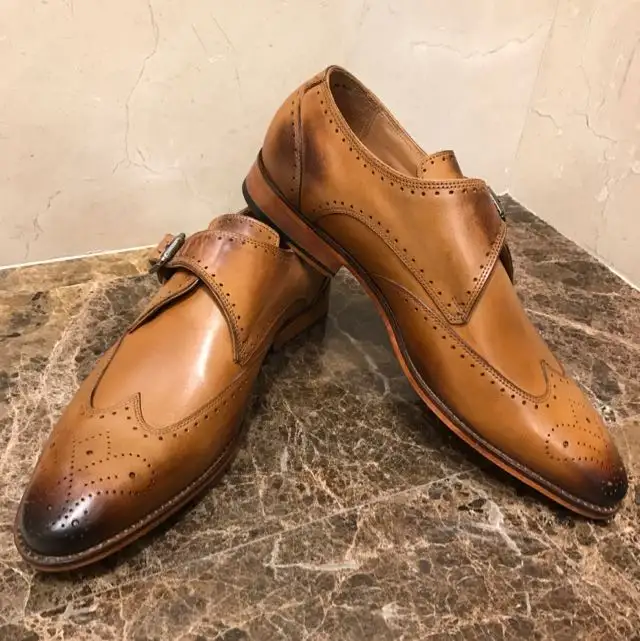
Too many cheap online brands are ruining it for the good quality brands
With the craze of social media and the ability to just create a shoe brand and build it on Instagram, the industry has become immensely saturated, and the consumer has a million options to choose from these days. The problem lies in the fact that everyone’s marketing campaign is this: ‘We are such and such online shoe company making handmade shoes that have cut the middleman and therefore are able to sell you the “best dress shoes in the world” for only $299.’
Sadly, the consumer believes these marketing gimmicks and buys the shoes, thinking they are great. All the while, the shoes are mediocre, and the client believes that this mediocrity is the end-all be-all, never understanding why they should invest in the more expensive and better-made product.

People have too many dress shoes
Sometimes, I feel that buying well-made dress shoes was a trend that boomed at the beginning of the social media craze, and being able to buy European-made shoes from the US in only a few clicks on the computer. People went shoe crazy and were buying 10-20 shoes a year. And let’s be honest, who really needs that many shoes? I mean, don’t get me wrong, I probably have around 150. But I don’t need them all, not even close.
A lot of people started buying up all of these exotic European shoe brands that were never available to them before, without taking a trip to Europe. But $20,000 later with a closet full of shoes, they started to realize, ‘What have I done? I don’t need all of these. I better start selling them off now.’ So there was this huge boom of consumers for dress shoes, which made it great for the original brands that were there to be there for the boom. But now has come the crash where people spent more than they could and/or needed, and now have stopped buying dress shoes full stop.
Or maybe there is a 4th option I have not yet thought about and would love to hear all of your opinions on why the shoe industry has quieted down. And this is coming from a lot of brands/shop owners out there who have been struggling to keep up with the boom of 2016/early 2017.
I hope that you have enjoyed this throwback post. I look forward to hearing your comments on where you think the shoe industry has gone/where it is now vs then.
—Justin FitzPatrick, The Shoe Snob
Shop · Marketplace · J.FitzPatrick · Patreon



Reselling has really tanked. I was a full-time luxury clothing and shoe reseller on Ebay for 7 years. Suits, dress shirts and even high end pre-owned shoes are easily had for much less than 5 years ago. I enjoy dressing well. For $3-400 you can pick up a great pair of gently worn shoes; Lobb, CJ Shell, Cleverley too.
Hi Justin. I agree with the three options you’ve explained. A fourth could be the emerging online sellers from other counties with lower labor costs. Here in this blog you’ve highlighted sellers from many countries, for example Vietnam, selling some amazing footwear at a lower price than would be sustainable for other companies.
Competition has lowered prices that I’m thankful for. however I think the more youthful focused brands are more sensitive to the changing trends in the marketplace like the gradual fading of suits from the workplace and the need for increased comfort and now increased instagram-ability. Rubber/lug/vibram/dainite soled dress shoes should have been introduced much earlier as I usually buy these only rather than the conventional leather soled pairs.
I think you’ve highlighted a pitfall of selling products that last ten to twenty years. Based on what I’ve read in your blog, the recession years were hard on small high-quality shoe makers. After the economy picked up again, people probably started buying better shoes again, but now won’t need to make as many purchases because good shoes last so long. And as you’ve pointed out, we don’t need that many pairs. I have about eight pairs that I LOVE wearing and several more that I like to wear once in a while.
But that means I only get to wear the shoes I love about once every 1.5-2 weeks.
Giant producers of all types of products learned the lesson of planned obsolescence and producing goods that are low cost and cheap, so that consumers need to buy them more frequently. Not a very honorable way to do business in my opinion, but it does drive profits up, right?
I think a potential solution for the better shoe makers might be more blogs like yours extolling the virtues of great shoes, including the value to spending more money on those shoes.
As far as people not needing to wear dress shoes to work as often, this is true. However, although I do not need to wear dress shoes to work every day, I CHOOSE to wear them to work everyday because I like the impression it creates about me and because I enjoy looking at them on my feet. Indeed, I wear them to non work functions as well, unless I am exercising, hiking, or working on my home improvement projects.
Again, I think a potential solution is to convince people of the value of dressing well, including wearing good shoes. Of course, that is a big change to make and one shoe blogger can’t do it alone.
However, at the end of the day, the good shoemakers will survive if they plan well and market well and they don’t all expect to get wealthy. Quality like yours eventually wins out if you can weather the ups and downs. For example, I’ve purchased shoes in the same price range you sell, but I was very unhappy with them. Also, some shoes in that range that I am happy with, but, nevertheless, not has happy as I am as with your shoes. I will most likely never buy shoes from those companies again. Now, your website is the first place I look for shoes. Your website is the first place I recommend people look for shoes as well.
You sell a great product for a very reasonable price. I keep telling myself I need to buy some more before everyone figures out what a great value your shoes are and they drive the prices up.
The question of where the (quality) shoe industry has gone finds some of the answers in your blog above. Maybe to add to the discussion is looking more closely at the demand side.
Supply: Certainly the supply of shoes (quality or not is debatable) has grown in the last decades due to (1) lower quality standards, (2) outsourcing production and not to forget (3) customer demand.
Demand: The shoe industry is producing what the customer is asking for. I do not think this is a short term effect caused by a recession although the recent recession will have damaged the “high end” shoe industry severely. Buying and wearing shoes is a habit for most men and people buy and wear what they know and are accustomed to. The customer demand has changed over the last generations as society has grown more and more informal. This has resulted in the fact that most men are no longer required to wear dress shoes for work and the group of men to come in contact to our coveted shoe industry is shrinking. When they are not gently pushed into the “high end” shoe industry from a work standpoint it is less likely they will ever come in contact with it again. And these people raise their children based on their experiences resulting in boys with no homegrown love for good shoes and no formal need when they grow older.
I am glad that a lot of your readers still are in love with great shoes and this will keep the industry alive. I am not UK based but since I was bitten by the bug I make a point in visiting the island (ok, mainly London) every two years to find myself a new pair. Just doing my part!
There was boom and we may be seeing the beginnings of a subsequent bust. Adaptable brands will mostly survive. Brands stuck in the past, and those who overextended their finances during the boom, will perish.
The market is moving away from dress shoes, but while the market for dress shoes shrinks the market for casual shoes grows – creating a (mostly new) market for well made, high end, casual shoes. Many brands are already adapting: chelsea and chukka boots have become ubiquitious, classic dress shoes in suede (instead of polished calf) have become a smart and stylish casual option, brighter (and those casual) colours are becoming more common, and more mid-range and high end brands are adding high quality sneakers to their lineup.
In my opinion, the online sellers are the main factor. There is an increase of 30% in online shoes selling and is emerging day by day.
Maybe people just do not have that much money to spend on extras such as new shoes? at least here in Germany, salaries have stagnated, while housing and healthcare and energy prices keep going up.
All you guys are making it so that people who simply need comfortable shoes because of foot problems (like me) can’t even find shoes! I need shoes like NewBalance 574 used to be, but in a XW size. In size 7. Is that too much to ask? Frankly, I’m best off dead than living in a world which has become so filled with snobs, that its somewhat akin to imposing Spanish boots of the 15th century.
Just take a look at all the people posting reviews on Amazon. They’re full of despair about how NewBalance, Saucony, Asic, Brooks, etc. have let shoe quality nosedive. I myself am full of despair at how so many Far-Eastern producers diabolically design such poor-quality uncomfortable shoes, with humps in all the wrong places (which dig into sensitive arches, such as Hoka, NB-FreshFoam, Saucony, Skechers), along with imposing slippage in the ankle-area (instead of confining width to the toebox area. The latter SHOULD be wide to allow wiggle room).
You have NO idea how much you all take for granted, and how incompassionate your comments read to someone with my painful feet! For example, to quote one of you who stated “brands stuck in the past”. Speak for yourself! OK?
Thanks for sharing your opinions
Well I am happy to say that I do not feel so bad about my purchases after reading the above article. I started off with AEs. Then I discovered European brands. Now I am interested in Asian brands. For me, I enjoy wearing fine footwear (son of a cobbler here). I appreciate the craftsmanship and materials used in construction; along with how, when well cared for, they can look better than new after several years of wear. With twelve pairs I consider myself an enthusiast and not a collector. Sometimes I wonder if I have a problem. I am getting ready to dip my toes into the hand lasted and handwelted side of shoe life. It is sad though to see some of the junk being sold in the so called finer department stores.
Thank you for sharing Arthur!
Interesting perspective from 2018 there Justin. All what you said back then still applies to 2025. I guess one of the changes we’ve seen over the past 8 years or so is the rise of Asian shoemaking brands really upping the ante with quality, higher end dress shoes (you know the brands well!). I guess though, to the regular Joe/fella buying shoes for work (assuming he doesn’t go for the sneaker/hybrid shoe because of convention and formality), he still will go to a bricks and mortar store to buy shoes. I used to go to John Lewis in the UK if I needed a dress shoe. When I look back the quality was just about bearable: you could get a pair of blake stitched shoes, oxfords, brogues of derbies that did the job under £150 back in the day. The said store still does this type of shoe as I always take a look at the selection when I go in. I have noticed however, that younger guys I work with predominantly wear cemented, pointy tan shoes no matter what they are wearing/everyday (shudder…the ‘Shoe Snob in me ;-)) !
I guess what’s changed over the past few years, as you asserted, is the drop off in formality: fellas no longer wear dress shoes every day. I see guys my age (mid 50s) wearing trainers/sneakers or, even, walking shoes for every day wear; they would only reach to the back of their shoe store for the black cap toe oxford when attending a wedding or funeral. I get comments about my footwear from many people. They say how nice my shoes are regularly – and I might only be wearing a pair of burgundy brogues I bought second-hand on eBay. I think at the heart of it all is the notion that dress shoes are uncomfortable, too stuffy or don’t suit ‘leisure wear’ that people are adopting more and more it seems. Why would you wear a brown brogue with a grey hoody and sweatpants or a pair of well-worn jeans and a welted shoe in black leather?
Best
Tony
You hit the nail on the head! And crazy to see how much Europe has changed, London included. They are the ones that kept style in tact and now you go to Italy and everyone is in sneakers. It’s madness
You make some great points about the shoe industry that are interesting and I didn’t know. Thanks. I think the decline is also few men think about shoes in the way we do in the sense that I need a good year welted shoe. Classic menswear enthusiasts are outliers. They are few in number. Once one thinks about classic menswear the foundation starts with shoes, a good pair of shoes. Sneakers have taken a considerable share of footwear worn due to giants like Nike. When I go out to eat or do something casual I see guys going to nice places with a well dressed woman and they are wearing a leisure outfit with a pair of Nikes on.
People err on the side of comfort and feel to wear a good pair of shoes is too dressy. I work in a school with about 50 men and they rarely wear what I would call a decent pair of shoes. They also feel the cost is too high. I think they don’t understand the value they can get with a good pair of shoes that will last a very long time with proper care over time and may only require to be resoled.
I am sure that you are one of the few dressing properly in Wash Heights, especially since i left 😉
Justin,
I completely agree with your thoughts on how dress styles have shifted from formal to more casual looks. I have to say, I personally won’t be jumping on the hybrid or sneaker shoe bandwagon. I first spotted those shoes at a Johnston & Murphy store in a big mall in 2016, and I didn’t find them appealing, especially those with white soles. Instead, I’ve become a big fan of Allen Edmonds, which still makes excellent, American-made leather shoes. I’ve loved every one of the eight pairs I’ve bought from them!
Recently, though, I noticed that Allen Edmonds has started rolling out sneakers and hybrid shoes that don’t fit my needs. While they definitely still offer their classic leather dress shoes, I can see those casual styles popping up all over. I have one pair of sneakers that I wear strictly at the gym, and I think that’s the best way for men to approach wearing them if they want to keep some self-respect.
I really think men should take a moment to consider what you’re saying, Justin. That said, I know not everyone thinks like I do—I’m an Army veteran and tend to have a more conservative and traditional outlook on life. Just sharing my thoughts!
Thank you for sharing your thoughs Stephen, they are much appreciated. I am glad that you enjoyed it. And sadly, yes Allen Edmonds, will soon start going more and more there as they were bought out by a private equity firm a while back and will do what the market demands of them. Expect more sneakers and white soles from them. Feel free to check out my brand, http://www.jfitzpatrickfootwear.com .. We still keep it quite classic ;-).
90% of buyers either fall in the Cole Haan sneaker shoe category or, if they’re willing to spend some money buy Gucci or ferragamo loafers because they’re recognizable as such. A small percentage of buyers will pay money for a properly made quality shoe that is unrecognizable as such to the general public. Sad, but true.
sadly, you are correct
Hi Justin,
You were rhetorically asking the question into the ether, but I asked Perplexity for you. Here is what the AI said:
Footwear Trends: Leather Shoes vs. Sneakers (2015–2025)
The global footwear market has shifted significantly over the past decade, with a clear move from formal leather shoes and boots toward more casual footwear, especially sneakers.
Market Share Trends
Year Leather Footwear Market Share (%) Sneakers Market Share (%)
2015 60 20
2020 40 40
2025 30 50
A decade ago (around 2015):
Leather shoes and boots made up about 60% of the market.
Sneakers accounted for only about 20% of footwear sales.
Today (2025):
Leather footwear has dropped to roughly 30% of the market.
Sneakers have surged to around 50% of all footwear sales.
Key Drivers of Change
Casualization of Fashion: Workplace dress codes and social norms have become more casual, making sneakers acceptable in many settings that once required leather shoes.
Comfort and Versatility: Sneakers are often preferred for their comfort and adaptability to different lifestyles.
Younger Consumers: Millennials and Gen Z overwhelmingly favor sneakers for both style and practicality.
Supporting Data
In the U.S., sneakers became the largest footwear category by sales in 2021, surpassing dress shoes and boots.
Global sneaker sales reached over $80 billion in 2022 and are projected to continue growing, while leather footwear sales have plateaued or declined.
Summary
Leather shoes and boots have lost significant market share to sneakers over the past decade. While leather footwear was once dominant, sneakers now represent the majority of footwear purchases as the world embraces a more casual style.
———————-
That said, here’s what I have to add for you: My account says that I have 9 pairs of your shoes. They are great! I’m wearing your mocha suede Cle Elum right now. They are a great summer shoe. And they are representative of the type of shoe that I love right now, they don’t have to be too formal, but they can be well-made. I love wearing your Columbia Redux or Whatcom in black in the cooler months as well.
Let me mention some others that I love from around the industry that fit relaxed rather than formal:
C&J Tresco, Molton, Islay, and Conniston
AE saddle leather Strandmok
Danner Logger 917 in Chocolate Chip, Mountain 600
Helm Zind and Lou and Siena
J Crew Field Boots
There’s a lot you can do that is more relaxed (with laces please!) while not trying to be Nike casual. Shoot a little more for James Bond or Indiana Jones and a little less Harvard and Yale. If you want to focus more on shoes than boots, still stalk the Truman boots website and be that, but for the office. You’ve got a lot of patina, not so much of leather variety. That’s one thing Thursday does so well.
Anyway, good luck! It’s a hard market to be in.
Jake
Hey Jake, thank you for your comment, kind words and all of your support. It means a lot. My surprise with this post, was how I saw the future 7 years ago and how it rinds truer today than ever. All your AI response hits the nail on the head. As per leather variety, per the current market no, not a “HUGE” amount of variety if factoring in casual shoes, but as a dress shoe brand, we had a ton. Most companies do not offer the amount of MTO offering that we do. But, yes, it has all changed, and no, we do not offer anything ‘casual’ outside of our Waxy Commander and suede. So, yes there is that to work on. But that is really ‘entering a new market’ to be honest, which is what must be done, apparently.