

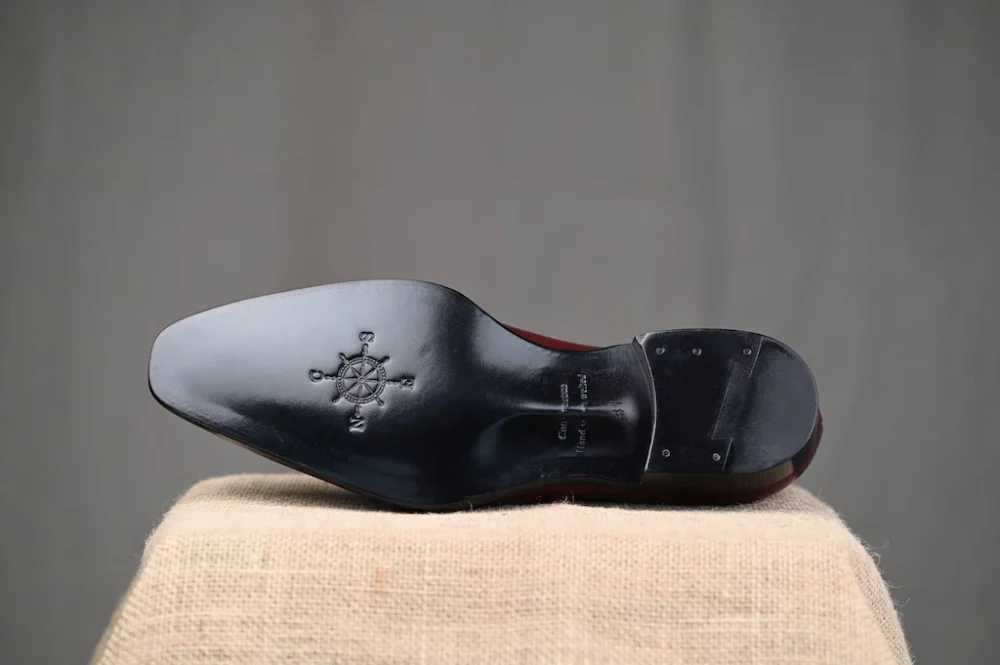
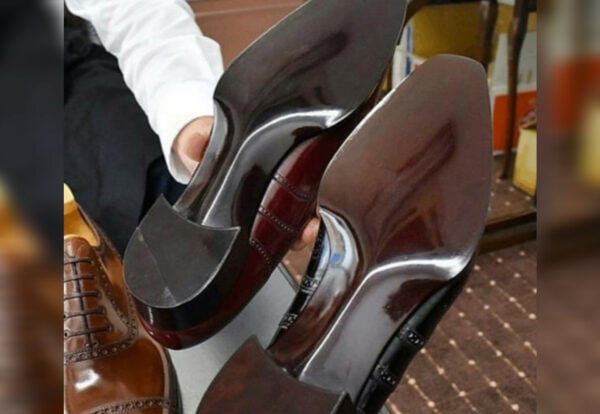
Generally speaking, there are two main types of sole finishing: Closed vs Open Channel. What do those mean though? An open channel sole stitch is when you look at the bottom of the shoe and see the channel stitch. On Goodyear welted shoes, this stitch indicates where the sole was sewn to the welt. A closed channel sole is defined by the lack of stitching that you see. This is created by cutting into the sole, making a thin flap that lifts up so that when you stitch on the sole, you can later glue down that flap to ‘close the channel.’
A general rule is that the lower the price point of the brand, the more chances are that they will have an open channel sole while the higher-end brands will usually go for the closed channel. In reality, there is nothing that gives or takes away from the shoe by doing either one. It is more a matter of elegance and creating a clean vs. rough(er) look, which is why the high-end makers go for the much more clean-looking closed channel.
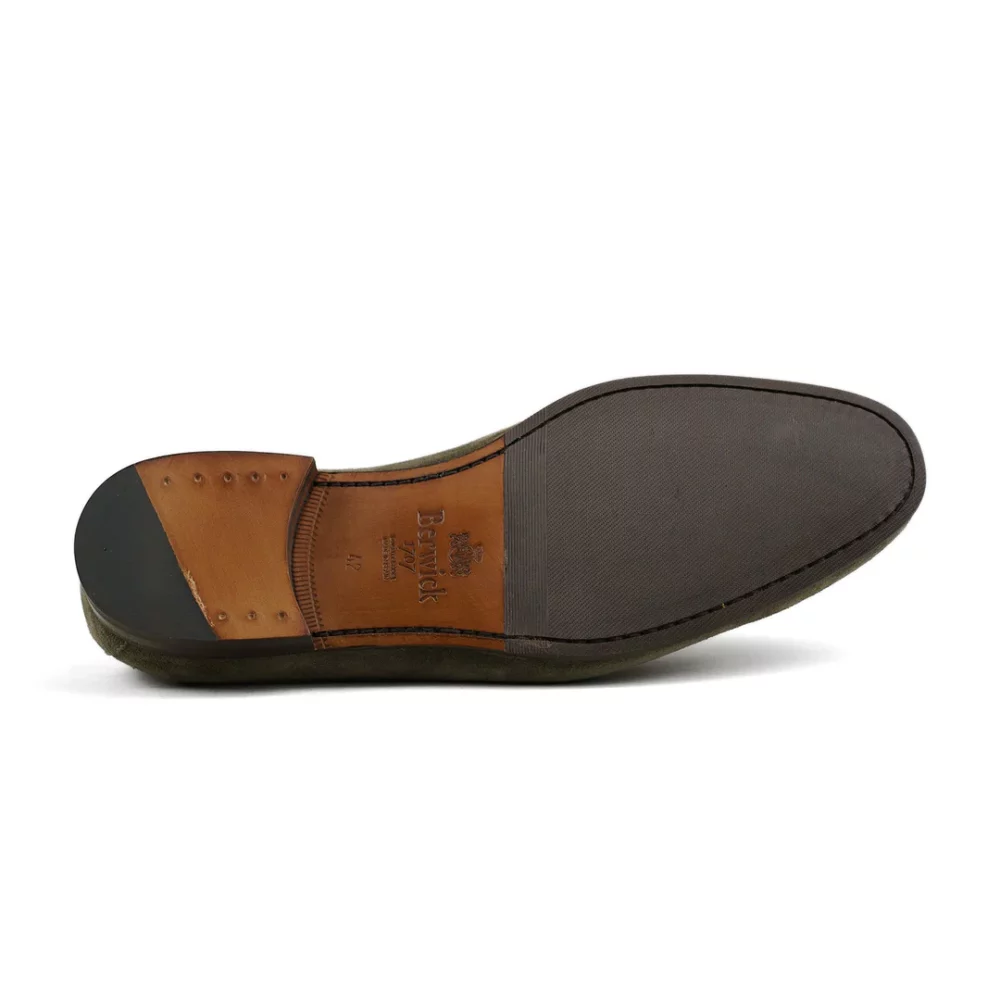
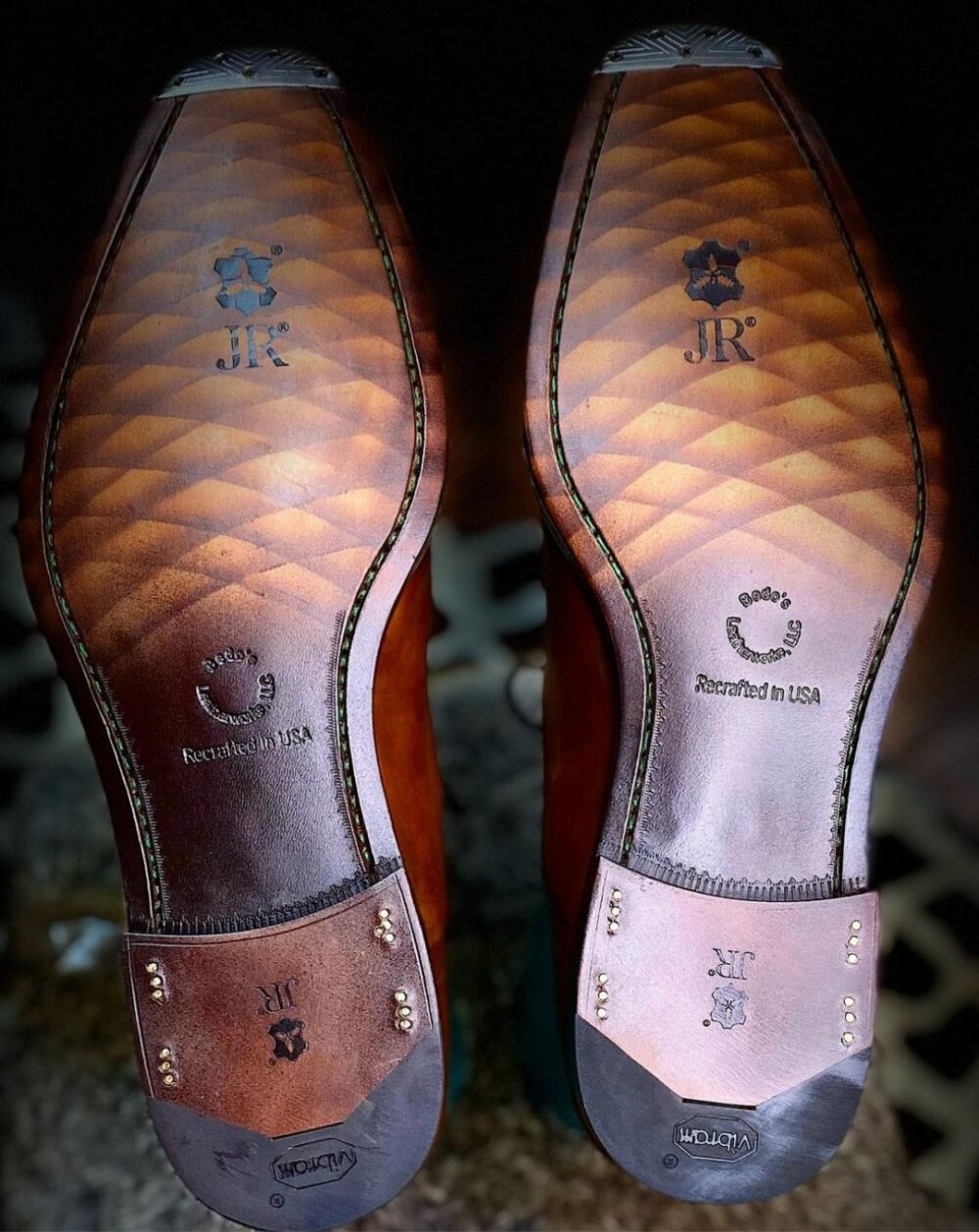
There are things that one should know however when it comes to the differences, both good and bad. So let’s take a look at those.
Open Channel
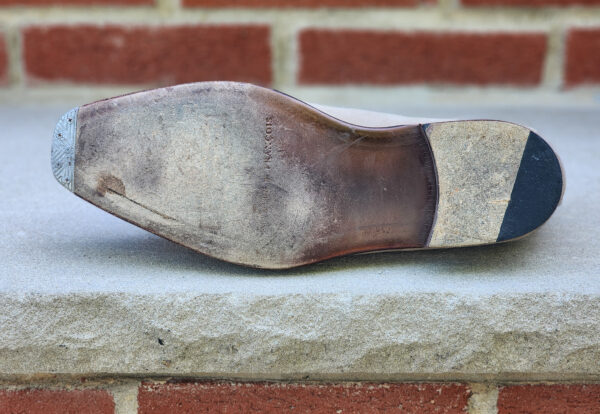
The channel is the little trench-like opening that holds the stitching that connects the sole and the welt. When it is ‘open’ that indicates that channel stitch is showing when you look at the bottom of the sole. The manufacturer simply stitches the sole onto the welt and the machine will create the channel as it is stitching each stitch.
Positives:
- It’s easy to repair
- It keeps the costs lower on your shoes
- It is straightforward
Negatives:
- In rare cases, the stitch can rip if worn too long without repair. Another rare case is that water can possibly seep through on a botch job.
- It’s not always that nice looking.
- A good maker might create a trenched (sunken) channel, while a mediocre maker most likely will not. The ones that don’t make the sunken channel will be more likely to come undone as the stitching gets more exposed to the pavement/concrete.
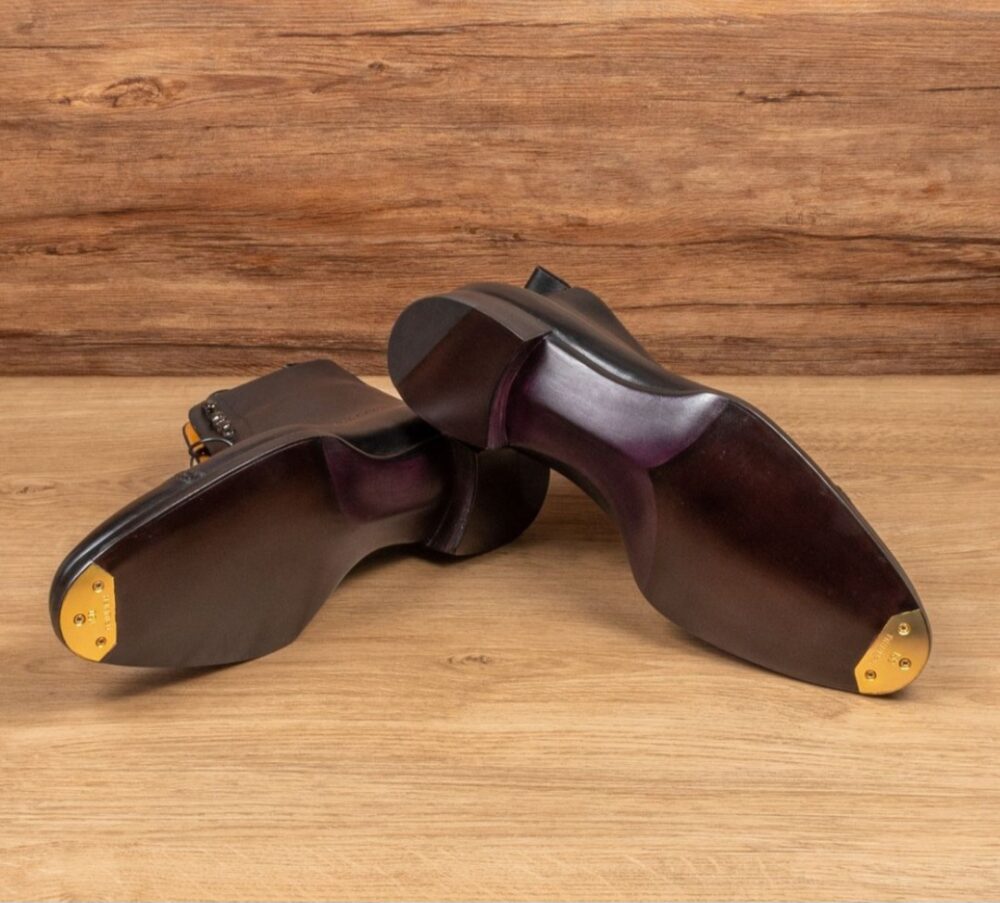
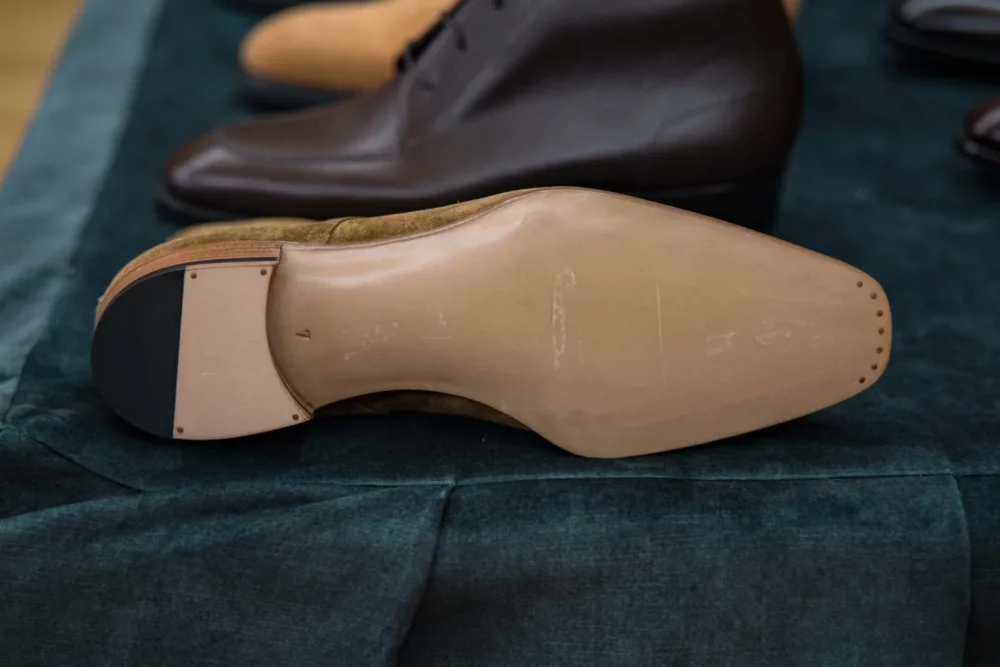

Closed Channel
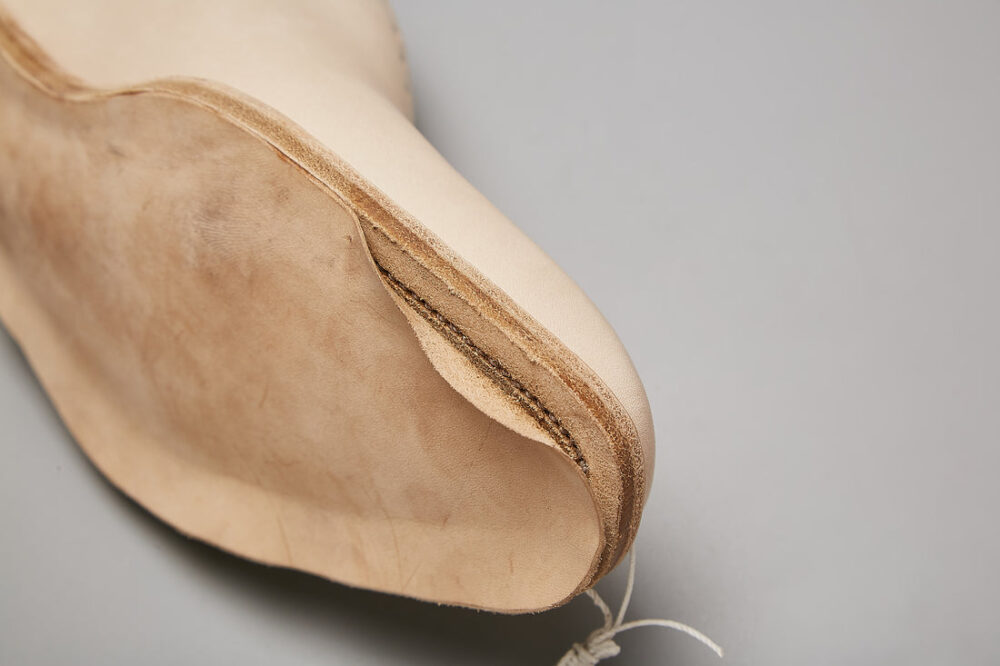
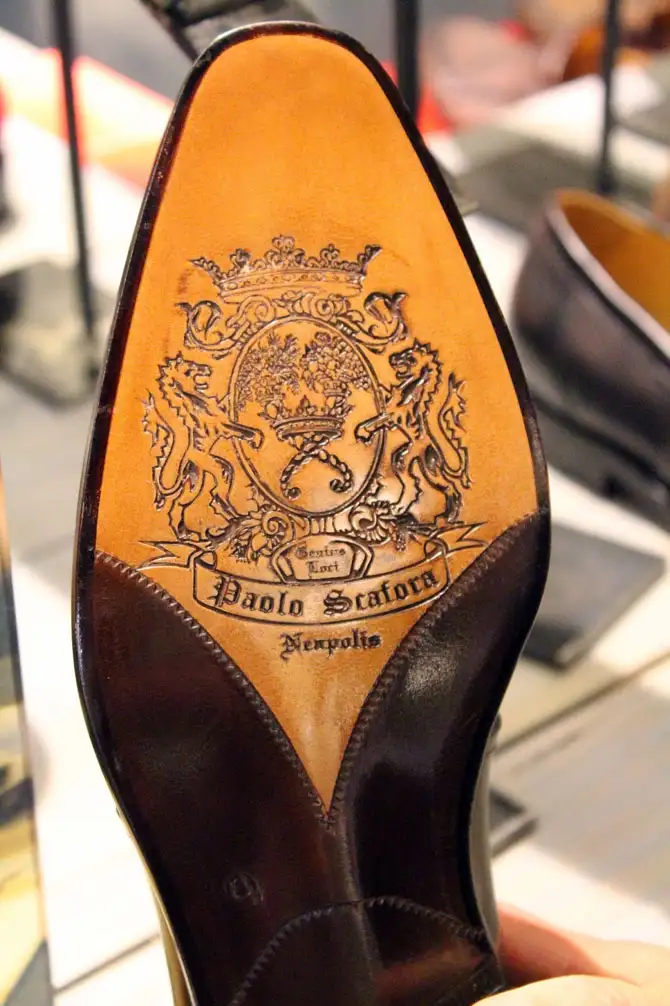
A closed channel is when the manufacturer, instead of simply creating the stitch and the channel at the same time, first cuts into the sole to create a little flap of leather that they can then lift up. Once this is cut and lifted up, they stitch the sole to the welt. After this, it is closed back down and glue is used to keep it down, thus creating a uniform surface without anything showing on it.
Positives:
- It gives a nice clean look to the sole. It is elegant, and tidy, and ultimately shows a higher level of craftsmanship.
- As the channel is closed, it protects the sole from water potentially coming through the channel.
Negatives:
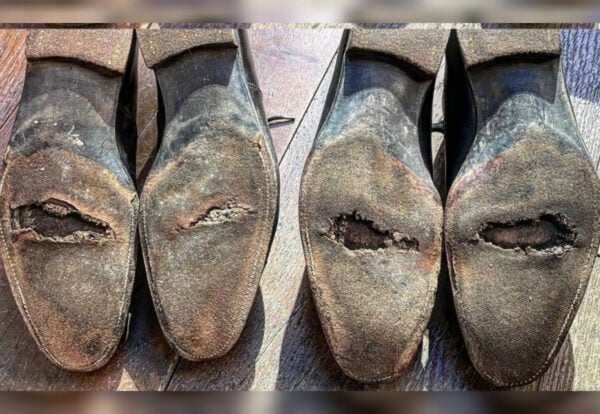
- As the leather that hides the channel is a thin piece that has only been glued down, it can either be undone by excess water/moisture/liquid, etc. and thus lift back or can be broken through stepping on small rocks or other strong, rigid things. When it breaks, it can leave little chunks of missing leather flaps, which is not nice to see. More often than not, this will occur as many of us walk constantly on concrete, wet surfaces, and on cobblestone streets.
- The rougher the surface you walk on (i.e. cobblestone), the more likely the flap will get pulled back (as you nick your toes) and thus expose the channel.
- Rainy/wet environments can easily detach the adhesive and prematurely open the channel flap, leaving it weak and easy to break.

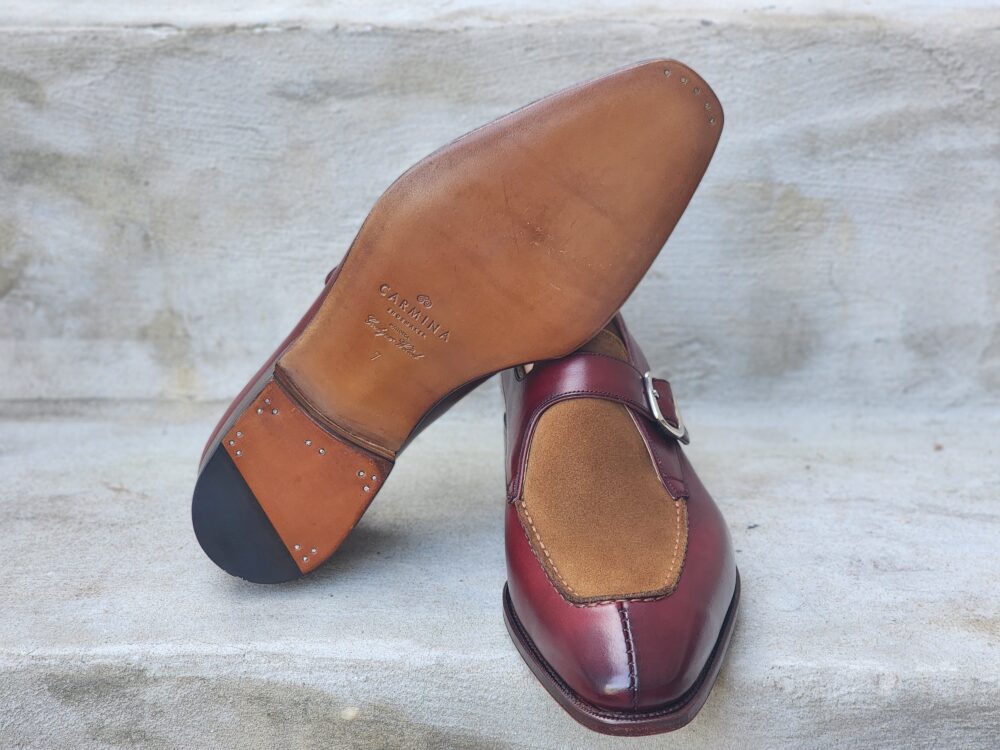

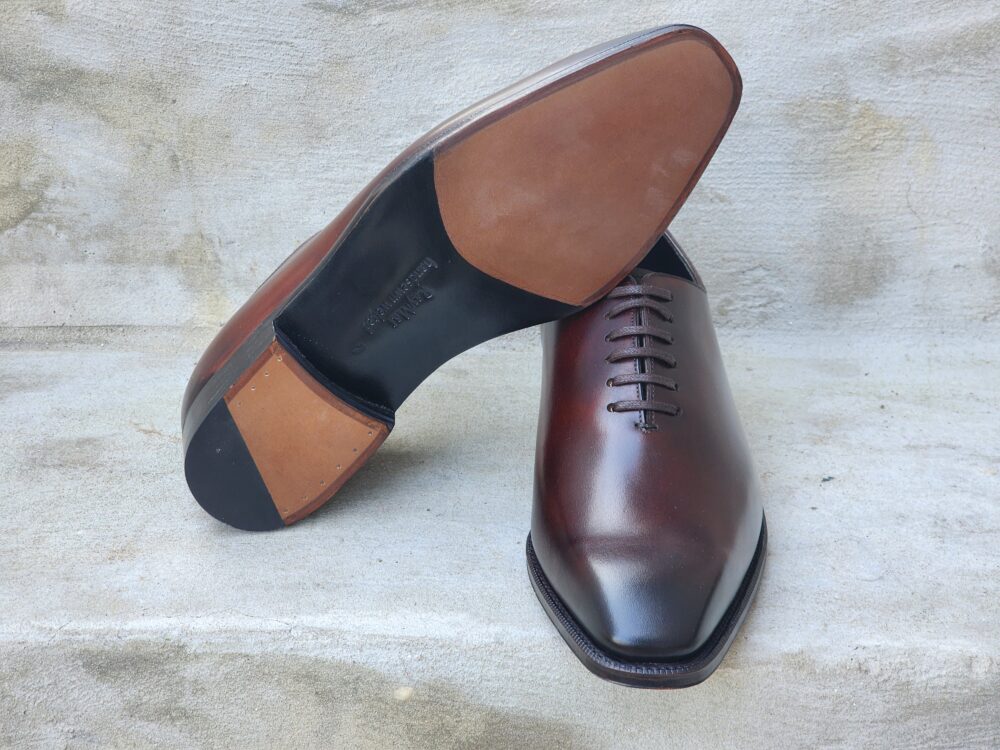
There really is no reason to go for a closed vs open channel shoe. There are no real arguments in terms of longevity or quality to be had on their comparison. The closed channel is mainly an aesthetic feature that becomes irrelevant after a few wears. But, in a world where details matter, this is something that people like to appreciate when judging a new shoe. It allows sole decoration to be created and can show a differentiation craftsmanship.
But it is important to note that just because a shoe is expensive and has given the sole a closed channel treatment does not mean that it will be indestructible. Get this immediately out of your head. Even the best sole in the world, with the best closed-channel job done, can be undone if you kick your toes hard enough on the concrete, trip up on a staircase, or do a million other things that can damage one’s soles. This is one of the benefits of the open channel. You don’t notice the wear and tear as much. So you have to choose your battles. But do so wisely.
—Justin FitzPatrick, The Shoe Snob
Shop · Marketplace · J.FitzPatrick · Patreon







Keep them irrelevant photos coming mister! 🙂
I do have one interesting (maybe not) observation that is for the same price range an Italian shoemaker would have closed channel blake stitching whereas an English shoemaker would not have closed channel Goodyear stitching (think Gucci vs C&J Becnhgrade) Any reasons to why is that the case?
because the cost of blake is less than goodyear so it balances out….but you can’t compare Gucci to C&J benchgrade….Gucci’s profit margin is way higher….part of that retail price is name alone, not cost of goods sold.
Hi Justin, the Saint Crispin’s have something to do with the post. They have a closed stitching 🙂 Greetings to you…..
Your work is beautiful can a pair of theses shoes be bought
Thanks for this post Justin. My first hand experience with “better” shoes is quite limited, my GY welted shoes have been Alden or Allen Edmonds — both open channel. It wasn’t until I began learning more about truly better shoes on your site that I discovered the closed channel treatment.
I will say that the fancy designs shown on some of the pictures you’ve posted (showcasing closed channel soles, sometimes with artful designs) seem sort of silly. All that lovely art work won’t look so good once the shoes are worn in and the soles are scuffed up a bit — right?
glad that you enjoyed it. Yes you are right….fancy designs on the sole usually on the forefoot, will be destroyed after several wears…but that is really neither here nor there….art is art I guess…. I really don’t like modern art, but people buy it and appreciate it…even if it is just a splash of paint on canvas..I don’t see the point to it, but there must be one
Great post and explanation…but who makes those tan bluchers in the “open channel” example?
sorry arthur for this obscenely late reply…to be honest, I have no clue who made those…think that they were a re-sole hence why I can’t place the maker
always a wonderful read Justin. You are a good teacher.
Thanks Johnny!
How good are To Boot New York shoes in relevance to price and construction? Are they well made, decent quality, lasting shoes?
So glad I stumbled across the Shoe Snob and Justin Fitzpatrick. I have learned so much through these articles and have purchased a few items from you. Look forward to future purchases and more education about dress shoes!
Hello
I have an observation regarding at least 2 different approaches to doing a closed channel. In 2 books from the 1950s “Boot and Shoe Repairing for Amateurs” and “How to Bottom a Welted Shoe” the channel is cut above 1/4″ from the sole edge at an angle and it looks a bit deeper than the very fine cut made at the soles edge which you can see done in detail in several videos on YT *mainly by Asian makers.
Have any of you on the pros and cons of both methods and why it appears that the older method is no longer used *as far as I know).
Sorry, I do not have the answers as have not studied the ‘older’ method nor heard about it.
Apologies for posting again but I just saw an explanation using the older method here: https://carreducker.blogspot.com/2010/07/cutting-channel.html
ah, this is the method i know, so I guess the newew one is the one that I am not familiar with. Admittedly, I do not follow the YT channels by the Asian makers so am unfamiliar with that style of making.
Thanks for that.
My pleasure
Hi Justin,
In this case I will give my opinion. The closed channel in the industry is only made to resemble craftsmanship as much as possible, this gives added value and allows charging more for the same shoe.
The reality is that the machines that make the channel, like the Goodyear machine, were invented to do the craft work in an industrial way.
A quality handmade product is expensive by definition because it is expensive to produce. When an industrial shoe looks like this, it can be charged more.
I am not a person against industrial progress, I think it is a great progress for mass production and lower costs.
I am not against industrial progress, I think it is a great step forward for mass production and lower costs.
However, a well-made shoe has something that transmits emotions and in fact it can be with the open channel where this excellence is also shown. Seeing all the stitches perfectly ordered and tensioned with precision adds beauty to the whole, each stitch closed the hole with precision.
Regards
Antonio
Thanks for sharing my friend!