
The Tim Liu Interview
In the world of online sales, I feel that it is more important than ever to put a face to a brand. A faceless brand that doesn’t respond to emails, doesn’t have a physical location, or fails to provide an email address but rather just a contact form might leave some red flags in purchasing online. After meeting the owner of Yearn Shoemaker, Mr. Tim Liu, last year at the London Super Trunk Show 2023 and seeing what a great guy he is, I knew that the rest of the world needed to see this too. The only issue is that I had to wait one year to take some photos with him!
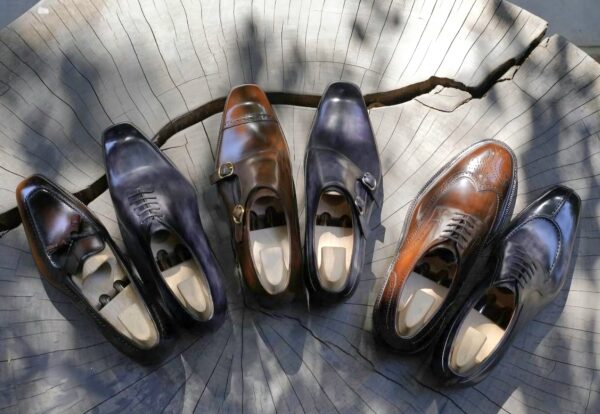
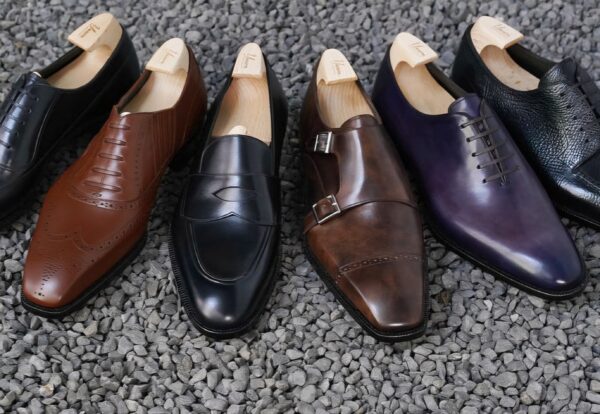
Yearn is making some of the best value for shoes right now but buying blindly from their site might prove daunting for some. Fret not, Tim Liu is perfectly fluent in English and is here to help in answering any questions you might have. One thing to note is that an email response from mainland China can sometimes be delayed due to internal internet access issues. Do not expect immediate responses.

Please see our exchange below:
1. Please describe yourself i.e. background and are you the founder of Yearn? What is your story in footwear?
I’m Tim Liu, one of the co-founders of Yearn Shoemaker. Currently, I oversee operations and marketing. The other two co-founders are Phenix Fu and Jie Zeng, our Head Shoemaker, who has over 20 years of experience in shoemaking.
My interest in handmade shoes began when I started attending various job interviews after graduating with a hotel management degree in Australia. I purchased my first suit and leather dress shoes for these interviews. Living on the Gold Coast, opportunities to wear leather shoes were rare; most people opted for flip-flops, and even in hotels, formal attire was uncommon. Fortunately, while selecting leather shoes, I discovered a brand called Aquila. As I entered the store, the only salesman warmly greeted me and, after learning about my budget and purpose, assessed my body type and confidently suggested a size 40 (UK7). He then handed me a pair of black cap-toe oxfords, which surprisingly fit perfectly.
Sometimes, you truly get inspired by someone’s passion. I started chatting about shoes with him, asking why there were price differences among seemingly similar shoes. He patiently explained the craftsmanship of the shoes to me, pointing out the stitching on the sole, explaining the Blake construction, and mentioning the more complex Goodyear welted shoes. He even directed me to a nearby store, RW Walliams, which used this technique, without hesitation. We talked for the entire afternoon and instantly connected.
His name is Arthur, the store manager. He had previously worked in sales for many designer brands, but his true passion, he told me, was classic men’s fashion. Working at Aquila, an outlet store on the Gold Coast was the closest he could get to his interests. Interestingly, I later worked in sales at Christian Louboutin and often visited Arthur’s store to chat. It was during this time that I started following The Shoe Snob Blog and Shoegazing, becoming an enthusiast. However, what ultimately led me into this industry was my curiosity about Chinese manufacturing. A pair of Aquila’s Blake construction shoes sold for $400 AUD ($300 USD); what would be the price of similar Chinese products? And what about their quality?
Upon returning to China, I met Phenix Fu and quickly joined the team. From that moment on, I’ve been thinking about how to promote high-quality Chinese handcrafted shoes to the international market. Until now, I’ve been working tirelessly on this, watching Yearn become increasingly recognized, which makes me very happy.

2. Do you have other shoe brands?
Yes, we have another brand called Slimshoes, which sells exclusively in China. Before my return to China, Phenix had been running this brand for several years. He was also passionate about handcrafted shoes. However, at the time, the shoes available on the Chinese market were chunky and unattractive, so he named his brand “Slimshoes” accordingly. Having studied in the UK, he had seen the more refined craftsmanship of British brands, which influenced his aesthetic preferences and laid the foundation to build a handmade shoe brand in China.

3. What is the story of the name ‘Yearn’? Where does that come from? What was the purpose of Yearn i.e. your inspiration for starting the brand?
The idea for the name “Yearn” came from Phenix. To be honest, we also felt that “Slimshoes” might sound awkward to international clients. This is indeed a weakness for many Chinese brands. For instance, the Chinese car brand BYD, whose international sales are growing, awkwardly added slogans like “Build Your Dreams” to their cars’ trunk lids, which looks quite embarrassing, though it’s just an abbreviation of the Chinese name. This awkwardness exists even more for small companies like ours.
We needed to better understand our customers. China has long engaged in international trade primarily through OEM (original equipment manufacturer), rarely directly involved in brand building and marketing, lacking experience. Unlike Japan or South Korea, it’s challenging to attract foreigners to China for marketing purposes (due to many policy restrictions). As a result, despite having top-quality products, the lack of understanding of customers, communication barriers, and marketing ineptitude confined us to OEM contracts with foreign brands, yielding minimal profits.
Therefore, we were eager to promote Chinese products, and Yearn embodies that hope. Especially after comparing price advantages, our decision to enter the export market was also the result of many years of product optimization. We have enough confidence in our shoes, both aesthetically and in terms of comfort, to gain recognition from many customers. Finally, I had the opportunity to realize my initial idea of promoting Chinese handmade shoes to the international market since returning to China and starting the Yearn project.
4. What are your plans for Yearn? Do you envision more stock or always a 25-day lead time for ‘stock’ pairs?
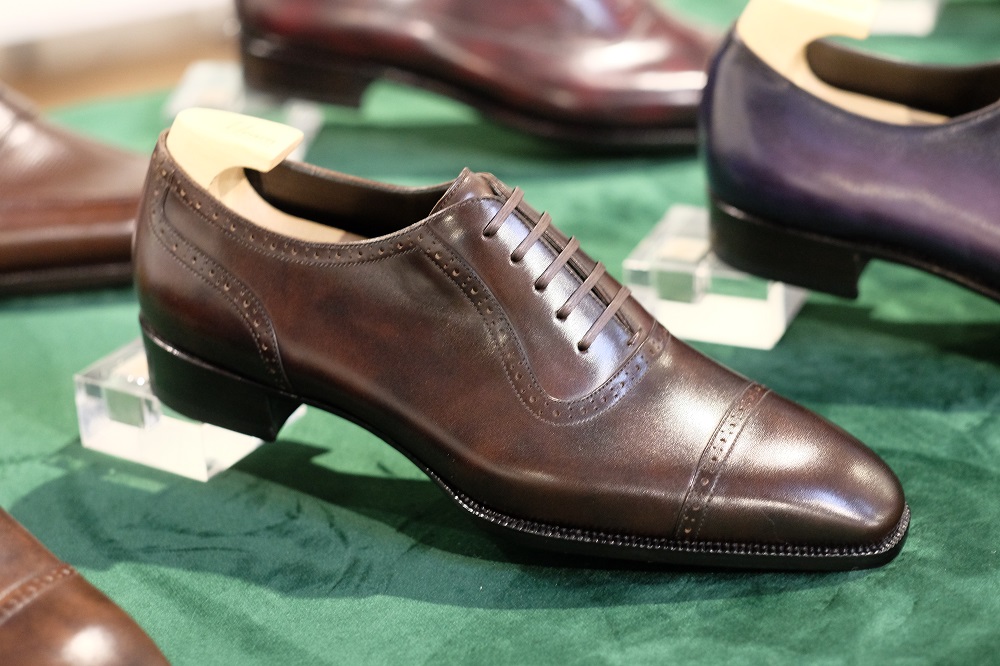
As it stands, our customer base is still primarily focused on enthusiasts, and the volume is still relatively small. To be honest, it’s challenging to support a large inventory at this price point, and the profit margins are not high. Therefore, we rely on made-to-order (MTO) production, as variations in size standards prevent Yearn from directly sharing inventory with Slimshoes. Like many other Chinese brands, MTO is our main sales method. Introducing ready-to-wear (RTW) options and offering returns and exchanges are efforts to reduce the trial costs for customers. The 25-day lead time for RTW is a compromise for us. In the future, if the sales volume stabilizes, we will consider increasing inventory to reduce customer wait times.

5. Do you have new collections coming out? Anything exciting or news?
Yes, we have a new MTO series called the Artisanal Line set to launch soon. I’m excited because there will be significant upgrades to bespoke level features. Our current MTO follows RTW standards, but the Artisanal Line will incorporate features like fiddleback waists and offer unique styles and leather choices without significantly raising prices.

6. Being outside of China, we have relatively little knowledge of what goes on in China. We know of the famous shoe brands that cater to the world, like Acme, Oct Tenth, etc, but are there far more interesting brands making great shoes that we never see here in ‘The West’? Please enlighten us on the shoe culture in China? I feel like it is growing rapidly.
Yes, like everyone else, before I returned to China, I didn’t know much about Chinese handcrafted shoe brands. Initially, I learned about the existence of a market for handmade shoes through brands represented by Medallion, such as Gaziano & Girling, Stefano Bemer, and St. Crispin. Later, I gradually realized that China is not lacking in experienced shoemakers. However, most of them lack a good educational background, making it challenging for them to have brand-building ideas and capabilities.
Just as you mentioned, Chinese footwear brands are mainly concentrated in cities like Beijing, Shanghai, and Guangzhou. Economically less developed regions in the west lack sufficient market support. Chengdu, where we are based, is one of the largest cities in the west and interestingly, our development is primarily supported by online sales. China’s online consumption volume has surpassed physical stores and is no longer subject to geographical restrictions. However, the handmade shoe market remains niche. Currently, aside from us, there are no other mature brands in the western region. Nevertheless, in recent years, many new brands have begun selling online. Considering the modest growth in the domestic consumer market, more and more Chinese brands are likely to seek export opportunities in the future.

7. Do you envision growth for the brand or to keep it relatively small and focus more so on your local efforts i.e. your local shoe brands?
We certainly hope that Yearn can serve more customers, just like Slimshoes. Initially, Slimshoes primarily catered to enthusiasts, but now, 80% of Slimshoes customers are from the mass market. We believe that only by doing so can a brand continue to develop, and looking at future consumption trends, more and more people will value quality rather than just brand recognition, which is an opportunity for us. However, reaching international mass-market clients will undoubtedly pose a greater challenge.
Yearn will also increase its product variety to meet more demands. Currently, Phenix manages Slimshoes operations, while my focus is on Yearn, so we do not solely target one market. Our goal is to allow more customers to experience excellent products.

8. How do you find sourcing leather? Where does yours come from? Do you buy directly from the tannery or are these specific agents you have to work with? Do you feel leather sourcing is becoming more difficult or roughly the same since you started?
This is a great question and one of the main challenges for all current Chinese brands. Currently, we source leather through two channels:
– Direct purchase from tanneries: Since last year, we have been purchasing leather mainly from Annonay. The advantage is that we can purchase according to our needs, but the downside is that the minimum order quantity is relatively large.
– Leather agents: This is the mainstream approach currently. Essentially, there are very few leather agents that Chinese brands cooperate with. The advantage is flexible purchasing, and defects can be returned, but the downside is that supplies may run out at any time, and we can only choose from existing stock.
Both methods are roughly the same in terms of cost, but regardless of the method, Chinese brands cannot obtain the highest-grade leather. The tanneries we are familiar with prioritize supplying European brands, and the remaining quotas are exported. Furthermore, since the handmade leather shoe market is niche, there are fewer and fewer agents, and we have indeed found it more challenging than before. We also hope that one day, Chinese tanneries will develop leather specifically for high-quality leather shoes, but this will take a long time.
During this trip to the UK, we will also visit leather agents in Northampton, hoping to have better options for sourcing leather.

9. Who are your inspirations in the shoe industry? I.e. what are your favorite brands that inspired you to get into shoes?
Like my story before, my interest in shoes was sparked very coincidentally. Rather than specific brands, I’m more drawn to the enthusiasm of people in this circle, like Arthur, the store manager of Aquila whom I met in Australia. I myself am an explorer and passionate about various handmade and delicate products, not just shoes. Every time I see new designs and product upgrades, I get excited. Wearing high-quality leather shoes and clothing can give a great sense of confidence, and providing this feeling to more customers is something I enjoy. These are all inspirations.
Of course, in terms of my brand preferences, it’s not always the same. You can see those preferences reflected in our products at different stages. In terms of trends, Gaziano & Girling undoubtedly influenced recent aesthetic trends and is a brand I greatly admire. Recently, I’ve started to prefer relatively restrained and simple lines in designs. Our new last designs also reflect this change. When you’re leading a brand, it’s hard not to incorporate your own preferences rather than being entirely market-driven.

10. Do you ever plan for physical shops or keep it online based only? We know you have one stockist in the UK. Do you have others outside of the UK and China? Any plans for new ones?
As I previously mentioned, the difference between the Chinese and overseas markets lies in consumer habits. We have a physical store in Chengdu, but it doesn’t significantly boost sales. Even if we were to open stores in Shanghai or Beijing, we wouldn’t see much growth. However, it’s different overseas. Our partnership with Arterton has significantly expanded our presence in the UK market, and physical stores better suit local consumer habits. If possible, I’d love to open a store in New York because our main customers are from the US. Of course, all these plans require a larger customer base to be viable.

11. How can people in the US learn more/become more comfortable with ordering? Any plans for US trunk shows?
Currently, all shoes purchased on our website are shipped directly from China, with a production-to-delivery cycle to the US taking less than a month. Returned shoes are sent directly to our warehouse in the US, making it more convenient for customers. The website will soon update the MTO ordering interface, eliminating the need for cumbersome email communication. We are planning future US trunk shows, and we will consider any possible opportunities.

12. Anything else you wish to share about Yearn shoes that i might have missed? something you wish to tell the people?
Thank you very much for this interview; I’ve truly enjoyed it. The questions were all excellent, and through them, I’ve revisited and organized the entire process of brand establishment and future plans. I also want to take this opportunity to express my gratitude to all those who support Yearn. We will continue to strive to make high-quality shoes.
Thank you Tim Liu for this interview. I hope that everyone enjoyed reading it and learned something new about Yearn shoemaker. Stay tuned as this great brands continues to make waves in our industry!
See other posts on Yearn here
Learn more at their website: https://yearnshoemaker.com/
—Justin FitzPatrick, The Shoe Snob
Shop · Marketplace · J.FitzPatrick · Patreon




You’re amazing Justin. It is so awesome that while you have your own brand, you continue to highlight other brands that someone to argue compete with you. I am very familiar with Yearn. The value they provide at the price they offer is close to unmatched in the industry. I’ve ordered directly from Yearn and more recently from Arterton ( who does an amazing job representing the brand ). I’m looking forward to seeing the Artisinal line
Thanks Michael! Glad that you enjoyed it and I appreciate the kind words!
Great story. I like the name Slimshoes! It is the slimness of a shoe last that draws me to it. Thanks for introducing Mr. Liu to us, and the photographs of their shoes in this article are beautiful.
Glad that you enjoyed it Arthur!